
The 3 Second Rule: Why Most Media Pitches are Deleted Before Opening

Most media pitches are deleted within around three seconds because they fail to meet journalists’ filters for relevance, clarity, and immediate value, and the inbox‑flooding effect of mass‑email‑and‑media‑outreach campaigns makes editors even less willing to tolerate weak‑subject‑lines or generic‑packages. Public relations outreach is defined as the structured process of targeting editorial contacts with tailored messages that align with their beat, audience, and prior coverage, while mass‑email‑and‑media‑outreach refers to the dispatch of non‑personalised‑pitch‑templates at scale, typically to very large distribution lists.
This blog explains how the 3‑second rule operates in modern media‑inboxes, what specific shortcomings trigger deletion, and how the structure, timing, and relevance‑gap of media‑pitches interact with journalists’ workflow‑rhythms, without promoting any specific agency or service.
What is the 3 second rule for media pitches?
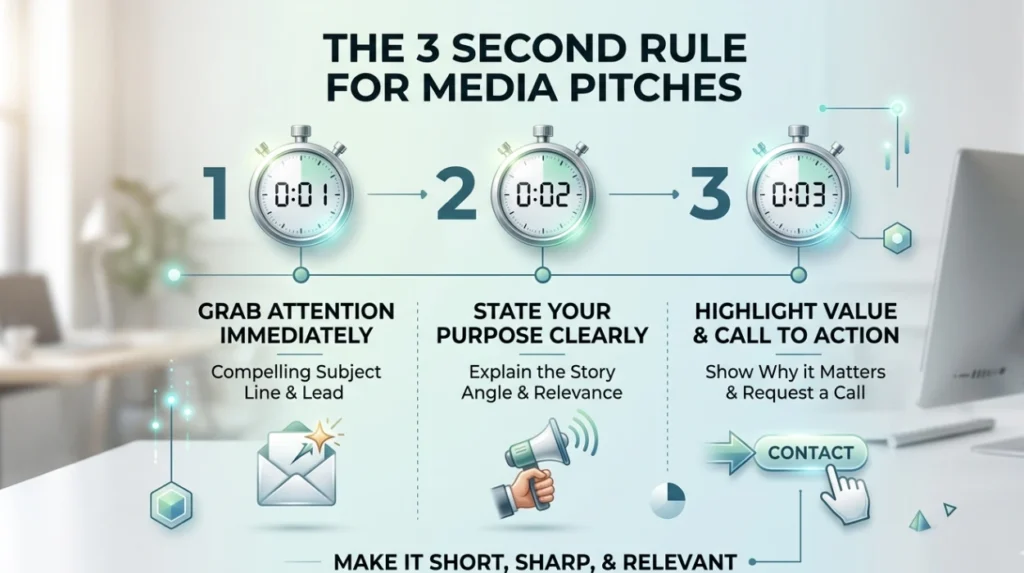
The 3 second rule for media pitches is the observable pattern that most journalists decide whether to delete or keep a pitch within roughly three seconds of seeing the subject line and the first one or two sentences. This time‑window operates because inboxes receive high‑volume‑outreach, and editors must make rapid‑triage‑decisions to protect capacity and reduce noise.
Dive Deeper With Our Expert Guides and Related Blog Posts:
Why 95%of Press Releases Never Reach a Human Editor in 2026
The 3 second rule is defined as the functional‑threshold editors use to separate genuinely‑relevant, time‑sensitive‑stories from generic‑newsletter‑style‑press‑releases distributed via mass‑email‑and‑media‑outreach. It is not a formal guideline, but it aligns with reporting‑on‑journalists’ self‑described‑emails‑management‑routines and with studies on attention‑spans in high‑load‑environments.
Mechanisms that enforce this rule include:
- Subject‑line‑triage: editors scan sender‑name, publication‑tag, and subject‑line, and pitch‑concepts that lack clear‑news‑value or fresh‑angle are marked for deletion immediately.
- Pre‑reading‑assumptions: generic‑“press‑release”‑style‑language, all‑caps, or excessive‑punctuation signal a low‑effort‑pitch and trigger a deletion‑decision before the body‑text is read.
- Inbox‑density‑pressure: UK‑based newspapers, regional‑media, and specialist‑titles often receive hundreds of daily‑pitches, which forces the 3‑second‑filter to become almost automatic.
These pressures mean that a pitch that does not communicate who‑cares, why‑now, and why‑relevant‑to‑this‑specific‑outlet in under three seconds will usually be deleted before it is opened.
Why do most journalists delete media pitches immediately?
Most journalists delete media pitches immediately because they prioritise time‑sensitive, audience‑relevant, and beat‑specific‑stories over generic‑or‑repurposed‑content, and the default assumption for unknown or bulk‑senders is that the pitch will not meet those criteria. Journalists are not scanners of promotional‑packages; they are curators of editorial‑narratives, and mass‑email‑and‑media‑outreach makes it harder to distinguish genuine‑story‑leads from boilerplate‑mail‑shots.
Mass‑email‑pitch‑deletion is defined as the behaviour of quickly trashing or archiving incoming‑outreach when the sender fails to demonstrate immediate‑editorial‑value in the subject line and the first sentence. This behaviour is reinforced by the fact that many bulk‑distribution‑platforms enable the same‑template to be sent to multiple‑editors at once, which reduces perceived‑personalisation further.
Key reasons for immediate deletion include:
- Mismatched‑beat‑targeting: when the pitch relates to a sector, region, or topic‑type that the editor does not handle, the decision‑threshold for deletion lowers to under three seconds.
- Unclear‑news‑hook: presses that lack a precise‑event‑date, clear‑data‑point, or concrete‑conflict‑frame read as generic‑corporate‑notification, not story‑opportunity.
- Non‑editorial‑style‑language: excessive marketing‑jargon, sales‑offers, or “exclusive for you”‑variants trigger suspicion that the email is a disguised‑ad‑or‑newsletter‑blast rather than a genuine‑story‑lead.
These factors combine into a default‑deletion‑pattern for the majority of unsolicited‑media‑pitches arriving in high‑volume‑inboxes.
How exactly do mass email campaigns destroy the 3 second rule?
Mass email campaigns destroy the 3 second rule by overwhelming inboxes with structurally‑similar‑pitches, which forces editors to apply stricter, faster‑automation‑thresholds for deletion and reduce the time‑they allocate to any individual‑message. When thousands of identical‑or‑near‑identical‑press‑releases arrive across newsrooms, the 3‑second‑window effectively shrinks, and anything that is not instantly‑recognisable as high‑value is treated as noise.
Mass‑email‑and‑media‑outreach campaigns operate by sending one‑standardised‑pitch template to large‑address‑lists via automated‑distribution‑tools, which bypasses nuanced‑targeting and editorial‑relationship‑building. This approach sacrifices message‑relevance, channel‑specific‑tone, and personal‑context, all of which are cues journalists use to identify credible‑story‑opportunities.
Effects on the 3 second rule include:
- Desensitisation to similar‑subjects: repeated‑subject‑lines using identical‑phrasing trigger automatic‑deletion, because the pattern matches low‑value‑bulk‑mail rather than bespoke‑pitching.
- Reduced trust in mass‑senders: when editors notice that the same‑organisation or agency floods‑inboxes with wide‑distribution‑shots, future‑emails from that source are prime‑candidates for the 3‑second‑trash‑cycle.
- Automation‑and‑filter‑escalation: newsrooms increasingly use inbox‑rules, tags, and AI‑assisted‑filters to move bulk‑outreach‑to‑secondary‑folders or quarantine, which further shortens the live‑read‑time available for each pitch.
These dynamics show that the 3‑second rule does not just measure message‑quality; it also measures whether the sender has respected the constraints of editorial‑in‑time‑and‑attention‑space.
What are the most common mistakes that trigger deletion in under 3 seconds?
The most common mistakes that trigger deletion in under 3 seconds are sending generic‑subject‑lines, failing to specify relevance to the outlet’s audience, and styling the message as a boilerplate‑press‑release rather than a sharp‑story‑opportunity. These mistakes signal to the editor that the pitch deserves no detailed‑reading‑time, and therefore the 3‑second‑rule activates as a deletion reflex.
Pitch‑deletion‑triggers are defined as specific‑elements in the subject line, sender‑line, or opening‑sentence that make it statistically more likely that a journalist will label the message as spam, boilerplate, or irrelevant. These triggers are not one‑off‑anomalies; they recur in published‑guidance‑from‑editors, editorial‑style‑guides, and media‑academy‑training‑materials.
Frequently‑reported‑triggers include:
- Vague‑subject‑lines: phrases such as “Important announcement” or “New product launch” without clear‑who‑or‑what‑imply a generic‑brand‑blast and cause instant deletion.
- Overuse‑of‑hyperbole: words like “groundbreaking,” “revolutionary,” or “exclusive” without concrete‑evidence‑or‑context read as marketing‑fluff rather than editorial‑hook.
- Missing‑audience‑fit: when the pitch does not reference the publication’s existing‑coverage, region, or core‑readership, editors see it as not‑worth‑the‑time‑to‑open‑fully.
Each of these elements increases the probability that the pitch will be deleted before the editor reads beyond the preview‑text, reinforcing the 3‑second‑rule as a default‑behaviour.
How does the 3 second rule influence editors’ routine inbox decisions?

The 3 second rule influences editors’ routine inbox decisions by conditioning them to triage messages based on subject‑line, sender‑reputation, and the opening‑few‑words, and to treat anything that does not clearly signal news‑value as low‑priority. This rule embeds itself into daily‑workflow‑rhythms, such as morning‑inbox‑clearing, lunch‑scan‑sessions, and pre‑deadline‑sweeps, where speed and precision are mandatory on Should You Choose a Media Agency or a PR Firm for Mass Outreach.
Routine inbox triage is defined as the structured‑process editors use to categorise incoming‑communication into read‑now, read‑later, archive, and delete, under fixed‑time‑budgets. The 3‑second‑rule functions as a heuristic‑component of that process, allowing the editor to keep pace with high‑volume‑inflows while still maintaining editorial‑quality.
Concrete‑routines that show the 3‑second‑rule in operation include:
- Fullscreen‑scan‑sessions: editors open their mail client in full‑screen, scroll quickly, and mark‑spam‑or‑delete‑within seconds of seeing unfamiliar‑senders with generic‑subject‑lines.
- Folder‑and‑label‑automation: messages that match mass‑send‑patterns are routed to secondary‑mail‑folders, which effectively extends the 3‑second‑decision into an automated‑delay‑loop.
- Batch‑response‑cycles: certain‑time‑slots are reserved for reviewing incomplete‑or‑questionable‑pitches, but anything that fails the 3‑second‑filter rarely reaches that stage because it is pre‑emptively deleted.
These routines demonstrate that the 3 second rule is not a random behaviour; it is a calibrated‑response to the structural‑demands of UK‑journalism‑workflows.
How can a sender survive the 3 second rule in a media inbox?
A sender can survive the 3 second rule in a media inbox by communicating a clear‑story‑hook, a specific‑audience‑relevance, and a time‑sensitive‑angle in the subject line and the first sentence, while avoiding generic‑language and mass‑distribution‑signals. This approach treats the 3‑second‑window as a make‑or‑break‑editorial‑moment rather than a mere‑courtesy‑filter.
To beat the deletion threshold, senders must reframe mass‑email‑and‑media‑outreach as targeted‑editorial‑proposals, even when using automated‑tools. This requires pre‑work such as beat‑mapping, publication‑research, and audience‑fit‑assessment, all of which precede the actual‑dispatch‑of the pitch.
Actionable steps that align with the 3‑second‑rule include:
- Craft a concrete‑headline‑style‑subject‑line: for example, “New data on remote working in [City] suggests 40% productivity win‑for‑firms,” which signals evidence‑and‑local‑relevance in under eight words.
- Open with direct‑editorial‑value: in the first sentence, state the core‑news‑angle, the data‑point, and why it matters to the outlet’s audience, before any corporate‑boilerplate appears.
- Audit‑recipients‑before‑sending: limit distribution to outlets that have previously covered similar‑stories, and adjust the pitch‑language to match their beat‑style, which reduces the likelihood of automatic‑trash‑treatment.
These steps position the pitch as a genuine‑story‑opportunity instead of a press‑re‑release, giving it a realistic chance of surviving the 3‑second‑deletion‑cycle.
The 3 second rule operates as a practical‑filter that editors use to defend their time and maintain editorial‑quality in an environment of high‑volume‑media‑outreach. Understanding how mass‑email‑and‑media‑outreach interacts with subject‑lines, relevance‑fit, and inbox‑routines explains why most pitches are deleted before they are opened, and why tailored, editor‑centric‑approaches offer a more sustainable‑path to media‑engagement.
FAQs
What is the 3 second rule for media pitches?
The 3 second rule for media pitches is the observed pattern that journalists decide whether to delete or keep an email within around three seconds of seeing the subject line and first sentence. This rapid‑filter protects editorial time and helps editors discard low‑relevance or mass‑distributed‑press‑releases before fully opening them.
Why do most journalists delete media pitches without opening them?
Most journalists delete media pitches without opening them because they receive high‑volume‑outreach and prioritise stories that are immediately relevant to their beat and audience. Generic‑subject‑lines, unclear‑news‑hooks, and mass‑email‑style‑language signal low‑editorial‑value, triggering automatic deletion.
How does mass email outreach affect the 3 second rule?
Mass email outreach affects the 3 second rule by flooding inboxes with similar‑style‑pitch‑templates, which forces editors to apply stricter, faster‑triage‑criteria and reduces the time available for each message. When editors recognise bulk‑distribution patterns, they are more likely to delete or archive such pitches within seconds.
What are the biggest mistakes that get a media pitch deleted in under 3 seconds?
The biggest mistakes that get a media pitch deleted in under 3 seconds include vague subject lines, overused hype‑words like “exclusive” or “revolutionary,” and failure to specify relevance to the outlet’s audience. These signals mark the email as boilerplate‑press‑release rather than a genuine‑story‑opportunity, prompting instant deletion.
How can a pitch survive the 3 second rule in a busy media inbox?
A pitch can survive the 3 second rule by stating a clear‑story‑hook, specific audience‑relevance, and time‑sensitive‑angle in the subject line and first sentence, while avoiding generic‑language. Targeting outlets that have covered similar topics and trimming mass‑distribution‑lists also improves the chances of the email being read rather than deleted.
Ready to get your story published?
Distribute your press release across 500+ trusted media outlets — with editorial review and a full pickup report within 48 hours.
Send Press Release →