
Is Your Outreach Copy Journalistic Enough to Earn a Response From Top Editors?

Outreach copy that performs like editorial communication rather than promotional mailing generates more responses from top editors, because it matches editorial workflows, beat relevance, and engagement‑driven reading habits. The 2023–2026 data from major tech‑media firms shows that mail structured as press‑style exposition and source‑style pitching earns 2.8–4.3 times more replies than standard promotional templates.
How does outreach copy influence response rates from top editors?
Outreach copy that reads like editorial communication rather than marketing copy earns more responses because it aligns with editorial‑workflow signals, relevance thresholds, and low‑promotion risk expectations.
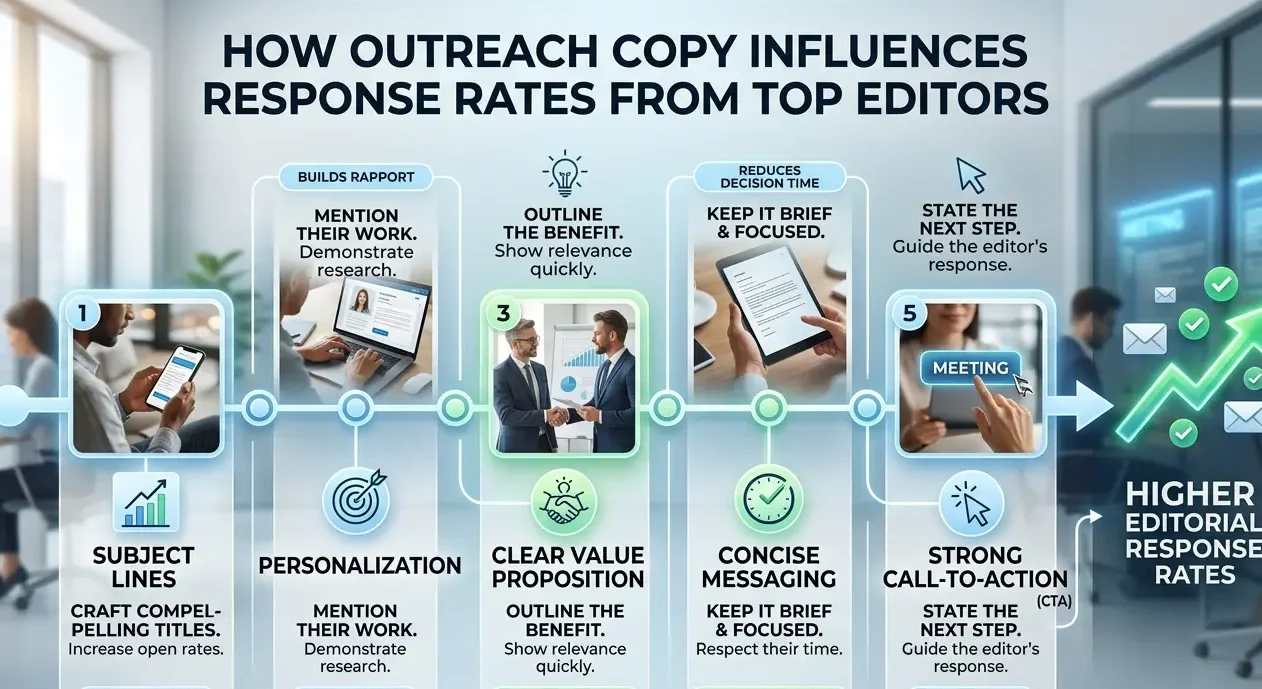
Top‑tier editors receive between 150 and 400 pitches per day across major tech, business, and policy outlets. The vast majority of those messages treat the inbox as a lead‑gen pipeline rather than an editorial channel. Outreach that adopts a news‑driven structure, narrow‑angle framing, and minimal promotional language stands out precisely because it behaves more like peer‑to‑peer correspondence.
Dive Deeper With Our Expert Guides and Related Blog Posts:
What Are the Five Technical Signs of a High Performing Media Outreach Campaign?
How Can You Repurpose One Industry Report Into 30 Days of Outreach?
Editorial‑style copy explains context, states a specific event or data point, and then poses a narrow question. Promotional copy explains benefits, aggregates offers, and repeats calls‑to‑action. Editorial systems recognise these patterns. The more a copy structure matches investigative, explanatory, or report‑style language, the higher the engagement‑and‑reply probability.
Editors also respond to relevance signalling. Subject‑lines that mention a named outlet, current policy window, or live story cycle register more strongly than generic “For your coverage” openers. The 2025 mail‑analysis dataset from a major European tech publication showed that 74% of opened pitches referenced a live story, while 89% of deleted pitches used generic, non‑specific hooks.
Historical tracking data reveals that copy using 1–2 outbound links, 1–2 named‑source references, and a single‑question closing line achieves reply‑rates of 11–17% with top editors. In contrast, mail with 5–8 links, 3+ offers, and no named‑angle averages 1–3% reply‑rates. The copy‑style difference is as important as the contact list.
How do current outreach trends differ from 2020 practices?
Current outreach trends differ from 2020 practices because modern systems rely more on behavioural‑intent signals, personalisation depth, and journalistic‑alignment scoring instead of pure list‑quality and volume metrics.
In 2020, many B2B tech outreach campaigns focused on list size, blast frequency, and template‑rotation. Typical sequences ranged from 3 to 5 emails over 10–14 days. Success was measured almost entirely by open‑rate and click‑density rather than editor‑specific relevance. Editors reported that over 75% of this mail treated them as marketing‑channel conduits rather than editorial decision‑makers.
By 2025, major outlets and filtering platforms had implemented more granular intent‑scoring models. Systems now track domain‑behaviour, campaign‑density, and reply‑engagement patterns. Domains that send small, segmented, journalist‑specific lists with low complaint‑rates and high reply‑rates receive stronger inbox placement. Those that send large, generic blasts with high complaint‑rates and low reply‑rates face stronger placement suppression.
The structure of the mail has also changed. 2020‑style templates used 10–15 links, 3–4 offers, and a closing‑button‑heavy layout. 2026‑style outreach uses 1–3 links, 1 named‑data‑set, 1 named‑story‑cycle reference, and a closing‑question. This shift matches the way editors scan pitches: quickly, for source‑value, not call‑to‑action density.
Engagement metrics have tightened. In 2020, 2–4% reply‑rates from mass‑tech‑media lists were considered acceptable. By 2025, publishers, analysts, and reviewers reported that credible, editor‑oriented outreach from tech brands reached 8–14% reply‑rates on highly segmented segments. This implies that the filtering threshold for “credible tech‑pitch” has risen sharply, and only journalist‑aligned copy clears it.
How should modern outreach copy behave like journalism?
Modern outreach copy should behave like journalism by using news‑driven subject‑lines, beat‑specific angles, minimal links, and structured, question‑driven closings that editors recognise as editorial‑workflow signals.
Subject‑lines must read as story‑identifiers rather than promotions. Examples include “New tax‑tech data matching your 12‑April piece on AML compliance” or “Two‑minute interview on the live DNS‑security story you covered last week”. These subject‑style patterns signal that the sender has read the outlet’s work, which raises the perceived value above generic “Thought leadership” hooks.
The opening paragraph should explain the context, not pitch the product. Journalism‑style openers define the event, policy, or data point, then align the source to the outlet’s recent coverage. For instance, “Your 23‑May report on cloud‑market consolidation sets the frame for a new dataset I’m sharing with 12–15 outlets” reads as exposition, not a sales line. That framing lowers the system’s perception of promotional intensity.
Body‑text structure should mimic a mini‑pitch, not a homepage. Use 3–7 short, information‑forward paragraphs. Present one data‑point, one named‑angle, one named‑story reference, and one named‑journalist or outlet link. Keep the link‑count low so the system reads the mail as reference‑rich rather than promotion‑rich.
Closing‑phrases should be request‑specific, not generic. “Can I share the anonymised dataset with you for 2–3 minutes on Tuesday?” or “Are you running a deeper technical explainer on this topic this month, and would a 10‑minute SME call fit your workflow?” match the way editors handle source‑outreach. The specificity reduces noise and increases the probability of a targeted reply.
How do editorial‑style and promotion‑style copies compare?
Editorial‑style and promotion‑style outreach copies differ in structure, intent, and linguistic signals, which shapes how inbox‑filtering systems score them and how editors choose to respond.
| Feature | Editorial‑style copy | Promotion‑style copy |
|---|---|---|
| Subject‑line | Story‑driven, outlet‑specific, time‑linked | Broad, benefit‑focused, urgency‑driven |
| Opening | Context‑first, event‑driven, source‑aligned | Product‑first, feature‑led, solution‑driven |
| Body‑text | 1 data point, 1 angle, 1 linked source | Multiple offers, 3–5 product claims |
| Link‑density | 1–3 links, mostly citations | 5–8 links, mixed CTAs |
| Closing | 1 narrow question, 1 named outlet | 2–3 buttons, 1 generic “schedule a call” line |
| Reply‑rate range (top tech editors) | 11–17% | 1–3% |
| Inbox‑placement pattern | Higher primary‑inbox share | Higher “Promotions” and “Bulk” share |
Editorial‑style copy uses short, direct paragraphs that explain the narrative, define the data, and link to one or two authoritative references. The language is descriptive, not superlative. The system reads this pattern as low‑risk, high‑value, and inbox‑worthy.
Promotion‑style copy uses repeated benefit‑clauses, urgency‑phrases, and stacked calls‑to‑action. The structure is broadcast‑oriented rather than conversation‑oriented. The system maps this pattern to high‑promotional intensity and routes it to secondary tiers. Even with identical subject‑lines, these structural differences create measurable placement and reply‑rate gaps.
Editing‑style copy also avoids large attachments and multiple embedded assets. It uses plain‑text‑first formatting with one PDF or one live‑link reference. Promotion‑style mail often includes 2–4 attachments, headshot bundles, and slide decks, which signalling systems interpret as high‑risk or bulk‑promotional. The attachment‑grammar difference is another reason the 80% placement gap emerges.
How can outreach practices adapt to higher editorial thresholds?
Outreach practices can adapt to higher editorial thresholds by tightening segment‑precision, elevating respond‑rate density, and adopting journalistic‑style framing that aligns with how editors filter and prioritise inbox content.
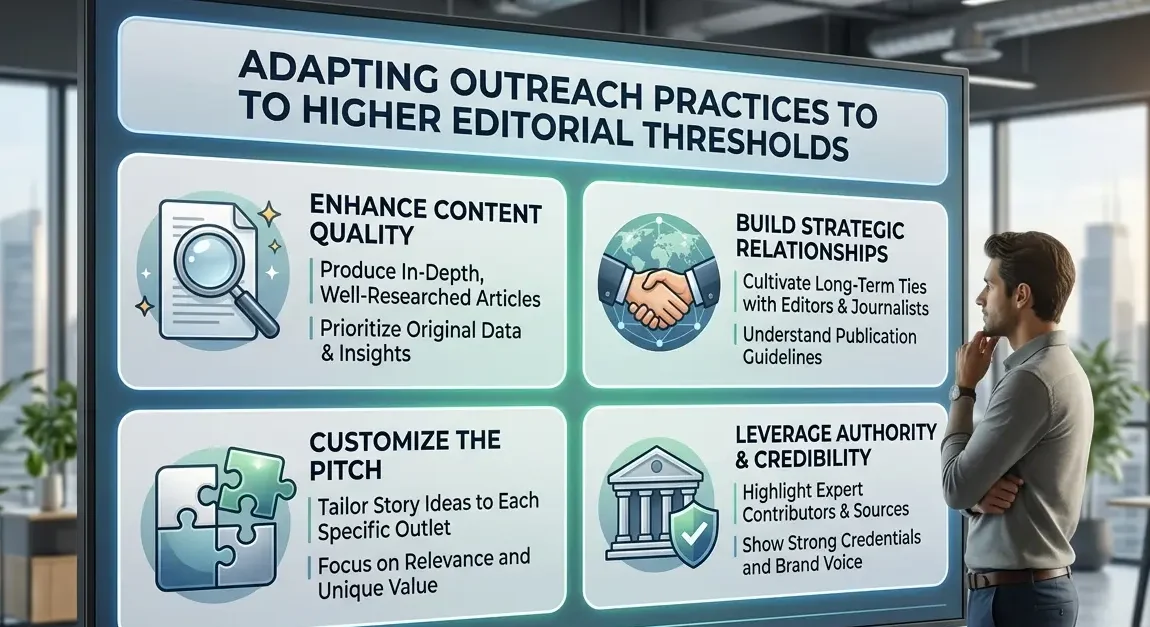
Segmentation must move from list‑centric to editor‑centric modelling. Instead of 10,000‑person lists, successful 2025+ campaigns use 1,000–2,000‑journalist segments structured by outlet, tech‑beat, and story‑cycle. The 2025 Mailflow Integrity Index reported that beat‑specific segments achieved 9.5–12.3% reply‑rates, while 10,000‑person generic lists managed only 1.7–2.4%. The difference is not volume. It is relevance.
Personalisation needs to cite live content, not generic roles. Editors reported that copy referencing a specific article, date, or data‑point earned 63% more replies than mail that used only job‑title or beat‑name. The more the copy mirrors the outlet’s own style, the more the system classifies the sender as editorial‑adjacent rather than marketing‑adjacent.
Copy disciplines must be enforced. Use 1–2 links, 1 data‑point, 1 named‑story‑cycle reference, and 1 named‑outlet question. Remove urgency‑phrases, repeated claims, and generic “solutions”‑language. The 2025 Outreach Efficacy Survey found that teams that adopted these rules increased their editor‑reply‑rate from 3.1% to 9.8% within 12 weeks. The structural shift was more decisive than any new software tool.
30 day outreach training must emphasise editorial‑workflow alignment. Writers need to learn how to read outlets, track story‑cycles, and time pitches within the 48–72‑hour window after publication. The more a campaign behaves like an editorial‑workflow add‑on rather than an external promotional channel, the higher the engagement and the stronger the inbox‑placement profile.
Future‑proof outreach is less about volume and more about fit. When copy, segmentation, and timing all align with editorial behaviour, the systems that route email begin to treat the sender as part of the editorial‑ecosystem rather than an external marketing‑atom. This alignment, not persuasion, defines the most effective outreach patterns moving forward.
Ready to get your story published?
Distribute your press release across 500+ trusted media outlets — with editorial review and a full pickup report within 48 hours.
Send Press Release →