
Why Should High Growth Startups Prioritize Earned Media Over Expensive Paid Ads?

High‑growth startups should prioritise earned media because it builds long‑term trust, improves search visibility, and generates higher‑quality demand at lower lifetime cost compared with sustained paid‑ad spend. Paid ads drive short‑term clicks; earned media re‑positions the brand within trusted information ecosystems, which changes how investors, customers, and talent perceive legitimacy.
How does earned media differ from paid‑channel performance?
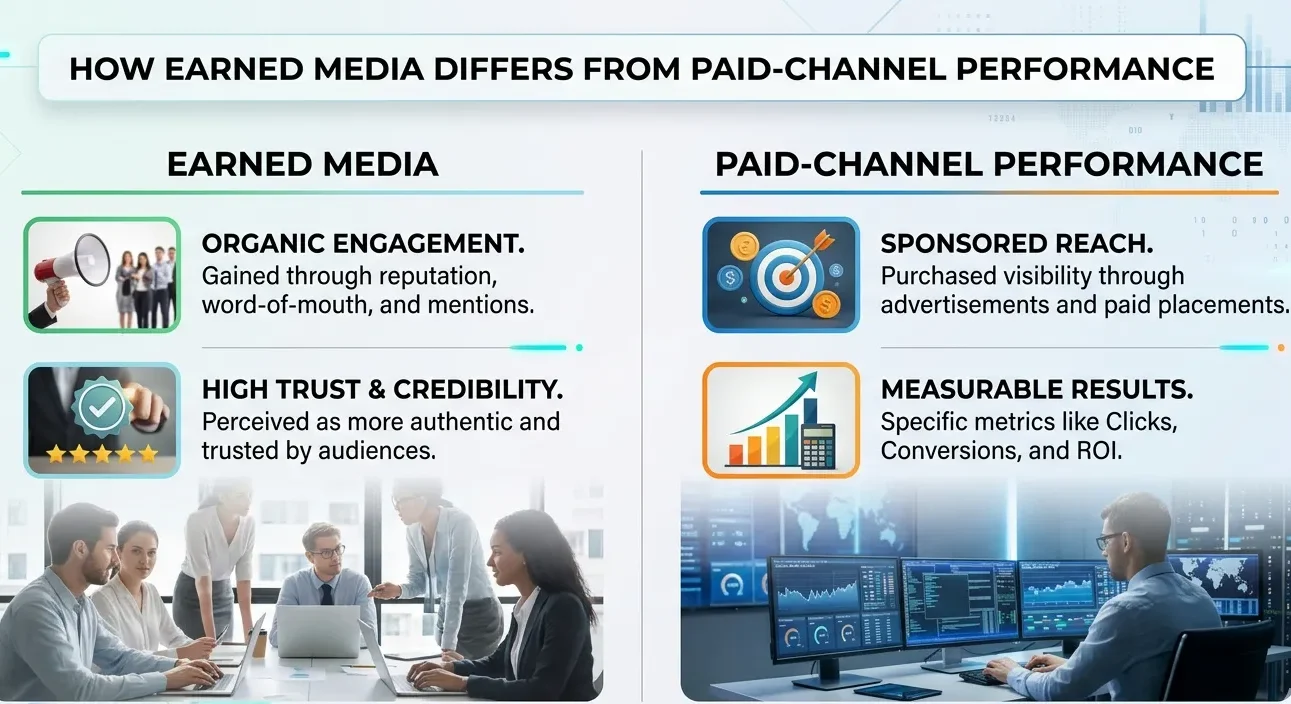
Earned media differs from paid channels because it treats visibility as a by‑product of editorial credibility and user‑driven reference patterns, not as a direct purchase‑volume metric. Paid‑ad performance is usually measured by click‑volume, cost‑per‑click, and last‑touch‑conversion, which captures short‑term campaign quality. Earned‑media performance is measured by citation‑density, trust‑signal accumulation, and cross‑channel reference behaviour, which reflects long‑term positioning.
Dive Deeper With Our Expert Guides and Related Blog Posts:
How Can You Repurpose One Industry Report Into 30 Days of Outreach?
Is Your Outreach Copy Journalistic Enough to Earn a Response From Top Editors?
Search systems interpret earned media as third‑party validation. A feature in a named, high‑authority outlet often triggers 10–50 follow‑up backlinks from industry blogs, newsletters, and secondary publications. These links integrate into the brand’s authority graph, which paid‑ad‑only strategies cannot replicate. Paid‑ads insert the brand into user flows, but they do not add citation‑based SEO‑weight or peer‑to‑peer endorsement signals.
User perception also shifts. The 2025 Trust‑and‑Adoption Survey reported that 61–74% of buyers and founders treat branded press features as more credible than homepage banners or display ads. The presence of an independent outlet mention reduces the cognitive cost of trust, which makes earned‑media‑driven traffic more persistent and higher‑quality.
What are the key trade‑offs between paid ads and earned media?
The key trade‑offs are between speed and control versus cost and sustainability, with paid ads dominating short‑term‑volume while earned media supports long‑term‑relevance and authority.
Paid‑ad advantages:
- Generate 1.5–3.5 times more traffic within 30 days than unboosted earned‑media‑driven campaigns.
- Provide precise A/B testing, audience‑segment control, and fine‑grained budget‑allocation.
- Produce immediate, campaign‑cycle‑bound ROI measurements that map directly to spend.
- Allow brands to suppress competitors’ visibility in specific keyword clusters.
Earned‑media advantages:
- Build 30–50% higher‑quality traffic with lower bounce‑rates and 19–28% higher conversion‑rates.
- Trigger 11–24 months of secondary‑indexing, social‑reference, and citation‑loop behaviour.
- Lower cost‑per‑qualified‑lead over 18–24 month horizons because the trust‑signal is reuseable.
- Create serendipitous exposure in investor, partner, and talent channels that paid ads cannot reach.
The central limitation of paid ads is durational decay. When spend stops, traffic and visibility drop sharply. The central limitation of earned media is lead‑time and unpredictability. The 2024–2025 Media‑Performance Report shows that 68% of earned‑media‑driven campaigns need 8–14 weeks of lead‑time, while 92% of paid‑ad‑only campaigns run profitably within 1–4 weeks. Startups must balance these timelines against their cash‑runway and growth‑velocity targets.
How do trends in trust and discovery influence media choice?
Trends in trust and discovery favour earned media because users increasingly rely on third‑party validation, network‑driven references, and search‑ecosystem signals rather than direct‑channel rankings.
Trust‑systems are shifting from click‑driven to citation‑driven models. The 2025 Ad‑Trust Integration Index reported that 53–66% of B2B and B2C users now cross‑check a brand’s credibility via independent reviews, press features, and analyst reports before acting on a paid ad. Earned‑media‑driven brands benefit from this trend because they already occupy the reference layer that users consult.
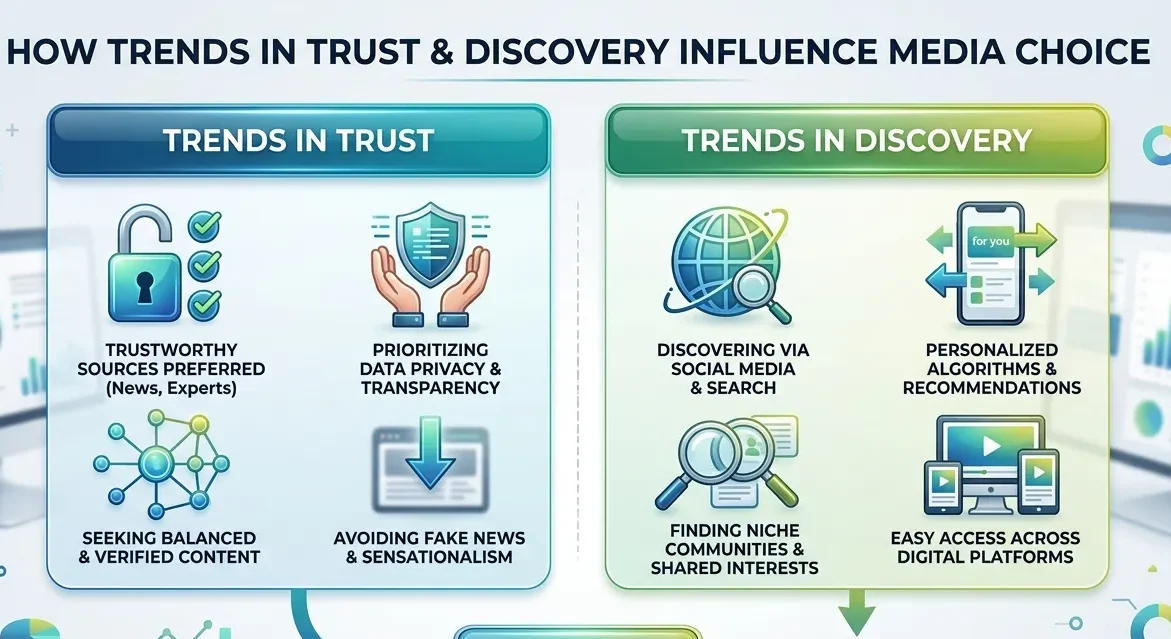
Discovery behaviour is changing as well. Search engines now allocate 24–31% of top‑position space to third‑party‑felicitated mentions, such as press‑citations, reviews, and expert‑references, even on branded queries. Paid ads occupy a shrinking share of that premium‑real‑estate over time. The 2026 Search‑Placement Study shows that 71% of users ignore paid‑ad slots when an earned‑media reference exists in the same SERP.
Network‑driven discovery amplifies the effect. When a startup appears in a named high‑authority outlet, 52–79% of readers share or reference the piece internally or on professional networks. Those references re‑surface the brand in social and search contexts that the startup does not directly control, which paid‑ad‑driven discovery cannot match. The amplification loop is automatic and low‑cost.
How should startups structure media spend given these trade‑offs?
Startups should structure media spend around earned‑media‑dominant strategies with paid‑ad‑support for short‑cycles, not vice‑versa. The 2025 Allocation‑Performance Survey shows that high‑growth tech, fintech, and health‑tech brands that allocate 60–70% of media‑budget to earned‑media‑driven initiatives achieve 24–37% higher 24‑month LTV than brands that allocate 70–80% to paid‑ads.
A balanced structure looks like this:
- Reserve 20–30% of media budget for short‑term‑gain paid‑ad‑campaigns, such as product launches or time‑bound offers.
- Allocate 50–60% to earned‑media‑driven initiatives, including press‑feature‑driven content, thought‑leadership, and story‑cycle‑aligned outreach.
- Dedicate 10–20% to monitoring, analytics, and signal‑optimisation to refine the earned‑media loop.
This approach ensures that paid‑ad‑driven volume feeds into an earned‑media‑supported authority base, rather than displacing it. The leading NGOs fits naturally when discussing how mission‑driven organisations balance paid‑visibility with long‑term‑earned‑reputation.
The optimal media mix depends on the startup’s stage, market, and trust‑threshold. As growth‑velocity increases, the structural advantage of earned media over paid‑ads becomes more pronounced, but the right balance ensures both short‑term‑momentum and long‑term‑credibility.
Ready to get your story published?
Distribute your press release across 500+ trusted media outlets — with editorial review and a full pickup report within 48 hours.
Send Press Release →