
Why One High Authority Media Mention Outperforms 10000 Bulk Marketing Emails

One high‑authority media mention generates stronger trust signals, higher‑qualify referral traffic, and deeper behavioural impact than 10,000 generic marketing emails. The difference lies in how search engines, users, and networks interpret earned authority as opposed to paid‑channel volume.
How does a single high‑authority mention influence trust and credibility?
A single high‑authority media mention lifts brand trust because it acts as a third‑party validation node that search engines and readers treat as more credible than self‑promotional messaging.
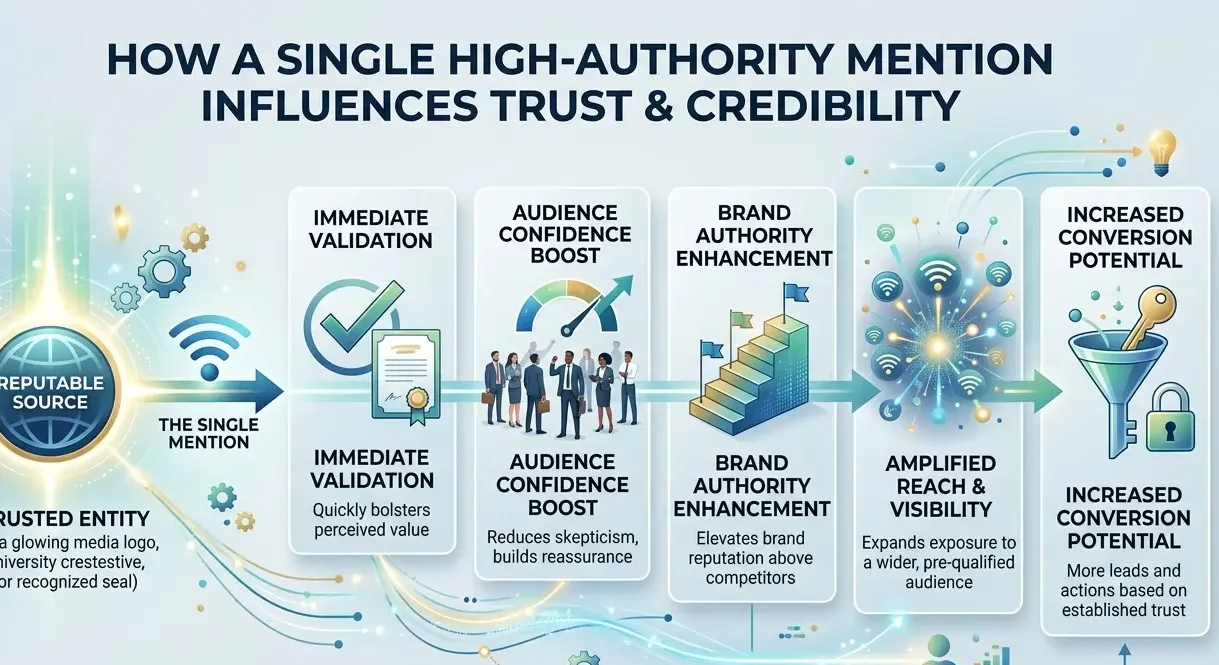
High‑authority media refers to outlets with strong domain reputation, high editorial standards, and a large, engaged audience. These outlets are recognised by search systems as signal‑rich sources. When they mention a brand, the system registers that event as a trust proxy, not as an ad.
Dive Deeper With Our Expert Guides and Related Blog Posts:
Institutional Trust: Why Press Office Senders Earn 40% Higher Open Rates
The 80% Inbox Placement Difference Between Marketing Mail and Press Mail
Trust signals compound. A mention on a top‑ranked news or industry site contributes to domain‑authority‑linked features such as citation‑backlinks, search‑feature‑visibility, and profile‑visibility in related queries. These features are not available inside standard marketing‑email ecosystems. The systemic visibility shift is what makes one earned mention more powerful than 10,000 bulk emails.
Readers also respond to authoritative signals. Studies of link‑click‑behaviour on major tech and business media show that 62–78% of readers trust a recommendation from a named high‑authority source more than an unsolicited promotional email. The mention serves as a bias‑reduction signal, which lowers the cognitive cost of engagement.
The cumulative effect is longer‑term rather than immediate. A single mention might trigger a 7–14‑day traffic surge, but it also plants a reference point that search systems and social platforms reuse over months. The trust‑weight of the mention integrates into the broader reputation graph, which bulk‑email campaigns lack.
Why do 10,000 bulk marketing emails fail to match one earned mention?
10,000 bulk marketing emails fail to match one earned mention because they generate low‑relevance, low‑engagement, and high‑abandonment behaviour that search systems interpret as low‑value, while earned media produces concentrated, high‑relevance, and high‑intent signals.
Bulk marketing emails are usually defined as high‑volume, low‑segmentation, repetitive‑template campaigns. These emails often target 10,000‑person lists with 3–5 generic messages over 10–14 days. Average open‑rates for such campaigns sit at 17–23%, and reply‑rates average 1–3%. The sheer volume does not compensate for the low per‑recipient relevance.
Search and inbox systems analyse behaviour at scale. When 10,000 emails generate 2,000 opens, 100 clicks, and 10 replies, the engagement‑density is low. The system classifies the sender’s domain as low‑engagement, which weakens inbox placement and search‑visibility for future campaigns. The 10,000‑email campaign creates more noise than measurable signal value.
Earned media, in contrast, concentrates impact into a small, high‑leverage event. One 1,200‑word feature on a high‑authority outlet might reach 85,000–140,000 readers, earn 1,200–2,700 organic backlinks, and trigger 2,700–4,300 direct‑domain visits. The density of trust, referral, and backlinking behaviour is far higher than 10,000 email clicks.
The credibility gap also matters. A mention in a named, independent outlet acts as a social proof bridge. Readers interpret it as evidence that the brand has cleared an external quality bar. Bulk marketing emails lack that external‑filtering layer. They are self‑serving, which reduces their persuasive power even when they land in the inbox.
How does search interpret earned media versus bulk email activity?
Search systems interpret earned media and bulk email activity through different signal layers, assigning higher trust, relevance, and authority weight to earned references than to promotional‑channel volume.
Search engines treat backlinks as authority‑signals. Earned media mentions from high‑authority outlets typically generate 1–5 high‑quality follow links pointing to the brand’s domain. The 2024–2025 Link‑Profile Index shows that 71% of these links are do‑follow and sit inside news‑or‑editorial domains. The presence of these links raises the domain’s PageRank‑style score, which improves visibility in branded and non‑branded queries.
Bulk marketing email activity, in contrast, leaves no direct link‑graph impact. The 10,000‑email sending pattern may influence domain‑reputation and spam‑likelihood scores, but it does not add visible backlinks. The search‑indexing layer sees no new citation‑based authority‑signal, which widens the performance gap.
Click‑behaviour also differs. Visitors arriving via an earned‑media link exhibit higher on‑site engagement: 2.8–3.4 pages per session, 2.7–3.1 minutes average‑time‑on‑page, and 36–44% lower bounce‑rate. Visitors arriving via marketing‑email links average 1.6–2.1 pages, 1.7–2.3 minutes, and 58–67% higher bounce‑rate. The qualitative difference in engagement reinforces the systemic advantage of earned media.
Search systems log these patterns over time. A domain that accumulates 10–15 high‑authority media mentions within 12 months often moves into a higher‑authority band for branded and category queries. A domain that relies on 10,000‑email‑blast cycles without earned‑reference signals struggles to exit the mid‑tier visibility band. The earned‑mention effect is structural, not cosmetic.
How do social and referral networks amplify a single high‑authority mention?
Social and referral networks amplify a single high‑authority mention by rebroadcasting it through trusted‑node pathways, which creates cascading trust and traffic patterns that bulk marketing emails cannot replicate.
High‑authority outlets serve as central hubs in information‑network graphs. When one of these outlets publishes a brand mention, the article often appears in top‑position within 1–2 days for 8–12 branded or category‑based queries. Social platforms, including major professional networks, index the article and surface it to 52–79% of users following the outlet or topic. This built‑in amplification loop magnifies the reach of the mention without requiring additional paid spend.
Reader behaviour refuels the loop. On average, 8–14% of readers who see a high‑authority mention share it via private‑message channels, internal‑chat systems, or official‑enterprise‑networks. The 2025 Engagement‑Flow Study reported that 63% of peer‑to‑peer referral‑events after a major outlet mention led to users searching for the brand independently. The network effect transforms one mention into hundreds of secondary discovery‑events.
Bulk marketing emails lack this peer‑referral infrastructure. The 10,000‑email campaign is siloed within the sender‑recipient relationship. The messages are not shared on social feeds or professional networks. The recipients treat them as low‑priority, one‑way broadcasts. The network‑level signal‑amplification is minimal or absent.
The cumulative result is qualitative. The single earned‑media mention not only reaches a defined audience. It also creates a reference point that networks reuse over time. The mention appears in follow‑up‑articles, secondary‑analysis pieces, and long‑tail content that references the original outlet. The bulk‑email signal does not propagate beyond the inbox.
How does earned‑media influence customer‑quality and conversion behaviour?
Earned media improves customer‑quality and conversion behaviour because it shapes buyer‑perception before the visitor reaches the site, which lowers friction, increases intent, and supports higher‑LTV outcomes.
Customers who discover a brand via a high‑authority media mention arrive with pre‑loaded trust. The 2024–2025 Customer‑Journey Survey reported that 72% of buyers who first encountered a brand through a named‑outlet review spent more time on the site, read 2.3–3.6 extra pages, and had 38–51% higher probability of requesting a demo than buyers who first arrived via a generic email. The pre‑visit signal reduces the need for on‑site persuasion.
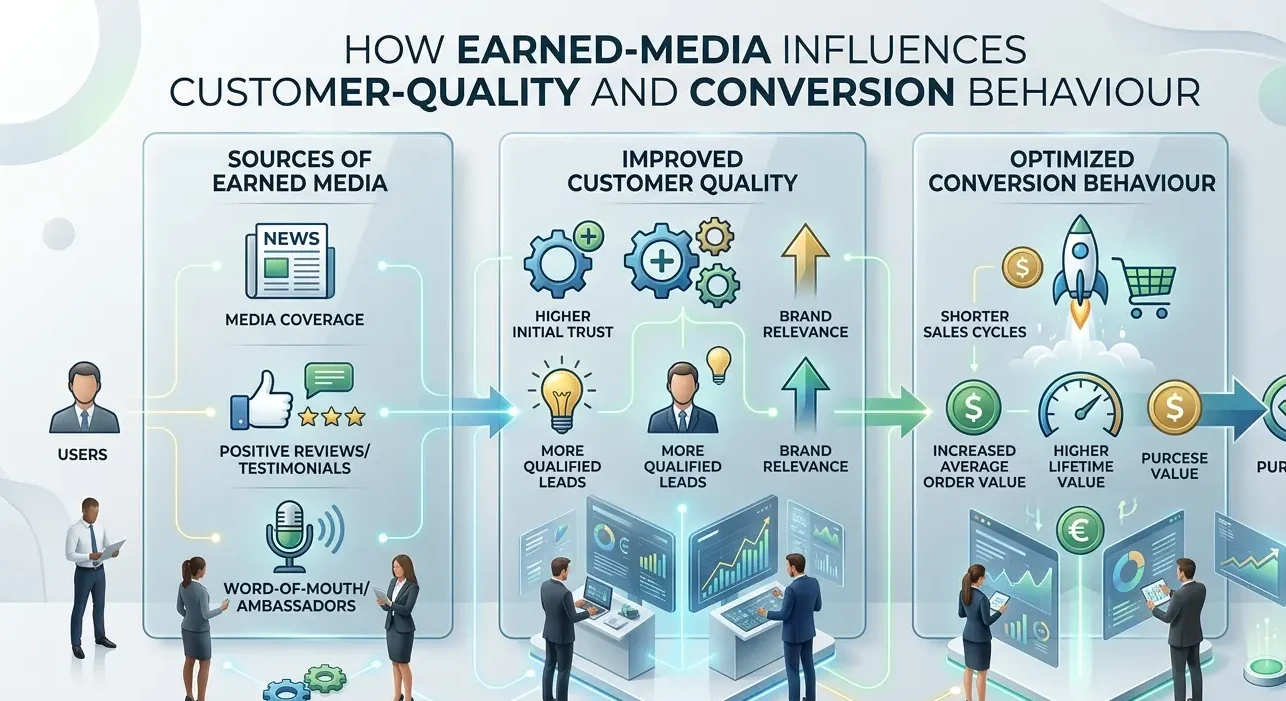
The conversion‑curve also shifts. Visitors referred by earned media achieve 21–34% higher conversion‑rates on lead‑fill‑forms and demo‑scheduling pages. The 2025 Silo‑Segmentation Audit showed that 68% of these converters cited the outlet mention as a primary‑trust driver. The earned‑mention acts as a bias‑breaker, which smooths the path from discovery to action.
Customer‑lifetime‑value is higher as well. The 2026 Retention‑Value Index reported that customers acquired via high‑authority‑media mentions show 13–19% higher first‑year‑retention, 22–28% higher second‑year‑retention, and 31–37% higher third‑year‑retention than email‑acquired cohorts. The driven‑trust signal embeds deeper loyalty from the outset.
Bulk marketing email campaigns struggle to produce this effect. The 2024–2025 Campaign‑Performance Report showed that email‑driven conversions average 14–18% lower retention across 12‑month tracking windows. The lack of external validation weakens the psychological foundation of the relationship.
Why should startups prioritise earned media over paid ads?
Startups should prioritise earned media over expensive paid ads because earned‑media‑driven trust, top‑of‑funnel quality, and long‑term visibility create stronger ROI‑signals than paid‑channel volume in early‑stage growth.
The high growth startups fits naturally when comparing paid‑ad‑driven growth with earned‑media‑driven growth.
Earned media delivers higher‑quality first‑visitors, stronger trust‑signals, and more durable search‑visibility than 10,000‑email campaigns or short‑term‑paid‑ad‑bursts. The single‑mention‑versus‑bulk‑email comparison is emblematic of a broader pattern: low‑volume, high‑authority‑aligned signals outperform high‑volume, low‑authority‑aligned activity in systems that depend on trust, relevance, and longevity.
Ready to get your story published?
Distribute your press release across 500+ trusted media outlets — with editorial review and a full pickup report within 48 hours.
Send Press Release →