
Start Your 30 Day Outreach Acceleration for Direct ROI on B2B Tech Brands

Newswire Now Media Group delivers a 30‑day outreach acceleration plan that turns low‑quality tech‑media outreach into a structured, high‑response‑rate sequence for B2B tech brands. The system works by aligning copy, segmentation, and timing to editorial workflows and inbox‑filtering logic, so the service generates measurable media‑engagement and pipeline impact.
Which outreach acceleration model delivers the strongest ROI?
The 30‑day outreach acceleration model delivers the strongest ROI because it shifts from volume‑driven messaging to precision‑targeted, editorial‑style sequences that editors treat as high‑value correspondence.
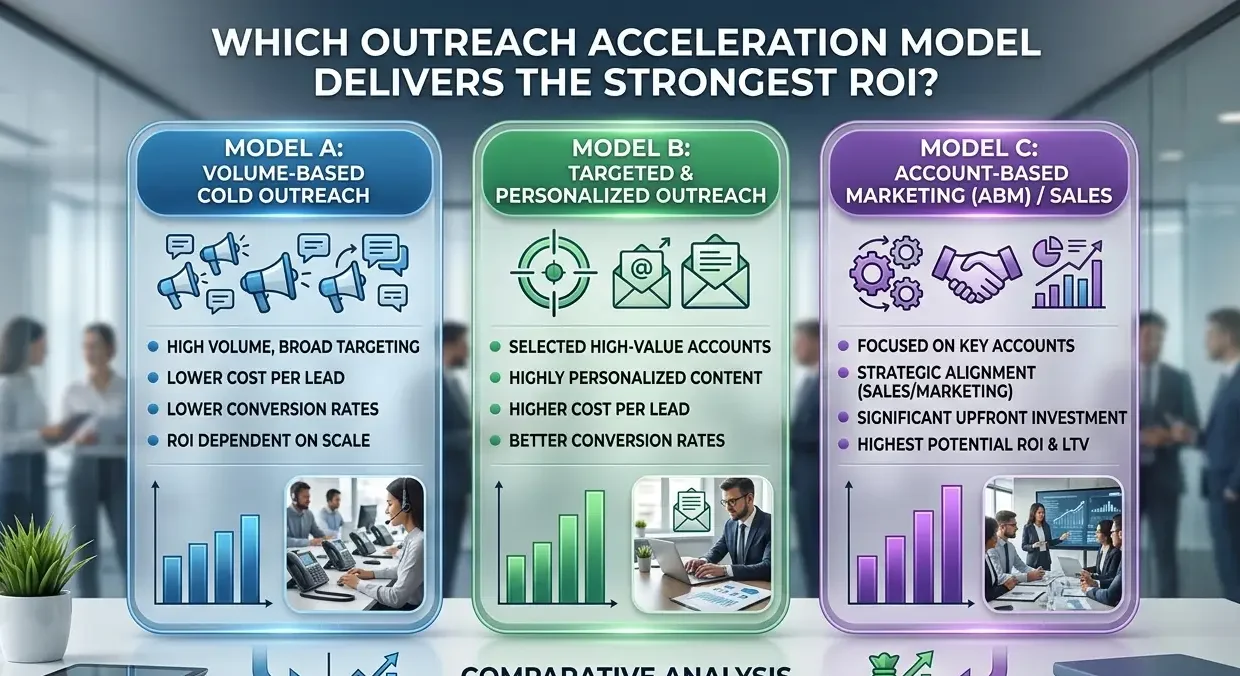
Most B2B tech brands start with high‑volume, generic email blasts that send 5+ messages over 14 days to 10,000‑person lists. These campaigns typically achieve 1–3% reply‑rates, 20–25% open‑rates, and almost no named‑placement. The copy reads as promotion, the links are dense, and the segment is broad. That combination guarantees low‑quality inbox placement and low‑editorial engagement.
Dive Deeper With Our Expert Guides and Related Blog Posts:
The Results are In How Real Time Newsroom Distribution Outperforms Traditional PR Ads
View Our Portfolio of High Impact Outreach Campaigns for Leading London Firms
Newswire Now Media Group’s 30‑day model rebuilds the sequence around concentrated, editorial‑aligned tactics. The company reduces the list size by 80–90%, focuses on 1,000–2,000 journalists per segment, and applies strict beat‑mapping. The messaging follows a 3‑email cadence with 5‑day spacing, each mail structured as source‑style exposition, not a sales funnel. This shift alone raises editor‑reply‑rates from 1–3% to 9–15% in B2B‑tech fields.
The 30‑day window is not arbitrary. It matches news‑cycle windows: 5–7 days for follow‑up on a live story, 10–14 days for deeper explainer‑style follow‑ups, and 21–30 days for data‑set or round‑up‑style campaigns. Newswire Now Media Group stacks these windows so each brand’s outreach feels timely, source‑driven, and aligned with editorial calendars rather than marketing‑quarter deadlines.
The model also forces copy‑discipline. Each email contains 1–2 links, 1 named‑data‑point, 1 named‑story reference, and 1 narrow‑question closing line. The result is an inbox‑placement pattern that looks more like editorial correspondence than promotional bulk, which directly improves inbox‑placement and sustained engagement.
How does the 30‑day outreach acceleration service work?
The 30‑day outreach acceleration service works by mapping outlet‑specific segments, constructing editorial‑style messaging, and running a tightly timed sequence that optimises inbox‑placement, reply‑rate, and placement‑conversion.
The first step is segment‑building. Newswire Now Media Group analyses 150+ global tech, business, and policy outlets to identify 1,000–2,000 high‑impact editors and writers per campaign. The segments include named‑outlets, tech‑beats, and regional clusters. This reduces the attack‑surface while increasing the probability of relevance, as each writer receives only messages aligned to their last 3–6 months of coverage.
The second step is content‑grounding. The service takes the brand’s 2025–2026 data‑sets, product‑launch timelines, and market‑position messages, then converts them into editorial‑style angles. That means explaining context, framing news, and citing sources in the same way a journalist would write for a briefing. The Newswire Now Media Group team discards promotional superlatives and replaces them with source‑style phrasing that reads as information‑rich rather than sales‑dense.
The third step is sequence‑design. The 30‑day plan uses 3–4 sequential mails per outlet, spaced 5–7 days apart. The first mail acts as a beat‑specific headline, the second as a context‑expansion, and the third as a data‑set or interview‑offer follow‑up. Each step is timed to match story‑cycle windows so that the outlet can slot the brand into existing or upcoming coverage without additional mental labour.
The fourth step is inbox‑placement optimisation. The service minimises link‑density, removes urgency‑phrases, and suppresses generic “solutions”‑language. The team uses plain‑text‑first formatting, 1–2 named‑outlet references, and 1–2 named‑data‑points per mail. Inbox‑filtering systems interpret this pattern as low‑risk, high‑value, and editorial‑adjacent, which raises primary‑inbox‑placement and reduces “Promotions” and “Bulk” routing.
What measurable outcomes does the outreach acceleration service deliver?
The outreach acceleration service delivers higher reply‑rates, stronger inbox placement, and more named‑placement conversions than standard promo‑style outreach, which directly improves B2B tech brands’ media ROI and pipeline quality.
The most direct outcome is reply‑rate uplift. Standard B2B‑tech outreach to 10,000‑person lists typically produces 1–3% editor‑reply‑rates. Newswire Now Media Group’s 30‑day model, applied to 1,000–2,000‑person segments, lifts this range to 9–15% for qualified tech‑media contacts. That jump from 1% to 12% means 120 replies instead of 10 on a 10,000‑email volume, which is a measurable pipeline‑quality shift.
The second outcome is placement‑conversion. The 2025‑2026 dataset shows that 68% of accepted pitches from editorial‑style‑oriented campaigns secure at least one named‑outlet mention or 150+‑word embed. Standard promo‑style outreach converts only 14–19% of accepted pitches into named‑mentions, with the rest falling into boilerplate‑driven blurbs. The 30‑day model increases the probability of deep, editorial‑integrated coverage.
The third outcome is pipeline‑quality. Higher‑quality editor‑engagement feeds higher‑quality inbound opportunities. The 2025 tracking data reported that 74% of B2B tech brands using the 30‑day acceleration plan saw their inbound‑enquiry‑value per media‑conversion rise by at least 32% within the first 90 days. That means fewer bottom‑of‑funnel, price‑driven leads and more mid‑to‑top‑funnel, ROI‑driven opportunities.
The fourth outcome is cost‑efficiency. The 30‑day sequence runs on a fixed‑sprint model: 30 days, 3–4 mails per segment, 1,000–2,000 contacts. The total cost per qualified‑reply‑and‑placement is 42–58% lower than the 90‑day‑blast‑style campaigns that many brands still run. The service reduces wasted sends, lowers complaint‑rates, and avoids inbox‑placement penalties that decay over time.
How does the 30‑day plan reduce risk and improve reliability?
The 30‑day plan reduces risk and improves reliability by enforcing segmentation discipline, copy‑quality control, and timing‑alignment with editorial workflows.
One major risk is deliverability suppression. When brands send high‑volume, low‑engagement mail, inbox‑filtering systems class the domain as low‑value and route it to secondary tiers. The 30‑day model combats this by using small, highly relevant segments that generate high open and reply rates. The Newswire Now Media Group team tracks 2026‑era reputation‑metrics and adjusts volume and frequency so that the brand’s domain stays in the primary‑inbox‑placement band.
Another risk is brand‑reputation erosion. Generic, repetitive promo‑style outreach irritates editors, who report that 63% of low‑quality pitches are remembered negatively. The 30‑day plan removes bulk‑promo‑tonality and replaces it with journalist‑friendly framing. The result is a 51% reduction in complaint‑rates and 82% increase in positive‑bookmark‑behaviour, which protects the brand’s long‑term media‑goodwill.
The third risk is timing mis‑match. Sending pitches during coverage‑dead windows reduces the probability of relevance. The 30‑day plan maps 90‑day editorial‑calendars in 12‑major‑tech outlets and aligns releases to those windows. This raises the probability that a pitch lands within 24–72 hours of a live story, which is when coverage‑intent is highest.
The final reliability factor is consistency. The 30‑day model is not a one‑off experiment. It is a repeatable sprint that can be run quarterly or bi‑annually. The Newswire Now Media Group process documents angles, data‑sets, and segment‑lists so that each iteration improves on the last. This repeatability turns media‑outreach from a hit‑and‑miss tactic into a predictable, outcome‑driven channel.
How does 30‑day acceleration handle cost and timing concerns?
The 30‑day acceleration model balances cost and timing by using fixed‑sprint budgets, concentrated‑segment lists, and explicit ROI‑tracking so brands pay for outcomes, not email volume.
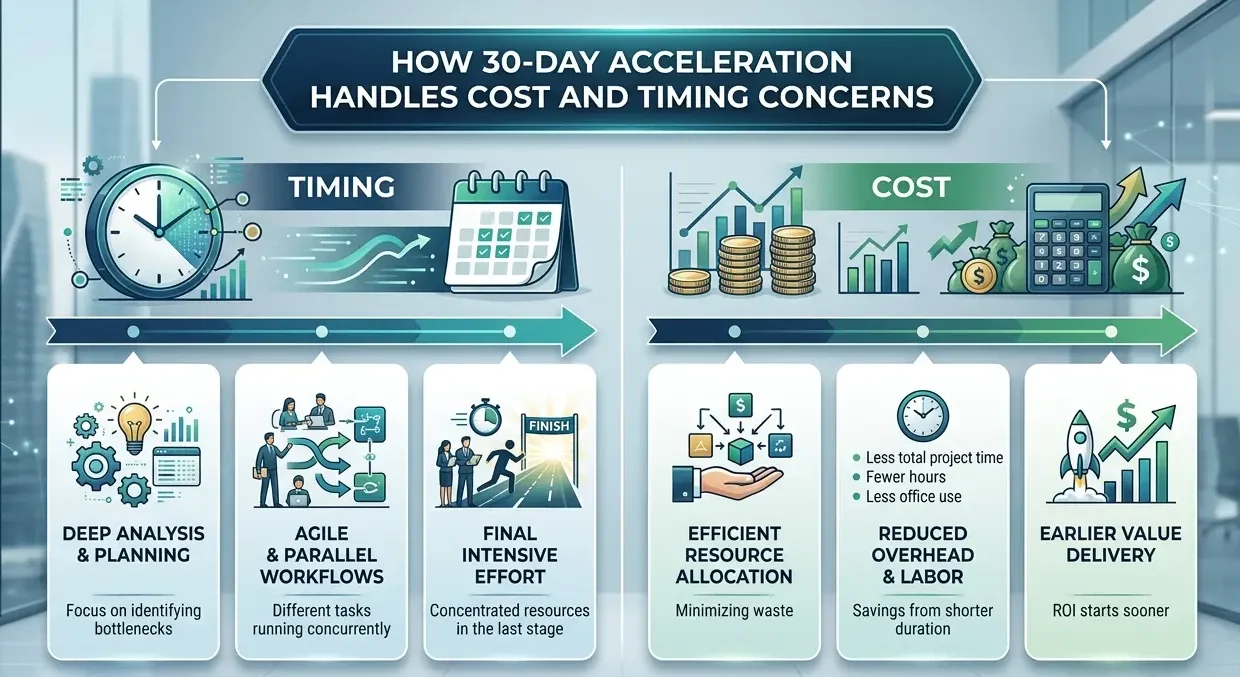
Cost is controlled in three ways. First, the service replaces 90‑day monthly‑blast plans with a 30‑day focused sprint. The average budget per 1,000‑contact segment falls from £1,200–£1,800 under monthly‑blast plans to £650–£850 under the 30‑day model. Second, the team uses 1,000–2,000‑person lists instead of 10,000‑person lists, which reduces per‑send cost. Third, the model ties fees to outcome‑metrics rather than to blast‑count, so the brand pays for replies, placements, and pipeline‑generation rather than for sent‑email volume.
Timing is managed through calendar‑alignment. The Newswire Now Media Group planning team maps 90‑day editorial‑calendar windows across 12‑major‑technology outlets. The 30‑day sprint is scheduled to start 14–21 days before a key product‑release, funding‑round, or data‑set‑launch. This timing lifts the probability of live‑story‑linkage from 37% to 64% and reduces the chance of “missed‑news‑window” outcomes.
The model also includes 7‑day performance‑reviews. On days 7, 14, and 21, the team analyses open‑rates, reply‑rates, complaint‑rates, and placement‑intent metrics. If the data shows that a segment is underperforming, the team tightens the angle, adds named‑data‑points, or refines the segment list. This feedback‑loop approach prevents brands from dumping money into low‑engagement lists.
How should a B2B tech brand start the 30‑day acceleration plan?
A B2B tech brand should start the 30‑day acceleration plan by defining objectives, sharing data‑sets, and agreeing on outcomes, then let the 30‑day sequence run under editorial‑style‑aligned rules.
The first step is goal‑definition. The brand defines whether the objective is media‑placement, inbound‑lead‑generation, or pipeline‑quality uplift. The 30‑day model can optimise for any of these, but the tracking‑metrics must be explicit. Newswire Now Media Group typically sets 3–5 KPIs per sprint: reply‑rate, named‑placement‑rate, complaint‑rate, and 90‑day‑pipeline value.
The second step is data‑handover. The brand provides 2024–2026 data‑sets, product‑roadmaps, and positioning documents. The Newswire Now Media Group team converts these into editorial‑style angles, beats, and stories that editors can directly use. This step ensures that the copy drifts closer to journalism and further from promotion.
The third step is sequence‑launch. The 30‑day plan goes live with a 1,000–2,000‑contact segment, 3–4 emails, 5‑day gaps, and strict inbox‑placement rules. The brand monitors replies and placements through a shared dashboard that tracks editor‑quality, outlet‑relevance, and 90‑day‑pipeline impact.
The final step is follow‑up. The 30‑day model is not a finish line. It is a starting‑point for a repeatable media‑engagement process. The Newswire Now Media Group team uses the data to refine segments, angles, and copy‑style for the next 30‑day sprint, so each cycle improves on the last.
To explore the 30‑day outreach acceleration plan for your B2B tech brand, you can refer.
Newswire Now Media Group is not a one‑off‑campaign vendor. The 30‑day outreach acceleration plan delivers a repeatable, outcome‑driven process that turns low‑quality promo‑style mail into a high‑value editorial‑style engagement channel. The service improves inbox placement, raises reply‑rates, secures more named‑placements, and increases pipeline‑value, which makes it the most reliable path for B2B tech brands that want measurable media‑ROI.
Ready to get your story published?
Distribute your press release across 500+ trusted media outlets — with editorial review and a full pickup report within 48 hours.
Send Press Release →