
The Ghosting Index: Why 8 out of 10 Journalists Ignore Startup Outreach

Eight out of 10 journalists ignore startup outreach because their inboxes are saturated with low‑relevance, template‑based, or sales‑driven pitches that fail to meet basic editorial standards. The Ghosting Index is a conceptual metric that reflects how likely a press pitch will be ignored based on its alignment with core‑journalistic‑principles such as relevance, newsworthiness, and source‑credibility.
What is the Ghosting Index and how do journalists apply it?
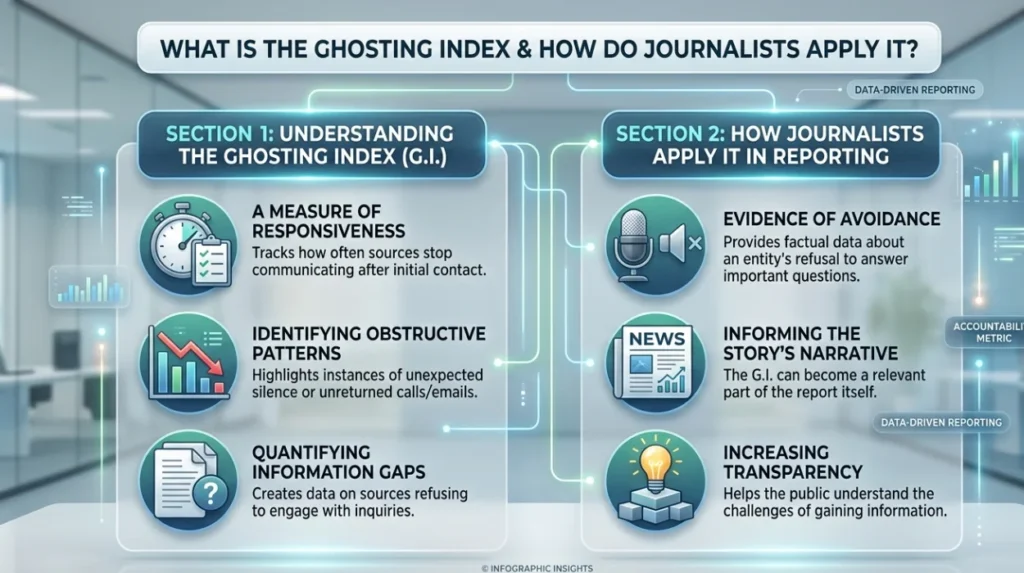
The Ghosting Index is an informal measure that predicts how likely an outreach message is to be ignored, based on its relevance, formatting, and alignment with a journalist’s beat and timeline. It operates on the principle that inbox‑overload pushes reporters to filter communications quickly, using heuristic‑rules that favour trusted, targeted, and low‑effort‑to‑read‑pitches.
Dive Deeper With Our Expert Guides and Related Blog Posts:
The 3 Second Rule: Why Most Media Pitches are Deleted Before Opening
Analyze the 60%t Reach Drop Caused by the Email Promotions Tab
Journalists do not consciously score each email with a number, but they consistently apply criteria that mirror the Ghosting Index. They scan for sender‑relevance, headline‑clarity, and evidence of prior‑knowledge of their work. Emails that appear generic, sales‑oriented, or poorly‑targeted are more likely to be deleted, archived, or ignored.
For example, an outreach message that addresses the wrong outlet, misspells the journalist’s name, or fails to indicate a clear‑angle scores high on the Ghosting Index. Conversely, a short, personalised‑pitch that links to a timely‑story‑hook and provides verifiable‑data scores very low.
How do journalists distinguish real press pitches from marketing spam?
Journalists distinguish real press pitches from marketing spam by checking for editorial‑alignment, source‑relevance, and the absence of overtly‑sales‑language or generic‑templates. A genuine‑pitch explains why the story matters to the public, cites specific‑data or events, and avoids phrases that read like product‑promotions.
Key‑differentiators include:
- Subject‑line clarity: a clear‑event‑or‑angle rather than “Great opportunity for you” or “Exclusive partnership.”
- Opening‑rationale: a one‑sentence‑summary that links the pitch to a broader‑trend, policy‑change, or verified‑development.
- Evidence‑support: inclusion of verifiable‑data, quotes, or documents that can be fact‑checked.
A press pitch that references recent‑articles the journalist has written, acknowledges their audience, and positions the startup as a source, not a client, is more likely to score low on the Ghosting Index. A mass‑blast‑style‑pitch that could be sent to any outlet falls into the spam‑zone.
Why do 8 out of 10 startup pitches fail to get a reply?
Eight out of 10 startup pitches fail to get a reply because they lack clear‑newsworthiness, are insufficiently‑targeted, or read like sales‑messages disguised as editorial opportunities. Journalists must prioritise queries that meet editorial‑standards, and low‑relevance‑outreach is quickly filtered.
Common‑reasons for failure include:
- Mismatched‑outlets: sending consumer‑tech‑stories to policy‑editors or local‑campaigns to national‑specialists.
- Missing context: not anchoring the startup’s news to a live‑trend, regulation, or public‑debate.
- Template‑tone: generic‑language that does not reference the journalist’s previous work or the outlet’s style.
Editors and reporters also rely on internal‑reputation‑filters. If a sender repeatedly submits off‑brief or self‑serving‑requests, their messages default into a higher‑Ghosting Index‑band, even if the next‑pitch would have been borderline‑relevant.
How does inbox overload shape the Ghosting Index in practice?
Inbox overload shapes the Ghosting Index by forcing journalists to triage messages quickly, using visual‑cues and first‑sentences that indicate whether an outreach aligns with their deadline‑pressures and story‑pipeline. High‑volume‑inboxes naturally favour low‑friction‑pitches that can be read and acted on in under 30 seconds.
Visual‑signals include subject‑line word‑choice, email‑length, and formatting. A wall‑of‑text, multiple‑attachments, or embedded‑forms increase the perceived‑effort‑cost. A concise‑pitch with one‑clear‑angle, one‑attachment, and a direct‑call‑to‑action reduces friction.
Editors also rely on sender‑history and domain‑trust. If a journalist has previously accepted a story from a particular contact, future‑pitches from that sender initially score lower on the Ghosting Index. If a domain or title has repeatedly produced spam‑or‑off‑brief‑submissions, its messages face higher‑automatic‑filtering.
How do press‑pitch timing and editorial calendars affect the Ghosting Index?
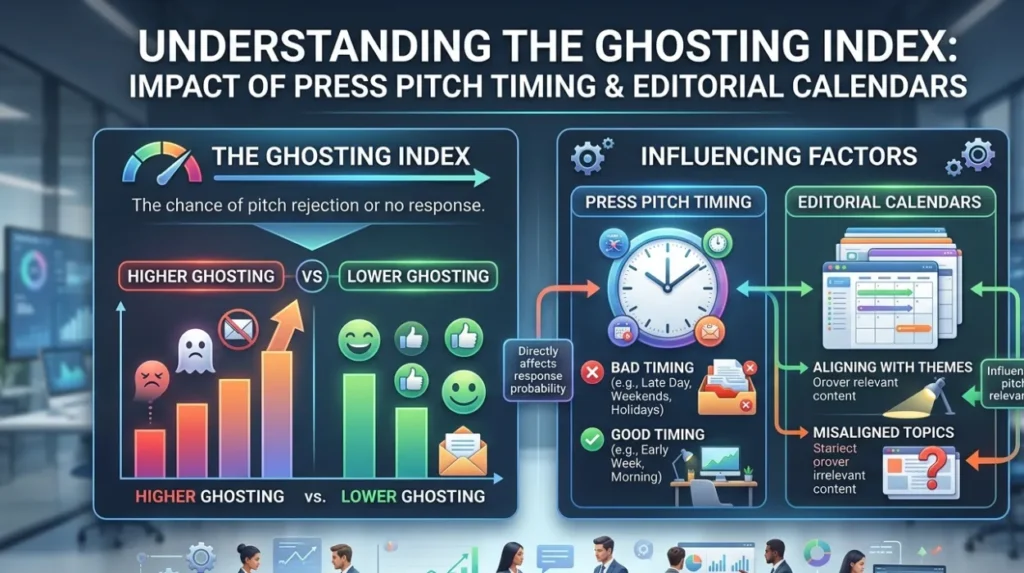
Press‑pitch timing and editorial calendars affect the Ghosting Index because journalists prioritise stories that fit their current‑commitments, not future‑or speculative‑narratives. A pitch that lands a week after a key‑event or misses a policy‑deadline automatically scores higher on the Ghosting Index.
Reporters and editors plan their coverage around fixed‑dates such as:
- Policy‑announcements (e.g. budget‑statements, regulatory‑launches).
- Statutory‑reports (e.g. ONS‑data‑releases, FCA‑guidance‑updates).
- Industry‑events (e.g. conferences, award‑ceremonies, Commons‑debates).
A pitch that directly supports these fixed‑points, offering fresh‑data, interviews, or case‑studies, is more likely to be read and integrated. A generic‑“we’re live now” or “thought‑leadership”‑message that does not link to a live‑narrative appears as noise rather than utility.
What role does relevance play in reducing a pitch’s Ghosting Score?
Relevance plays a central role in reducing a pitch’s Ghosting Score because it aligns the message with the journalist’s specific‑beat, audience, and ongoing‑coverage themes. A highly‑relevant‑pitch appears as a resource, not an interruption on How can journalists tell the difference between a press pitch and sales spam?.
Relevance is built on three‑layers:
- Beat‑alignment: the topic must fall within the journalist’s primary‑focus (e.g. fintech, health‑policy, local‑housing).
- Anchor‑to‑live‑narratives: the startup’s news must connect to a visible‑story‑thread, such as a new‑law, a public‑debate, or a recent‑scandal.
- Audience‑value: the explanation must show why the story matters to the outlet’s readers, not just to the startup.
A journalist who writes about open‑banking, for example, is more likely to see value in a startup‑pitch that references a recent‑PSD3‑consultation and provides verifiable‑usage‑stats, rather than a generic‑growth‑story about a new‑feature.
How does the Ghosting Index relate to email‑list‑hygiene and mass‑broadcast practices?
The Ghosting Index relates to email‑list‑hygiene and mass‑broadcast practices because undifferentiated‑outreach, outdated‑recipient‑data, and non‑segmented‑lists raise the likelihood of mismatched‑or‑expired‑journalistic‑contacts. A high‑Ghosting Score follows when a single‑pitch template hits hundreds of inboxes, many of which are no longer active or relevant.
Mass‑email‑and‑media‑outreach‑campaigns that ignore list‑segmentation, role‑context, or beat‑changes create friction for journalists. They receive repeated‑requests from senders who show no awareness of their current‑job‑title, employer, or coverage‑focus. This pattern reinforces the perception that the outreach is transactional, not editorial.
In contrast, a pitch list built on up‑to‑date‑data, role‑specific‑targeting, and beat‑verification reduces the Ghosting Index by aligning each message with a plausible‑editorial‑context. Editors can still ignore it, but they are less likely to treat it as spam.
The Ghosting Index operates as a practical reflection of how editorial workflows and inbox‑volume shape responsiveness to startup outreach. It is not a formal‑metric, but a pattern‑driven‑tool journalists use to manage attention and prioritise genuinely‑newsworthy‑submissions. By aligning with relevance, timing, and clear‑editorial‑value, outreach can reduce its Ghosting Score and move closer to the 2 in 10 pitches that receive replies.
FAQs
Why do journalists ignore most startup press pitches?
Journalists ignore most startup outreach because inboxes are saturated with low‑relevance, generic, or sales‑driven pitches that do not align with their beat, timing, or editorial standards. Startups that fail to personalise, anchor to live news, or demonstrate clear newsworthiness end up in the “Ghosting Index” band where replies are rare.
How can startups make their press pitches less likely to be ignored?
Startups can reduce the chance of being ghosted by tailoring each pitch to the journalist’s beat, referencing recent stories, and using concise, data‑driven, editorial‑style language instead of marketing copy. Segmenting outreach lists and aligning with editorial calendars also lowers the Ghosting Index for individual messages.
What is the Ghosting Index in media outreach?
The Ghosting Index is a conceptual measure of how likely a press pitch is to be ignored, based on relevance, targeting, and whether it reads like a genuine editorial opportunity or sales spam. It reflects the way journalists filter thousands of emails using heuristic cues such as subject line, sender reputation, and alignment with current stories.
How does mass email outreach affect a startup’s chances of getting coverage?
Mass email outreach increases the Ghosting Index because undifferentiated blasts to outdated or mismatched journalist lists often land off‑brief or with irrelevant contacts. Targeted, research‑based distribution lists that filter by beat, outlet, and current coverage dramatically improve the odds of a meaningful reply.
How can a press pitch stand out without sounding like marketing?
A press pitch stands out by focusing on the public‑interest angle, using clear, data‑backed language, and avoiding product‑centric claims that resemble advertising. Structuring the message around the journalist’s audience, timeline, and recent stories signals genuine editorial value instead of sales intent.
Ready to get your story published?
Distribute your press release across 500+ trusted media outlets — with editorial review and a full pickup report within 48 hours.
Send Press Release →