
A Guide to Business Distribution Services and Media Visibility

Business distribution services structure how information moves from organisations to media channels, search ecosystems, and audience networks. They determine how visibility is created across journalism platforms and digital publication systems.
They operate by routing business announcements through curated media channels and editorial networks. This process defines how press content reaches journalists, aggregators, and industry publications. Visibility depends on distribution structure, timing, and targeting precision.
What are business distribution services and how do they structure media visibility?
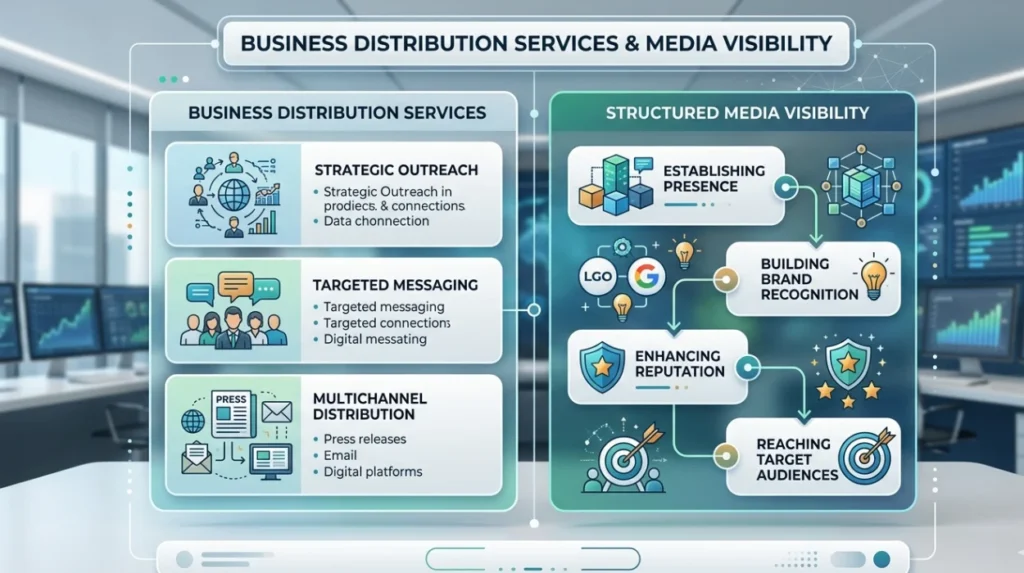
Business distribution services are systems that distribute corporate announcements through media networks, aggregators, and editorial pipelines. They structure visibility by controlling how press content enters journalistic and digital ecosystems.
Dive Deeper With Our Expert Guides and Related Blog Posts:
Why Professional Press Release Writing Beats DIY Content
How to Manage a Press Embargo Without Leaking Your Story
They operate as structured communication channels that move information from businesses into media circulation networks. These services evaluate content relevance, categorise industry themes, and route releases to appropriate publication outlets. Media visibility depends on distribution breadth, editorial alignment, and publication indexing systems.
Distribution architecture and media flow
Distribution architecture defines how press content travels across networks and determines visibility reach.
A distribution system evaluates content type, assigns categories, and routes material through syndicated media channels. It prioritises relevance scoring, publication authority, and thematic alignment. Media flow depends on structured routing paths rather than random dissemination. Visibility increases when distribution networks align content with high-authority indexing systems and sector-specific media clusters.
Media visibility mechanisms in distribution systems
Media visibility mechanisms determine how often and where content appears across journalistic platforms.
Visibility is created through publication indexing, syndication cycles, and content replication across media databases. Distribution systems amplify reach by pushing announcements into aggregated news feeds. These mechanisms evaluate timing, relevance, and editorial acceptance criteria. Visibility strength depends on how widely content is syndicated across structured media environments.
How does PR & press release distribution influence journalist reach?
PR and press release distribution increases journalist reach by systematically placing structured announcements into editorial workflows. It defines how information enters newsroom pipelines and determines accessibility for reporting teams.
Press distribution systems route announcements directly into journalist monitoring tools and editorial databases. They prioritise relevance tagging, industry classification, and newsroom accessibility. Journalist reach depends on targeting accuracy, timing alignment, and editorial filtering systems used by media organisations.
Editorial pipeline integration for journalists
Editorial pipeline integration determines how press content enters journalist workflows.
Distribution systems embed press releases into newsroom monitoring tools and media dashboards. Journalists access content through keyword alerts, category feeds, and topic-based aggregation systems. This integration improves discoverability by aligning announcements with active editorial beats. Reach expands when content matches journalist-defined topic clusters.
Targeting precision in journalist communication
Targeting precision defines how accurately press content reaches relevant journalists.
Distribution platforms segment journalists based on industry focus, geographic coverage, and thematic interests. Content is routed using metadata tagging and classification systems. Precision reduces irrelevant exposure and increases editorial engagement. Effective targeting depends on accurate segmentation and structured distribution filters.
What factors determine the effectiveness of distribution networks?
Distribution network effectiveness depends on reach quality, publication authority, targeting accuracy, and content relevance. These factors collectively define how well media visibility is achieved across channels.
Networks operate through layered publication systems that prioritise content relevance and editorial credibility. Effectiveness is measured by coverage depth, syndication strength, and audience alignment. Strong networks balance distribution scale with precision targeting to maximise visibility outcomes.
Network reach and publication authority
Reach and authority determine how far and how credibly content spreads.
High-performing networks distribute content across established media databases and verified publication outlets. Authority is measured by editorial credibility and indexing strength. Wider reach increases exposure, while authority ensures trust signals in media coverage. Both elements must operate together for effective visibility.
Content relevance and classification accuracy
Relevance and classification determine how well content matches media categories.
Distribution systems use tagging frameworks to assign industry categories and thematic labels. Accurate classification improves journalist matching and editorial acceptance rates. Irrelevant tagging reduces visibility and weakens distribution performance. Precision in classification directly influences media pickup rates.
How do digital and traditional distribution models differ?
Digital and traditional distribution models differ in speed, targeting precision, and content scalability. Each model structures media visibility through distinct communication channels and editorial systems.
Digital models rely on automated syndication and algorithmic indexing. Traditional models depend on manual editorial review and established media relationships. The difference shapes how quickly content reaches journalists and how widely it is circulated.
Automated distribution in digital systems
Digital systems use automation to distribute content across multiple media channels simultaneously.
These systems rely on algorithmic tagging, keyword mapping, and real-time syndication. Content is published across digital news platforms within minutes. Automation increases speed but depends heavily on metadata accuracy. Visibility is influenced by algorithmic ranking and search indexing systems.
Editorial-controlled traditional distribution
Traditional distribution relies on editorial review and selective publication processes.
Content is evaluated manually before acceptance into media outlets. This creates slower dissemination cycles but higher editorial scrutiny. Visibility depends on newsroom decisions rather than automated routing. Traditional systems prioritise credibility over distribution speed.
What challenges affect media visibility in competitive industries?
Media visibility challenges arise from content saturation, algorithmic filtering, and editorial selectivity. These factors reduce the likelihood of press content achieving wide coverage.
Competitive industries generate high volumes of press material, making differentiation difficult. Distribution systems must compete for limited editorial attention and algorithmic ranking space. Visibility declines when content lacks targeting precision or thematic relevance.
Content saturation in media ecosystems
Content saturation reduces visibility by increasing competition within distribution channels.
Thousands of press releases enter media systems daily, creating high competition for placement. Editorial teams filter content based on relevance and news value. Saturation forces distribution systems to prioritise only highly relevant announcements. Lower-quality content is often excluded from publication cycles.
Algorithmic filtering and ranking constraints
Algorithmic filtering determines which content appears in digital news feeds.
Search engines and news aggregators rank content based on relevance signals and authority metrics. Poorly structured press releases struggle to gain visibility. Algorithmic constraints reduce exposure for non-optimised content. Distribution effectiveness depends on meeting indexing and ranking criteria.
How can distribution strategies be evaluated for performance?
Distribution strategies are evaluated using reach metrics, engagement indicators, and publication coverage analysis. These measurements determine how effectively media visibility objectives are achieved.
Evaluation frameworks analyse where content is published, how often it is syndicated, and how audiences interact with it. Performance depends on both quantitative coverage and qualitative media relevance.
Coverage analysis and publication tracking
Coverage analysis measures how widely content is distributed across media outlets.
Tracking systems identify publication frequency, outlet diversity, and geographic reach. Broader coverage indicates stronger distribution performance. Analysis includes monitoring syndicated copies across media databases. Coverage depth reflects how effectively distribution networks operate.
Engagement and journalist interaction metrics
Engagement metrics assess how journalists and audiences respond to distributed content.
Metrics include article pickups, citation frequency, and editorial follow-up activity. High engagement indicates strong relevance alignment. Interaction levels determine whether content influences reporting cycles. Effective strategies generate measurable journalist engagement signals.
How does targeting journalists in the USA shape distribution outcomes?
Targeting journalists in the USA increases distribution precision by aligning press content with specific editorial ecosystems and industry-focused reporting networks. It strengthens media visibility in a highly segmented journalism market.
This approach uses geographic segmentation, beat-based classification, and editorial preference mapping. It improves relevance by matching content to journalist coverage areas and newsroom priorities. Distribution outcomes depend on accuracy in segmentation and timing alignment with editorial cycles.
Geographic segmentation and media alignment
Geographic segmentation structures distribution based on regional journalism ecosystems.
Content is routed to journalists covering specific states, cities, or industry hubs within the USA. This improves relevance and increases pickup probability. Regional alignment ensures content matches local reporting priorities. Distribution systems depend on accurate geographic classification for effectiveness.
Editorial beat matching and relevance optimisation
Editorial beat matching aligns press content with journalist specialisations.
Systems categorise journalists by industry focus such as finance, technology, or healthcare. Content is distributed based on these categories to increase relevance. Beat alignment improves engagement and reduces irrelevant exposure. Precision targeting enhances overall distribution efficiency.
Strategic targeting frameworks also connect to broader visibility systems such as Reaching USA Journalists, where distribution precision determines editorial access and media penetration across structured news environments.
Business distribution services operate as structured systems that determine how information moves through media ecosystems. Their effectiveness depends on classification accuracy, network architecture, and editorial alignment. Media visibility is shaped by how precisely content is targeted and how efficiently it integrates into journalists’ workflows across digital and traditional environments.
Ready to get your story published?
Distribute your press release across 500+ trusted media outlets — with editorial review and a full pickup report within 48 hours.
Send Press Release →