
How Technical Textile Companies Drive Industrial Innovation
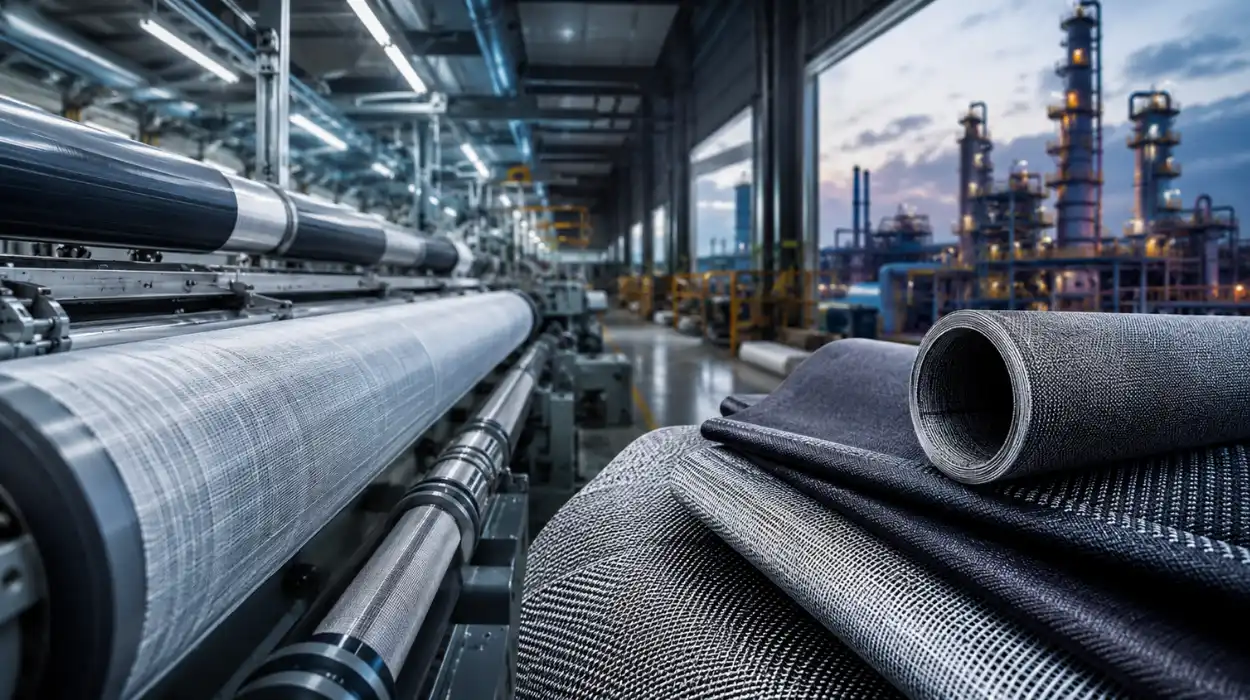
Technical textile companies drive industrial innovation by engineering fibres, fabrics and composite materials for specific performance requirements across industrial applications.
Their innovations improve properties such as strength, thermal resistance, filtration, durability, lightweight construction and chemical protection.
What Are Technical Textiles?
Technical textiles are engineered textile materials designed primarily for functional performance rather than aesthetic appearance. Their value comes from measurable properties such as tensile strength, abrasion resistance, flame resistance, filtration efficiency and moisture management. Technical textiles include products made from fibres such as aramid, carbon, glass, polyester, polypropylene and high-performance polyethene. Their applications extend across construction, automotive manufacturing, aerospace, healthcare, agriculture, energy and protective equipment. This functional orientation makes technical textiles an important component of industrial material development. Innovation in this sector therefore focuses on solving defined engineering and manufacturing requirements.
Which Properties Define Technical Textile Performance?
Technical textile performance is defined by the physical, chemical and mechanical characteristics required for a specific application. High-tenacity fibres provide strength where structural reinforcement is required, while aramid fibres provide heat resistance and high tensile performance. Nonwoven materials provide controlled filtration, separation and absorption properties. Coated fabrics add resistance against water, chemicals, ultraviolet exposure or extreme temperatures. Manufacturers measure these characteristics through recognised testing methods and technical specifications. These measurements connect textile development directly with industrial engineering requirements.
How Do Technical Textile Companies Create New Materials?
Technical textile companies create new materials by combining fibre engineering, material science, textile processing and application-specific testing. Fibre selection establishes the fundamental performance characteristics of a textile product. Yarn construction influences strength, flexibility, density and dimensional stability. Weaving, knitting, braiding and nonwoven production determine the structure of the finished material. Coatings and finishing processes then modify surface and functional characteristics. Manufacturers validate the resulting material against technical specifications before industrial deployment.
How Does Fibre Engineering Support Innovation?
Fibre engineering is the process of modifying fibre composition, structure or geometry to achieve a defined performance characteristic. Synthetic fibres can be engineered with specific molecular structures, cross-sections and surface treatments. Carbon fibre provides high strength and stiffness with relatively low mass, making it relevant to aerospace and automotive applications. Aramid fibres such as Kevlar are recognised for high tensile strength and resistance to heat. Glass fibres reinforce composite structures used across construction, transport and industrial manufacturing. These material characteristics create opportunities for replacing heavier or less efficient components.
How Do Technical Textiles Support Innovation Across Industries?
Technical textiles support industrial innovation by providing specialised materials that perform defined functions within products, machinery and infrastructure. In automotive manufacturing, textile composites contribute to lightweight components and reinforcement structures. In aerospace, high-performance fibres support lightweight composite systems where strength-to-weight ratio is critical. In construction, geotextiles provide separation, reinforcement, drainage and erosion-control functions. In agriculture, technical fabrics support crop protection, irrigation systems and controlled growing environments. This cross-sector application makes Innovation Across Industries closely connected to the role of technical textile engineering.
Which Industrial Sectors Use Technical Textile Materials?
Industrial sectors use technical textiles according to specific functional requirements rather than conventional textile aesthetics. Automotive manufacturers use reinforcement fabrics, airbags, filtration materials and interior components. Healthcare manufacturers use nonwovens for surgical gowns, wound-care products and medical filtration. Energy companies use specialised fabrics for insulation, filtration and protective applications. Civil engineering projects use geotextiles and geosynthetics for soil stabilisation, drainage and reinforcement. Protective equipment manufacturers use engineered fabrics for resistance against heat, chemicals, abrasion and mechanical hazards.
How Do Technical Textiles Improve Industrial Manufacturing?
Technical textiles improve industrial manufacturing by integrating specialised material functions into production systems and finished products. A textile material can reinforce without adding the mass associated with conventional structural materials. Filtration textiles can separate particles, liquids or gases according to controlled physical properties. Thermal textiles provide insulation and protection in environments involving high or low temperatures. Reinforcement fabrics support composite manufacturing by distributing loads through engineered fibre structures. These functions allow manufacturers to address performance requirements through material design.
How Do Lightweight Textiles Affect Product Engineering?
Lightweight textile materials affect product engineering by reducing material mass while maintaining required mechanical performance. Carbon-fibre-reinforced textiles illustrate this principle through high stiffness and strength relative to weight. Automotive engineers use lightweight composite materials as part of efforts to reduce vehicle mass and improve energy efficiency. Aerospace engineers apply similar material principles where structural weight directly affects aircraft performance. The engineering process involves selecting fibres, textile architectures, resin systems and manufacturing methods according to the required specification. Material optimisation therefore connects textile innovation with broader industrial design.
How Does Research and Development Drive Technical Textile Innovation?
Research and development drives technical textile innovation by converting material research into tested textile products with measurable industrial functions. Research teams examine fibre chemistry, polymer structures, coatings, textile architectures and composite interfaces. Development teams convert these findings into yarns, fabrics, nonwovens and finished technical products. Laboratory testing measures characteristics such as tensile strength, permeability, thermal resistance and abrasion performance. Pilot production evaluates whether the material can be manufactured consistently at industrial scale. This process establishes a direct relationship between scientific research and commercial textile manufacturing.
How Do Advanced Manufacturing Technologies Change Textile Development?
Advanced manufacturing technologies change textile development by increasing control over material structure, production precision and product functionality. Automated weaving and knitting systems produce complex textile architectures with controlled fibre placement. 3D weaving creates multilayer structures that support advanced composite manufacturing. Digital manufacturing systems provide greater control over production parameters and quality monitoring. Additive manufacturing also enables research into textile-compatible structures and customised material components. These technologies expand the engineering possibilities available to technical textile manufacturers.
How Do Regulations Influence Technical Textile Innovation?
Regulations influence technical textile innovation by establishing measurable requirements for safety, environmental performance and product quality. Manufacturers supplying the European market encounter regulatory frameworks such as REACH, which governs the use of chemical substances. Personal protective equipment is subject to requirements established under the European Union’s Regulation (EU) 2016/425. Construction products can require compliance with applicable European standards and performance declarations. Medical textile products face additional regulatory requirements depending on their intended use and classification. Regulatory specifications therefore influence material selection, testing procedures, documentation and product development.
How Does Product Testing Verify Technical Textile Performance?
Product testing verifies whether a technical textile meets defined performance specifications under controlled conditions. Testing can measure tensile strength, tear resistance, abrasion resistance, flame behaviour, filtration performance and dimensional stability. Standards organisations such as ASTM International and ISO publish test methods used across industrial textile applications. Manufacturers document test results to establish conformity with relevant technical requirements. Testing also identifies material limitations before products enter demanding operating environments. Verification therefore provides the evidence required to connect textile innovation with reliable industrial performance.
How Can Technical Textile Companies Communicate Industrial Innovation Through Publicity?
Technical textile companies communicate industrial innovation through factual announcements that explain measurable developments, product functions, research milestones and industrial applications. A press release is a structured public announcement distributed to journalists, publishers and media organisations. Technical textile announcements become more useful to professional audiences when they identify the material, technology, application and verified performance characteristics. Journalists covering manufacturing, materials science, construction or automotive technology use factual information to assess potential industry stories. Clear technical terminology also helps publishers understand the relevance of an announcement without relying on promotional claims.
What Information Makes a Technical Textile Announcement Newsworthy?
A technical textile announcement becomes newsworthy when it communicates a specific development with identifiable industrial relevance. New material introductions can explain the fibre composition, functional property and intended application. Manufacturing developments can identify a new production technology, facility, capacity milestone or process improvement. Research announcements can report defined findings supported by testing or institutional collaboration. Regulatory announcements can explain certification, compliance or product qualification where documentation supports the claim. These details give journalists concrete information for evaluating the industrial significance of a release.
How Does Press Release Distribution Connect Technical Textile Innovation With Media Coverage?
Press release distribution connects technical textile announcements with media outlets by transmitting structured news content through established publishing and syndication systems. Distribution services receive a release, process its metadata and transmit the content to selected media channels. Publishing systems can place the release on news websites where crawlers discover the resulting page. Search engines then evaluate accessible content according to their technical and content-quality systems. Journalists can also encounter releases while monitoring industry developments, company announcements and specialist news sources. Distribution therefore provides a mechanism for making verified industrial information publicly accessible.
How Does Google News Discover Technical Textile Announcements?
Google News discovers eligible news content through automated crawling, content analysis and publisher systems rather than through a simple submission guarantee. A publisher page needs to remain technically accessible so automated systems can retrieve its content. Clear headlines, identifiable publication information, structured content and transparent sourcing support machine understanding. Google also evaluates content according to its news-related policies and overall quality systems. Inclusion in Google News is therefore determined by Google’s systems rather than by a guaranteed placement purchased through distribution. Technical textile companies benefit from accurate metadata and clearly structured announcements because these elements help automated systems interpret the published material.
How Do Journalists Use Technical Textile Press Releases?
Journalists use technical textile press releases as source material for identifying developments, verifying claims and finding relevant industry information. Specialist reporters monitor announcements from manufacturers, research institutions, trade organisations and technology companies. A release can provide names, dates, technical specifications and contact information that support further reporting. Journalists evaluate claims against available evidence before publishing independent coverage. Technical terminology becomes more useful when it is accompanied by precise explanations and measurable information. The strongest source material therefore helps journalists understand what changed, why it matters and which evidence supports the announcement.
How Do Embargoes Affect Technical Textile Announcements?
An embargo controls when journalists are permitted to publish information supplied before its public release time. An embargoed press release gives selected recipients advance access to information under an agreed publication condition. The release contains a specific date, time and time zone that define when publication is permitted. International distribution requires careful time-zone coordination because a single announcement can reach journalists in different regions simultaneously. Wire services and publishers also use scheduled distribution systems to control release timing. Accurate embargo information reduces confusion when technical announcements involve regulatory filings, product launches or coordinated industry communications.
Why Does Technical Textile Innovation Matter to Industrial Progress?
Technical textile innovation matters because engineered textile materials provide functional solutions for demanding industrial systems and products. Fibre engineering introduces new combinations of strength, weight, thermal resistance and chemical performance. Textile manufacturing converts those properties into controlled structures such as woven fabrics, nonwovens, braids and composites. Testing verifies whether those structures meet defined industrial requirements. Public communication then allows manufacturers, researchers and journalists to document verified developments through accessible information. The underlying mechanism is straightforward: material science creates performance, textile engineering converts performance into products, and factual communication explains the resulting industrial application.
Ready to get your story published?
Distribute your press release across 500+ trusted media outlets — with editorial review and a full pickup report within 48 hours.
Send Press Release →