
Press release distribution costs for market research

For market research publishers, press release distribution for market research can mean sending a release through a newswire, distributing it across a media network or targeting journalists directly. The best route depends on whether you want broad circulation, publication across selected outlets or relevance to a specific media audience.
A report’s findings deserve clear, accurate presentation, and distribution should put them in front of readers who can use them. This guide explains how the three routes differ, what drives distribution costs in the UK and how to prepare a release that shares a report’s key findings without overstating them. It also covers the practical considerations behind choosing a distribution approach, from audience and geographic scope to editorial review and pickup reporting.
Key Takeaways
- Match the distribution route to your goal: broad newswire reach, selected placements or focused journalist outreach.
- Assess UK distribution costs by the scope of the circuit and the level of targeting, rather than by the headline price alone.
- Shape a market research release around clear findings, credible context and precise claims to make the report easier for media to assess.
- Compare services by their editorial review, outlet reach and pickup reporting to understand what distribution delivers.
Newswire, placement networks and targeted outreach
Distribution routes differ in how they circulate a release and who is likely to see it. For market research, match the report’s subject, intended audience and geographic scope to the channel, whether that is a newswire, media network or journalist outreach.
Newswire distribution
A newswire circulates a release through a distribution system to media outlets and journalists, supporting broad coverage across a chosen territory or industry. The provider should consider the report’s central finding, the organisations likely to use it and the audience you want to reach. For example, research on retail buying habits calls for a different media focus from a report on manufacturing investment. Ask what the distribution includes and how pickup is reported: transmission alone does not prove publication.
Placement network reach
A media network distributes a release across participating websites or outlets. Its value depends on how relevant those destinations are to the report, not simply the number of placements. A provider can match the subject to suitable outlets and distinguish online publication from direct delivery to journalists. For example, a consumer confidence report may suit business and retail publications, while a specialist technology study needs outlets covering that field. Check how placements are defined and reported so you can see where the release appeared.
Geographic and industry targeting
Targeting starts with the audience: the provider identifies the report’s subject, the industries affected and the locations where its findings matter. A UK-wide survey may call for national coverage; findings specific to Scotland may need a regional focus. Journalist target-list development then matches those priorities with reporters’ beats, outlet topics and geographic remits. The provider can establish relevance by checking whether a journalist covers the subject and audience, rather than relying on a broad contact list. Share the report’s key finding, methodology, intended readership and any regional breakdowns; these details help shape the distribution plan and give journalists a clear reason to assess the announcement.
What are the main types of press release distribution services?
UK distribution packages can combine release circulation, audience targeting, editorial review, outlet placement and pickup reporting. Inclusions vary, so compare the channels, coverage and reporting with the announcement’s purpose.
Comparing distribution services
Start with the goal: broad circulation, relevant publication or direct journalist outreach. Channel selection should reflect the announcement’s subject, intended audience, geographic relevance and news value. For example, findings about UK consumer spending may suit business and retail outlets, while research on a specialist technology market calls for industry-focused coverage.
Establish how delivery is defined. A transmission receipt, a list of outlets reached and evidence of published placements measure different things. Editorial review can improve clarity and presentation before distribution, but does not mean a journalist will publish the release. Check how each channel is reported so you can distinguish distribution activity from media pickup.
Choose a single-release service for one report announcement. If you plan to announce several distinct findings over time, consider a multi-release arrangement. Match the format to your publishing plan, not simply the longest channel list.
Distribution package inclusions
A package may include submission, editorial checks, channel selection and distribution to relevant media contacts. Some options also include publication across participating outlets or a report showing where the announcement appeared. Compare the included elements so you can assess the package against your needs.
For a market research report, useful editorial checks include whether the headline reflects the findings, claims match the evidence and methodology is clear. The distribution provider can use the report’s sector, geography and intended readership to select suitable outlets and journalists. Clear targeting helps align the announcement with its intended audience.
Choose reporting that lets you measure the work delivered, such as the channels used and recorded placements. Explore press release distribution options that align with your report and audience.
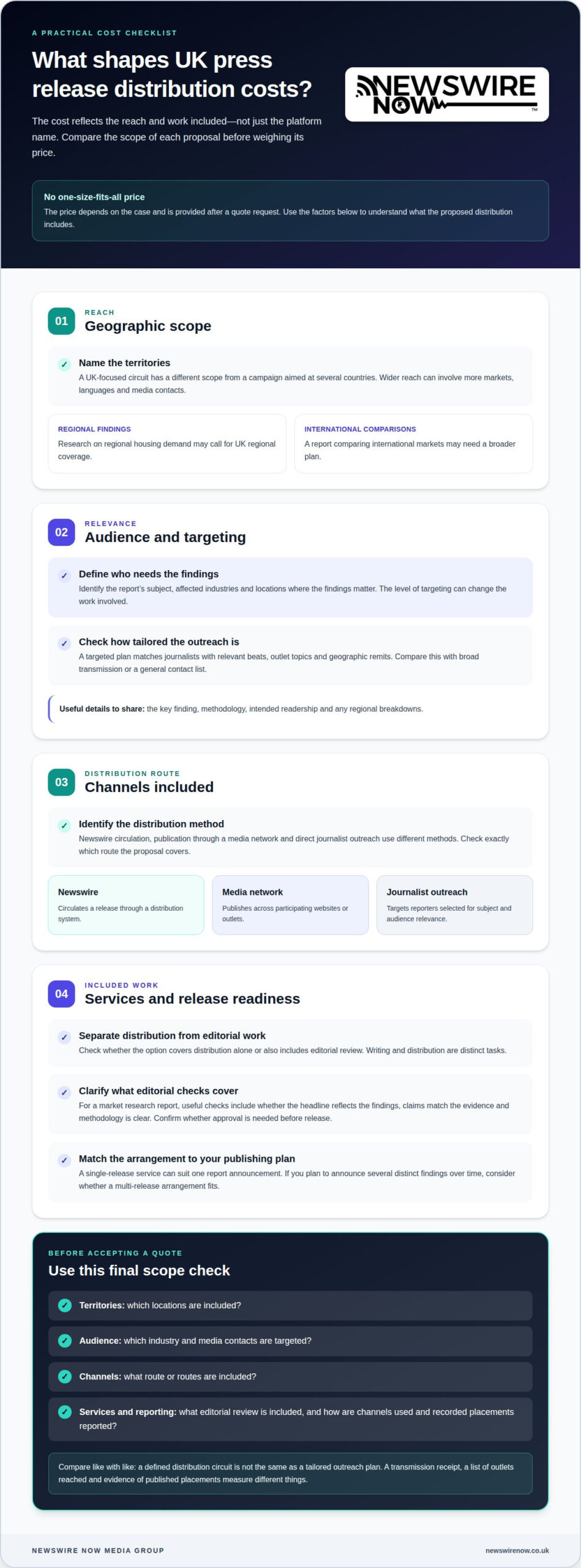
Distribution costs
Distribution costs reflect the reach and work included, not just the platform name. A UK-focused circuit differs from a global campaign, while a specialist announcement may need targeted industry outlets rather than broad transmission. Price depends on the case and is given after a quote request; the main cost factors are geographic scope, audience targeting, channels and included services.
Geography is a key factor. A release aimed at UK business media has a different scope from one targeting several countries. Wider reach can involve more markets, languages and media contacts, so the proposed distribution route matters. For example, research on regional housing demand may need UK regional coverage, while a report comparing international markets calls for a broader plan.
Channel choice also shapes the work. Newswire circulation, publication through a media network and direct journalist outreach use different methods. Check whether an option covers distribution alone or also includes editorial review and pickup reporting. Compare like with like: a defined distribution circuit is not the same as a tailored outreach plan.
Separate distribution from writing. A finished release may need editorial attention before it is ready for the media, but writing and distribution are distinct tasks. Check which editorial reviews are included, what they cover and whether approval is needed before release. For a report with several findings, identify the announcement to be distributed and whether each release has its own targeting plan.
Before accepting a quote, establish the scope in writing. Check the named territories, industry audience, channels, editorial work, reporting and any exclusions. A useful comparison might assess two proposals for the same UK retail report: one focused on broad newswire coverage, another on selected retail outlets and journalist outreach. Compare what each delivers, rather than choosing by headline price alone. This makes the budget decision clearer and ties spend to the report’s audience and communication goals.
Market research report press release distribution
A research release needs a clear finding, its context and enough methodology for journalists to interpret it. In the UK, present the sample, fieldwork dates, geography and limitations accurately; distinguish measured results from forecasts, and avoid implying causation where the study shows only an association.
Before distribution, check every headline figure and claim against the final report. Verify percentages against their base, preserve units and time periods, and ensure quotes match approved wording. For example, a finding about surveyed households must not be presented as applying to every UK household. Identify the research population and explain important qualifications clearly.
Publishing partners and journalists need a concise route to the evidence. A provider can organise the release around one principal result, then include supporting data and a clear methodology note. If the report compares regions, name the locations consistently; if it tracks change, state the comparison period. This helps preserve accuracy across coverage and improves visibility without turning a qualified finding into an absolute claim.
Distributing results before publication or client approval can expose confidential findings, circulate outdated figures or create conflicting versions. A draft may also contain a statistic later revised in the report. Use the approved release and final data, and identify an authorised contact for media queries. Clear approval controls protect the report’s credibility and the publishing process.
For example, a study on retail preferences should distinguish the surveyed group from the wider market, state the relevant period and avoid unsupported conclusions. A careful editorial review can catch unclear wording before the release reaches journalists. To prepare your report for media distribution, arrange press release distribution with the final findings and approved copy.
Present the sample, fieldwork dates, geography and limitations accurately. Distinguish measured results from forecasts, avoid implying unsupported causation, check every claim against the final report, and identify the research population and important qualifications. Distribute only approved copy using final data.
Newswire Now Media Group: Single Press Release Distribution
Newswire Now Media Group’s Single Press Release Distribution suits a market research publisher sharing one approved report or finding. Editorial Review supports the release before distribution, and Media Pickup Reporting provides a record of media coverage.
For a report with distinct findings planned for separate announcements, Multi-release Distribution Bundles offer another distribution option. The network includes more than 500 news outlets across 27 industry sectors and 37 professions, helping connect releases with relevant audiences. Its independent network also includes over 40 owned publications reaching readers worldwide.
Prepare the final release with approved claims, methodology and intended audience, then choose a distribution option that fits your publishing plan. Contact Newswire Now Media Group to discuss distributing your market research announcement.
Plan your next research announcement
Treat distribution as part of the report’s communication plan, not a final administrative step. Before release, agree on the most important finding, who needs to see it and what context makes it meaningful. This keeps the announcement aligned with the research, whether you’re sharing one report or planning several releases over time.
For press release distribution for market research, match the release plan to your publishing schedule and approval process. Newswire Now Media Group offers Single Press Release Distribution, Multi-release Distribution Bundles and Editorial Review for different announcement needs.
Bring your approved findings and intended audience into the conversation, then choose a distribution approach that fits your plans. Contact Newswire Now Media Group to discuss your next announcement and take the next step with confidence.
Frequently Asked Questions
Which UK press release distribution services cover market research and business media?
UK market research announcements can use a newswire, a placement network or targeted journalist outreach. A provider can direct a business report towards relevant trade and business media, rather than treating every outlet as equally suitable. For example, research into consumer spending may interest retail and finance journalists, while a manufacturing survey calls for specialist industry coverage.
How much does press release distribution cost in the UK?
The cost depends on the distribution scope and services included, such as geographic reach, channel selection, editorial review and reporting. For this type of service, the price depends on the case and is given after a quote request. A useful comparison separates distribution from writing or other work, and checks whether the proposed channels match the report’s audience and objectives.
How do UK press release distribution services compare on reach, targeting and reporting?
Compare services by the audiences their channels reach, how closely distribution is targeted and what delivery evidence is reported. A broad newswire approach prioritises circulation, while targeted outreach focuses on journalists covering specific subjects. Reports should distinguish a release being sent from one being published. For market research, relevant coverage matters more than a large but poorly matched outlet list.
How can a distribution provider help prepare and distribute a market research press release?
A provider can review the release’s structure and distribute an approved announcement through channels suited to its subject. For press release distribution for market research, precise claims are essential: do not describe a survey of selected respondents as representing everyone unless the methodology supports that conclusion. Include the study’s population, geography, time period and relevant limitations in the approved material.
How can a provider report the reach and impact of a distributed market research press release?
A distribution report can document activity, including channels used and recorded media placements. These show where a release was sent or published, but do not automatically measure readership, website visits or business outcomes. To assess impact, compare placement records with relevant campaign analytics, such as visits to the report page or engagement with its findings, while keeping each measure distinct.
Ready to get your story published?
Distribute your press release across 500+ trusted media outlets — with editorial review and a full pickup report within 48 hours.
Send Press Release →