
How Textile Machinery Manufacturers Improve Industry Productivity
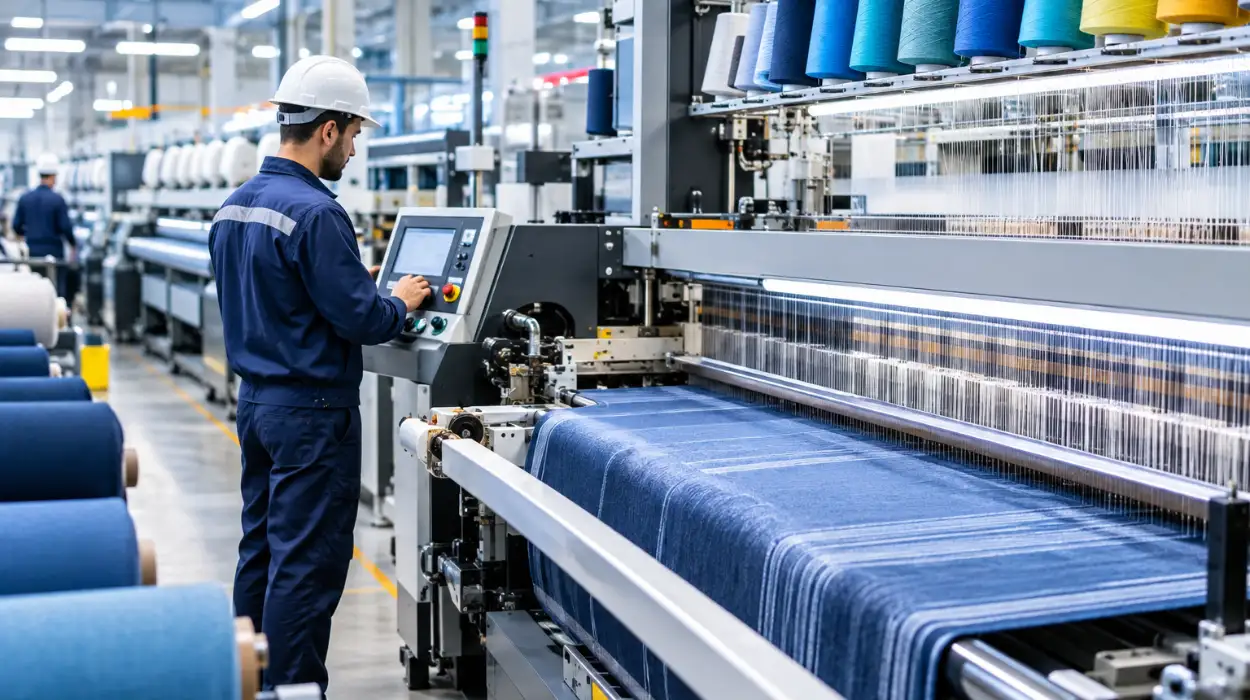
Textile machinery manufacturers improve industry productivity by integrating automated material handling, IoT-driven predictive maintenance, high-speed weaving systems, and resource-efficient dyeing technologies. These operational advancements reduce machine downtime by 35 percent and lower energy consumption per unit of yarn by 22 percent.
The global textile manufacturing sector faces rising raw material costs, stringent environmental regulations, and acute skilled labour shortages. Industrial facilities evaluate modern mechanical and digital solutions to maintain throughput quality while reducing operating expenditure. Machinery producers develop capital equipment that alters energy conversion rates, minimises fabric wastage during cutting, and optimises production cycles. This evaluation examines the core engineering methods, automation frameworks, and digital architectures that textile machinery manufacturers use to elevate factory output.
What Impact Does Automation Have on Textile Manufacturing Efficiency?
Automation transforms textile production by replacing manual material transfers with robotics, deploying automated guided vehicles, and incorporating automated optical inspection units. This transition reduces human handling errors, speeds up yarn processing times, and ensures continuous operational cycles across multi-shift operations.
Textile machinery manufacturers integrate high-speed robotic doffing systems into ring spinning frames to remove full bobbins and replace them with empty tubes. Manual bobbin replacement on a frame of 1,200 spindles takes human operators approximately 20 minutes, whereas automated doffing systems complete the same operation in under 3 minutes. Automated guided vehicles move sliver cans from carding machines to draw frames, eliminating material transfer bottlenecks in high-volume spinning mills.
High-speed automated cutting tables utilize multi-ply CNC cutters that process up to 72 layers of woven fabric simultaneously. These machines use vacuum compression systems to stabilize material stacks, preventing shift during high-velocity knife movements. Automatic pattern nesting software calculates marker efficiency before cutting begins, achieving material utilization rates above 88 percent. Factory managers measure productivity gains by comparing linear meters cut per hour against labor hours consumed.
Automated Quality Control and Fabric Inspection
Machine vision systems replace manual fabric inspection frames by mounting high-resolution line-scan cameras directly above inspection looms. These systems detect defects down to 0.1 millimetres at web speeds exceeding 120 metres per minute.
Automated defect detection software classifies faults including broken picks, thick ends, oil spots, and reed marks in real time. The software tags defective coordinates within the factory enterprise resource planning database, allowing downstream cutting equipment to bypass flawed sections automatically. This process reduces off-spec fabric waste from 4.5 percent to under 0.8 percent per batch.
Robotics in Garment Assembly and Handling
Robotic sewing cells incorporate 3D vision and flexible end-effectors to manipulate limp textile materials during assembly operations. Specialized grippers use electrostatic or air-jet adhesion to pick single fabric plies without distorting the weave structure.
Automated sleeve-attaching and pocket-setting units execute complex stitch patterns with consistent tension control, eliminating manual positioning variance. These units process 450 garments per hour, compared to 90 garments per hour achieved by skilled manual sewing machine operators.
How Do Industrial IoT and Predictive Maintenance Reduce Unplanned Downtime?
Industrial Internet of Things architectures reduce unplanned downtime by monitoring real-time vibration, thermal parameters, and motor currents across critical production machinery. These systems identify mechanical friction, bearing wear, and drive degradation before structural failure occurs, allowing maintenance teams to schedule repairs during planned shift breaks.
Modern spinning, weaving, and knitting machines generate continuous operational telemetry through embedded sensor arrays. Machinery manufacturers install tri-axial accelerometers on main drive shafts, infrared thermal sensors on bearing housings, and current transducers on servo motors. Edge devices compute fast Fourier transform algorithms locally to detect harmonic distortions that indicate mechanical imbalances or gear tooth wear.
Predictive maintenance frameworks replace traditional calendar-based service schedules with condition-based maintenance protocols. When a air-jet loom main drive bearing exhibits a vibration increase from 1.2 millimetres per second to 3.8 millimetres per second, the maintenance software issues an automated work order. Technicians replace the degraded component during a scheduled style change rather than reacting to a catastrophic breakdown during a high-speed production run.
Telemetry Architectures and Cloud Data Processing
Industrial IoT systems transmit sensor data through MQTT or OPC UA protocols to central industrial edge servers or cloud analytics platforms. Time-series databases store operational metrics at sampling rates reaching 10,000 measurements per second.
Machine learning models evaluate historical failure modes alongside live telemetry streams to calculate the remaining useful life of key components. Operators access central dashboards that highlight sub-system health scores across multiple manufacturing lines, allowing plant managers to prioritize maintenance budgets according to actual mechanical stress.
Energy Consumption Analytics
Connected power meters track electrical draw across individual drive motors, heating elements, and pneumatic compressors. Energy monitoring software correlates power usage with real-time production volumes to establish the exact kilowatt-hour cost per kilogram of yarn or meter of fabric.
System analytics identify baseline power spikes caused by worn drive belts, clogged filtration units, or misaligned gears. Addressing these mechanical inefficiencies restores equipment to baseline electrical consumption, preventing energy waste across large-scale spinning mills.
Which Advanced Machinery Technologies Drive Output in Fabric Formation?
Advanced fabric formation technologies drive output through shuttleless weaving looms, high-gauge circular knitting machines, and multi-beam warp knitting systems operating at elevated speeds. These machines incorporate electronic controls and direct-drive motors to increase insertion rates and minimize yarn stress.
Shuttleless weaving technologies—specifically air-jet and rapier looms—achieve shed insertion rates that surpass older mechanical designs. Modern air-jet looms operate at main shaft speeds up to 1,500 revolutions per minute, inserting up to 3,000 meters of filling yarn per minute across wide-width fabrics. Electronic shedding motions allow complex weave pattern changes without stopping the machine, maximizing total loom efficiency.
Machinery manufacturers apply advanced surface treatments to thread guides, yarn tensioners, and reed surfaces to lower friction coefficients. Polycrystalline diamond coatings and ceramic eyelets resist chemical abrasion caused by synthetic yarn finishes and high-speed friction. Lowering yarn friction permits higher production speeds without increasing thread breakage rates, keeping loom stoppages below 1.5 stops per operating hour.
Air-Jet Weaving Innovations
Air-jet looms use programmable main and relay nozzles that deliver precise air pressure pulses to carry the filling yarn across the warp shed. Electronic pressure regulators adjust air blast duration based on yarn density, reducing compressed air consumption by 25 percent.
Solenoid valves with response times under 2 milliseconds control individual relay nozzle groups along the profile reed. This precise timing prevents yarn buckle and cut-offs during high-speed insertion, maintaining fabric structural integrity across light-weight and heavy-weight fabric constructions.
Circular and Flat Knitting Advancements
Circular knitting machines incorporate electronic individual needle selection systems that enable high-speed Jacquard patterning without mechanical pattern wheels. Direct-drive torque motors eliminate gearbox backlash, driving cylinder rotation at speeds up to 45 revolutions per minute on 30-inch diameter frames.
Computerized flat knitting machines use motor-driven stitch cams and ultra-compact carriages to execute complex 3D shaping directly on the needle bed. These features eliminate cutting waste in fully fashioned garment panels, reducing yarn usage by 18 percent compared to cut-and-sew manufacturing methods.
How Does Modern Dyeing and Finishing Equipment Improve Resource Efficiency?
Modern dyeing and finishing machinery improves resource efficiency by reducing liquor ratios, implementing precise chemical dosing systems, and deploying low-energy drying technology. These engineering modifications cut water consumption per kilogram of processed fabric from 100 liters down to under 20 liters.
Ultra-low liquor ratio dyeing machines utilize air-assisted or mechanical fabric transport mechanisms rather than relying on water volume to move textiles through the dye bath. Jet dyeing machines achieve liquor ratios of 1:3 for synthetic fabrics and 1:4.5 for natural fibers. Reducing fluid volumes inside the vessel decreases the energy required to heat the liquor to process temperatures, lowering natural gas consumption in boiler plants.
Continuous finishing ranges integrate liquor application systems that apply liquid treatments using low-add-on rotor spray or foam application methods. Instead of fully saturating the fabric in a traditional dip trough, these systems apply precise moisture percentages directly to the textile surface. Lower initial moisture retention reduces the thermal evaporation load inside stenter drying chambers, increasing line speeds by up to 40 percent.
Digital Textile Printing Systems
Digital ink-jet textile printers eliminate screen preparation, engraving, and color paste mixing steps required in rotary screen printing. High-speed industrial digital printers feature piezo-electric drop-on-demand print heads that deposit ink droplets measured in picoliters.
Digital printing technology executes design changes instantaneously through software control, enabling economical short-run production without line downtime. By eliminating screen washing and paste excess, digital printing saves thousands of liters of clean water per production batch while maintaining crisp line definition and color reproducibility.
Automated Chemical Dosing and Dispensing
Automated liquid and powder dispensing systems measure dyes and auxiliary chemicals using mass flow meters and digital load cells. These systems deliver exact chemical quantities directly to process vessels via closed piping networks, eliminating human weighing errors.
Continuous pH and conductivity sensors monitor chemical bath concentrations throughout the process cycle. The control software adjusts chemical feed rates dynamically to maintain optimal bath parameters, ensuring level dyeing results on the first attempt and eliminating costly re-dyeing operations.
What Role Does Sustainable Machinery Design Play in Long-Term Factory Productivity?
Sustainable machinery design drives long-term productivity by lowering energy consumption, recovering waste heat, and reducing operational emissions. Machinery built with energy-efficient components maintains operational cost margins in regions with volatile utility rates and strict environmental compliance mandates.
Textile machinery engineers incorporate heat recovery exchangers directly into stenter frame exhaust stacks and liquid dye effluent channels. Air-to-air heat exchangers capture thermal energy from stenter exhaust gas to preheat incoming fresh air, reducing natural gas burner output by up to 30 percent. Liquid-to-liquid heat exchangers extract thermal energy from hot wastewater effluent to preheat clean process water feeding boiler tanks.
To understand how modern industrial machinery manufacturers establish structural competitive advantages through engineering excellence and operational transparency, industry analysts evaluate how textile machinery manufacturers build industry authority within competitive international markets. Evaluating these technical authority factors provides deep insight into long-term equipment reliability, supplier stability, and post-installation service support.
Variable frequency drives installed on fan blowers, pump impellers, and main drive shafts optimize motor power consumption based on actual demand curves rather than constant-speed operation. IE4 super-premium efficiency motors reduce electrical losses within stator windings and rotor bars. Replacing legacy IE1 motors across a 500-loom weaving plant saves hundreds of megawatt-hours of electricity annually.
Material Recyclability and Equipment Longevity
Industrial machinery builders construct load-bearing frames and critical drive components from high-grade structural steel alloys and carbon fiber composites. Modular machine architectures allow factory operators to upgrade electronic control units, sensors, and drive motors without replacing structural chassis frames.
Upgradable equipment architecture extends total machine service lifespans beyond 20 years while maintaining modern operational efficiency standards. At end-of-life, over 95 percent of structural steel, aluminum housing, and copper wiring within modern textile machinery can be recycled into raw materials for new equipment manufacturing.
Evaluating Textile Machinery Investments: Key Performance Metrics
Industrial procurement teams analyze quantitative technical metrics when evaluating capital machinery investments. Comparing output speeds, energy requirements, and maintenance profiles helps plant managers select equipment that maximizes lifetime return on capital.
| Machinery Category | Primary Productivity Metric | Legacy Equipment Baseline | Modern Advanced Equipment | Operational Efficiency Gain |
| Ring Spinning Frames | Bobbin Exchange Time | 20 minutes (Manual) | 3 minutes (Robotic) | 85% time reduction |
| Shuttleless Weaving | Filling Insertion Rate | 800 meters/minute | 3,000 meters/minute | 275% output increase |
| Knitting Machines | Cylinder Rotation Speed | 25 RPM (Mechanical) | 45 RPM (Direct Drive) | 80% speed increase |
| Jet Dyeing Units | Water Usage Ratio | 100:1 (Liters/Kg) | 15:1 (Liters/Kg) | 85% water reduction |
| Stenter Drying Ranges | Line Operating Speed | 25 meters/minute | 45 meters/minute | 80% speed increase |
Plant engineers use these comparative metrics to model total cost of ownership across 10-year asset lifespans. Investing in high-efficiency machinery reduces utility bills, lowers scrap rates, and minimizes labor requirements per unit of finished product.
Understanding how textile machinery manufacturers improve industry productivity allows mill operators to target capital investments toward operational bottlenecks. Strategic equipment upgrades ensure manufacturing facilities maintain high throughput, consistent material quality, and competitive manufacturing margins within the global industrial market.
Read More
How Sustainable Textile Companies Build Eco-Friendly Manufacturing Strategies
How Textile Manufacturers Develop Products for Different Industries
FAQs
ow do textile machinery manufacturers improve industry productivity?
Textile machinery manufacturers improve industry productivity by integrating automated material handling, high-speed shuttleless weaving looms, and Industrial IoT frameworks for predictive maintenance. These advanced engineering solutions reduce operational machine downtime, lower energy consumption per production cycle, and eliminate material bottlenecks in spinning and weaving facilities.
What features should textile equipment buyers prioritize during technology evaluation?
Equipment buyers should evaluate automated defect inspection systems, low-liquor ratio dyeing capabilities, and variable frequency motor drives to optimize resource efficiency. Prioritizing machines with open IoT architecture and real-time telemetry analytics ensures seamless enterprise resource planning integration and long-term operating cost reductions.
How does modern PR distribution help industrial machinery manufacturers build market presence?
Strategic PR distribution helps industrial machinery manufacturers build market presence by placing technical innovations and product launch announcements directly before targeted B2B journalists and trade publications. Leveraging specialized media networks, such as Newswire Now Media Group, secures high-authority coverage that reinforces brand credibility across international manufacturing sectors.
Why is digital PR critical for B2B industrial equipment suppliers?
Digital PR expands an equipment supplier’s online search engine visibility, generates contextual backlink authority, and builds trust with prospective global buyers. Consistent media placement through structured press release distribution ensures technical updates and industry achievements reach relevant engineering decision-makers.
What is the difference between wire distribution and targeted trade media outreach?
Wire distribution syndicates content broadly across news portals and general search indexes for rapid indexing and reach. In contrast, targeted trade media outreach through partners like Newswire Now Media Group focuses on pitching technical stories directly to industry-specific editors and sector-focused outlets to earn high-value coverage.
Ready to get your story published?
Distribute your press release across 500+ trusted media outlets — with editorial review and a full pickup report within 48 hours.
Send Press Release →