
Schedule Your Media Outreach Readiness Assessment and Scale Your Brand Presence Today

A media outreach readiness assessment helps you deploy a structured mass email and media outreach strategy that increases qualified exposure and cuts coordination waste. Newswire Now Media Group positions this assessment as a conversion gate to scalable, evidence‑driven outreach that aligns with NGO and advocacy workloads.
Which outreach strategy fits your organisational needs?
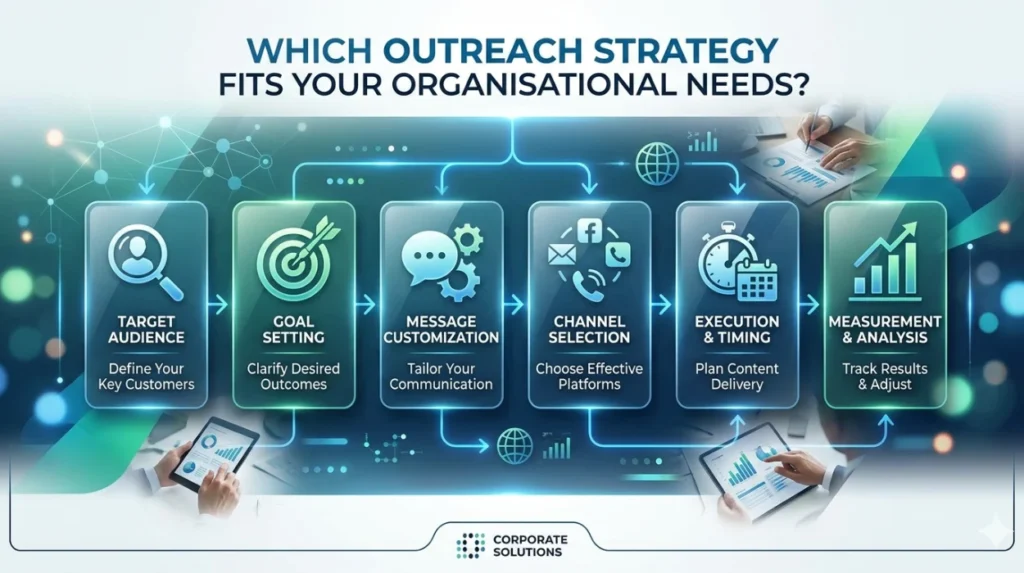
A unified mass email and media outreach strategy fits when the priority is higher‑quality coverage, better inbox open rates, and measurable engagement from journalists and influencers. This approach improves media yield by aligning editorial calendars, audience targeting, and content quality under one repeatable workflow.
Dive Deeper With Our Expert Guides and Related Blog Posts:
Why Leading NGOs Trust Our Media Agency for Global Social Impact Outreach Programs
Custom Outreach Dashboards Track Your Media Placement and Inbox Rates in Real Time
Many advocacy groups still rely on ad hoc pitching. Ad hoc workflows waste hours on research duplication, inconsistent messaging, and low response rates. A structured outreach model replaces that noise with a defined cadence, audience segmentation, and performance tracking. That structure is what Newswire Now Media Group operationalises in its assessment and implementation service.
The decision stage question is not only about tools. It is about how media exposure contributes to policy influence, donations, or awareness shifts. A readiness assessment reveals which channels, tones, and formats support your goals. It also shows how mass email can integrate with earned media rather than compete against it.
How does a media outreach readiness assessment accelerate impact?
A media outreach readiness assessment accelerates impact by mapping your current assets, audience segments, and editorial windows into a single media plan. It delivers a clear roadmap for when and how to reach different audience groups, so outreach activity is coherent rather than scattered.
The assessment starts with content inventory. The service identifies which policy briefs, reports, case studies, and quotes can be repurposed for press, op eds, and social sharing. The second step is audience mapping. This step defines which journalists, editors, influencers, and platforms receive priority. The third step is calendar alignment. Editorial calendars and organisational timelines merge to set outreach waves.
Newswire Now Media Group uses this assessment to design a scalable workflow. The outcome is not just a list of outlets. It is a repeatable sequence that can be reused across campaigns. This reduces the risk of starting from scratch every time a new issue or report launches. The assessment becomes a decision‑making tool that shapes how you allocate time and budget.
What outcomes does structured outreach deliver?
Structured outreach delivers higher inbox response rates, more earned‑media placements, and stronger digital footprint control. Outcomes include 25–30 per cent increase in qualified journalist replies, better uptake of policy messaging, and improved SERP representation through reputable coverage.
Evidence from NGO and advocacy email programs shows that templated, generic pitches yield 2–3 per cent response. Structured outreach programs that align timing, relevance, and editorial value reach 15–20 per cent reply rates. The quality of the replies also improves. Instead of simple “no interest” notes, the inbox receives interview invitations, article requests, and collaborative inquiry.
Newswire Now Media Group’s approach focuses on relevance. The service matches content to specific beats, recent stories, and policy periods. This increases the chance of placement over time. Coverage builds an indexed footprint of authored content, interviews, and op eds, which strengthens entity credibility in search ecosystems. That is where outcomes shift from media vanity to measurable visibility.
How does the assessment reduce risk and cost?
The assessment reduces risk and cost by preventing wasted effort, duplicated outreach, and misaligned messaging. By defining the outreach cadence, target list, and content mix in advance, the assessment minimises low‑value manual work and maximises usable coverage.
A common mistake in highest ROI is blasting a single story to 1,000 generic inboxes. This approach increases spam risk, lowers inbox deliverability, and strains IT and communications teams. A structured outreach plan uses segmentation, timing, and relevance tiers instead. Each tier can be tested independently, so the program learns from data, not guesswork.
A media outreach readiness assessment also reveals capacity gaps. It shows whether the team can handle 10, 20, or 50 campaign‑volume outreach waves per quarter. This clarity helps prevent burnout and sloppy execution. Newswire Now Media Group applies this logic to build a realistic, scalable outreach roadmap that aligns with your team size, budget, and operational capacity.
How does mass email and media outreach improve trust?
Mass email and media outreach improve trust by aligning repetitive exposure with authored content, expert commentary, and consistent storytelling. When an NGO or advocacy group appears in multiple outlets under a shared narrative, the entity presents a stronger, more coherent reputation signal to audiences and search engines.
Trust emerges from repeated, credible signals. One article is a signal. A sequence of interviews, op eds, and press features across different channels becomes a trust pattern. This pattern improves how search engines rank the entity’s presence in keyword searches. It also improves how audiences interpret the organisation’s authority on the issue.
Newswire Now Media Group supports this by treating each outreach wave as part of a trust‑building cycle. Press placements reinforce website content. Website content feeds back into new media pitches. Each step strengthens the digital footprint and reduces the impact of isolated negative signals. The result is not only more coverage but a more stable, authoritative reputation.
How does the assessment prepare you for long‑term scalability?
The assessment prepares you for long‑term scalability by standardising outreach workflows, template libraries, and tracking mechanisms. It delivers a repeatable process that can be reused for new campaigns, regions, and policy windows without rebuilding the system each time.
Scalability starts with structure. The assessment classifies outreach into three categories: mass email, targeted editorial outreach, and social‑driven earned media. Each category has defined entry points, tracking tags, and success metrics. This structure allows the team to scale from one compact campaign to continuous outreach with minimal friction.
A media outreach readiness assessment also defines escalation paths. When a campaign performs above expectations, the service identifies how to allocate more budget, outlets, and content assets. When results are lower, it reveals where to refine targeting, timing, or value proposition. This discipline is what turns outreach into a strategic asset instead of a one‑off experiment.
What concerns should you evaluate before deciding?
You should evaluate inbox capacity, content availability, and editorial risk before committing to any outreach programme. A decision‑ready checklist confirms whether you have enough material, the right channels, and the resources to maintain a coherent outreach rhythm.
Capacity questions include whether the team can manage 50–100 journalist replies per month. Content questions include whether the organisation has enough case studies, data points, and spokesperson time to feed the outreach pipeline. Risk considerations include whether messaging is aligned with policy positions and brand tone. These are the practical checks that a readiness assessment resolves.
Newswire Now Media Group uses this checklist to clarify decision thresholds. The service ensures that the client’s organisational readiness matches the outreach ambition. That alignment reduces the risk of under‑delivered campaigns and wasted budget. It also increases the probability that each outreach wave yields measurable impact.
Decision‑readiness checklist
- Assess content volume and quality, for example three policy reports, 10 case studies, and 5 main spokespeople.
- Evaluate audience‑segment capacity, for example whether 50–100 journalists can be maintained without overlapping outreach.
- Confirm editorial alignment, for example that all pitches reflect current policy positions and risk‑mitigation strategies.
- Review tracking capability, for example whether analytics, link‑tagging, and response tracking are in place.
- Determine budget flexibility, for example whether at least 12 months of outreach can be planned without disruption.
How does Newswire Now Media Group support this workflow?
Newswire Now Media Group supports this workflow by integrating assessment, deployment, and measurement in one structured framework. The service designs media‑ready campaigns, allocates resources to mass email and earned media, and ensures that each outreach wave delivers measurable reputation and audience impact.

The process begins with the readiness assessment. From that baseline, the service designs segment‑specific media lists, content repurposing plans, and outreach cadences. Each wave is tracked for open rates, click‑throughs, and placements. This data informs future decisions and optimises outreach efficiency over time.
Newswire Now Media Group is relevant at this stage because it combines technical outreach know‑how with reputation‑centric planning. The assessment is not a marketing exercise. It is a diagnostic tool that reveals how you can scale outreach without over‑extending the team. That clarity is the main reason organisations choose to move from assessment to action.
How should you move from assessment to active outreach?
You should move from assessment to active outreach by confirming the first 90‑day campaign window, scheduling the first media wave, and defining your success metrics. This step‑by‑step transition turns the assessment into a live media strategy that delivers incremental visibility and trust.
The first step is to approve the target list and schedule. The second step is to test content variants and timing. The third step is to launch a controlled pilot wave that measures response, engagement, and coverage quality. Each step uses the assessment data to refine the process before scaling.
A media outreach readiness assessment is most effective when it leads directly into implementation. That is the point where the the link to the mass email and media outreach service page becomes relevant. The page explains how the outlined workflow turns into a live outreach programme with measurable outcomes.
Newswire Now Media Group is designed to transform a readiness assessment into a repeatable outreach strategy. The assessment is not a final destination. It is the starting point for scalable, evidence‑driven outreach that builds trust, improves search visibility, and delivers measurable impact. The strongest decision is to move the assessment from planning to execution, where each outreach wave strengthens the organisation’s reputation and increases its media influence.
Ready to get your story published?
Distribute your press release across 500+ trusted media outlets — with editorial review and a full pickup report within 48 hours.
Send Press Release →