
Why DTC Brands Are Growing Faster Than Traditional Retail
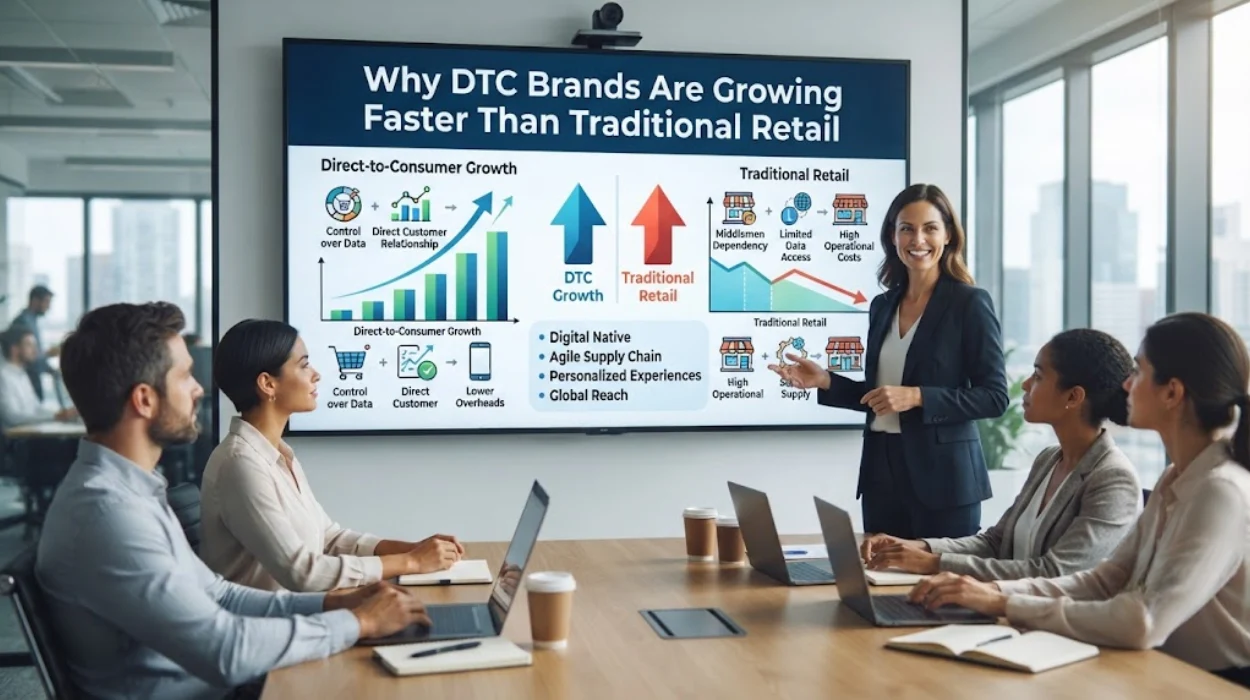
Direct-to-consumer (DTC) brands grow faster than traditional retail because they control distribution, customer data, and media narratives without intermediaries. This direct control enables faster feedback loops, stronger audience relationships, and more efficient digital PR amplification.
How do DTC brands control distribution differently from traditional retail?
DTC brands control distribution by owning the entire sales and communication pipeline, eliminating third-party retail intermediaries.
DTC distribution is a closed-loop system where brands define how products move from production to the end user without relying on wholesalers or physical retail chains. Traditional retail depends on layered supply chains involving distributors, retailers, and in-store merchandising, which slows down product positioning and messaging updates. In contrast, DTC brands publish updates directly through owned channels such as Shopify storefronts, email systems like Klaviyo, and social platforms including Instagram and TikTok. This direct pipeline allows immediate alignment between product availability and media messaging. Press releases distributed through digital PR channels reinforce this control by ensuring consistent narratives across media outlets. Google News indexing further accelerates visibility by surfacing brand announcements in real-time search environments. This structural efficiency defines the speed advantage of DTC models.
Why does data ownership accelerate DTC market growth?
Data ownership accelerates DTC growth because brands directly collect, analyse, and act on first-party customer data without dependency on external retailers.
First-party data is information collected directly from customers through transactions, website interactions, and subscriptions. DTC brands track metrics such as purchase frequency, customer lifetime value, and behavioural triggers using tools like Google Analytics 4 and Meta Pixel. Traditional retailers retain this data, limiting manufacturers’ ability to refine messaging or product development. DTC brands use this data to inform press release timing, ensuring announcements align with peak engagement periods. Media distribution platforms analyse audience signals to determine optimal publication windows. Google News algorithms prioritise fresh, relevant content, which amplifies data-informed releases. This continuous feedback loop enables faster adaptation to market demand. Data ownership defines the operational intelligence behind DTC expansion.
How do press releases amplify DTC brand visibility?
Press releases amplify DTC visibility by distributing structured brand narratives across indexed media networks and journalist ecosystems.
A press release is a structured communication document designed for media distribution and indexing. DTC brands use press releases to announce product launches, funding rounds, and market expansions. Distribution through wire services ensures syndication across multiple publications simultaneously. Journalists source stories from platforms such as Cision and Muck Rack, where press releases appear in searchable databases. Google News indexes these releases when they meet publisher guidelines, including structured headlines, timestamps, and author attribution. This indexing increases discoverability in search results and news feeds. Media outlets such as Yahoo Finance and MarketWatch republish syndicated releases, extending reach. This mechanism transforms a single announcement into multi-channel visibility. Press release distribution defines the amplification layer of DTC growth.
What role does Google News indexing play in DTC expansion?
Google News indexing accelerates DTC expansion by surfacing brand announcements in high-visibility search and news environments.
Google News is a content aggregation system that indexes newsworthy articles based on relevance, authority, and freshness. DTC brands benefit when their press releases appear in indexed publications that meet Google News Publisher Centre requirements. These requirements include clear editorial structure, transparent authorship, and consistent publishing frequency. Crawl frequency determines how often Google scans a publication for new content, directly impacting how quickly a release appears in search results. Structured data, such as NewsArticle schema, enhances indexing accuracy by defining headline, datePublished, and publisher fields. Indexed content appears in Top Stories and News tabs, increasing organic visibility. This visibility drives traffic to brand-owned platforms. Google News indexing defines the discoverability mechanism behind DTC growth.
How do journalists source DTC stories from media distributions?
Journalists source DTC stories by analysing press release databases, media wires, and verified newsroom feeds.
Journalists rely on structured information pipelines to identify newsworthy content. Platforms such as PR Newswire, Business Wire, and EIN Presswire distribute press releases to verified media lists. These platforms categorise releases by industry, region, and topic, enabling targeted discovery. Journalists filter content based on relevance, timeliness, and credibility signals. Embargoed releases provide early access to information under agreed publication timelines, ensuring coordinated coverage. Media monitoring tools track trending topics, allowing journalists to align stories with audience interest. Verified sources increase the likelihood of publication in outlets like Reuters and Bloomberg. This sourcing process ensures DTC announcements reach credible media channels. Journalist sourcing defines the credibility layer of DTC visibility.
Why do DTC brands achieve faster feedback loops?
DTC brands achieve faster feedback loops because they directly connect customer responses with product and communication adjustments.
A feedback loop is a system where outputs are continuously analysed to refine inputs. DTC brands collect real-time feedback through reviews, social engagement, and purchase behaviour. Traditional retail delays feedback due to indirect communication channels and limited data access. Press release performance metrics, including impressions and pickup rates, provide additional feedback signals. Media analytics platforms track how releases perform across publications and search engines. Google News engagement metrics indicate visibility and audience interaction. This data informs immediate adjustments in messaging and product positioning. Faster feedback loops enable rapid iteration and market responsiveness. Feedback systems define the adaptability of DTC brands.
How does media syndication support DTC growth?
Media syndication supports DTC growth by replicating press release content across multiple authoritative platforms simultaneously.
Media syndication is the process of distributing content to multiple publishers through a central system. Wire services distribute a single press release to hundreds of partner websites, including Yahoo News, AP News, and regional outlets. Each syndicated version retains core content while adapting to platform formatting requirements. This replication increases the number of indexed pages referencing the brand. Search engines recognise these mentions as signals of relevance and authority. Syndication also expands geographic reach, exposing DTC brands to international audiences. Consistent messaging across platforms strengthens brand recognition. Media syndication defines the scale mechanism of DTC visibility.
What is the relationship between DTC growth and customer relationships?
DTC growth directly correlates with stronger customer relationships built through direct communication and personalised engagement.
Customer relationships in DTC models are defined by continuous interaction across owned channels. Brands communicate through email campaigns, SMS platforms, and social media without intermediary filtering. Press releases reinforce these relationships by providing transparent updates about brand developments. Media coverage adds credibility by validating brand narratives through third-party sources. This integration of direct and earned media strengthens trust and loyalty. The concept of Customer Relationships and Market Growth explains how consistent communication drives repeat engagement and revenue expansion. Data-driven insights personalise interactions, increasing retention rates. Strong relationships define the sustainability of DTC growth.
How do embargoes and timing strategies influence DTC media coverage?
Embargoes and timing strategies influence DTC media coverage by coordinating when and how information becomes public.
An embargo is a controlled release agreement where journalists receive information before a specified publication time. DTC brands use embargoes to synchronise coverage across multiple outlets. This coordination ensures maximum visibility at a single moment, increasing impact. Timing strategies align releases with peak media consumption periods, such as weekday mornings in major markets. Wire services schedule distribution to match these windows. Google News prioritises fresh content, making timing critical for visibility. Simultaneous publication across outlets amplifies reach and engagement. Strategic timing defines the momentum of DTC media exposure.
Why does owned media integration strengthen DTC scalability?
Owned media integration strengthens DTC scalability by aligning internal communication channels with external media distribution.
Owned media includes websites, blogs, and email lists controlled by the brand. DTC brands integrate press releases into these channels to reinforce messaging consistency. Blog posts expand on press release content, providing additional context for audiences. Email campaigns distribute announcements directly to subscribers, increasing engagement. Social platforms amplify reach through shares and interactions. This integration ensures that earned media coverage aligns with internal messaging strategies. Search engines recognise consistent narratives across channels, improving visibility. The combination of owned and earned media creates a unified communication ecosystem. This ecosystem defines scalable growth for DTC brands.
How does direct access to audiences reshape retail competition?
Direct access to audiences reshapes retail competition by removing dependency on physical retail visibility and enabling digital-first engagement.
Traditional retail relies on shelf placement and in-store promotions to reach customers. DTC brands bypass these limitations by engaging audiences through digital platforms. Press releases ensure that brand announcements reach global audiences without geographic constraints. Media coverage in digital publications replaces the need for physical presence. Google News indexing provides immediate access to information for consumers worldwide. This shift reduces barriers to entry for new brands. Direct access enables faster market penetration and expansion. Audience accessibility defines the competitive advantage of DTC models.
How do service infrastructures support DTC media distribution?
Service infrastructures support DTC media distribution by providing systems that manage, distribute, and track press releases across networks.
Media distribution services offer tools for formatting, scheduling, and analysing press releases. These systems ensure compliance with journalistic standards and platform requirements. Distribution networks connect brands with publishers, journalists, and aggregators. Analytics dashboards track impressions, engagement, and pickup rates. Integration with search engines enhances indexing and discoverability. A structured Ecommerce sector service page explains how distribution systems operate within digital commerce environments. These infrastructures enable efficient communication at scale. Service systems define the operational backbone of DTC media strategies.
DTC brands grow faster than traditional retail because they integrate direct distribution, data ownership, and media amplification into a unified system. Press release distribution, Google News indexing, and media syndication form the core mechanisms that enable rapid visibility, credibility, and scalability in global markets.
Ready to get your story published?
Distribute your press release across 500+ trusted media outlets — with editorial review and a full pickup report within 48 hours.
Send Press Release →