
How to Successfully Self Publish Children’s Books
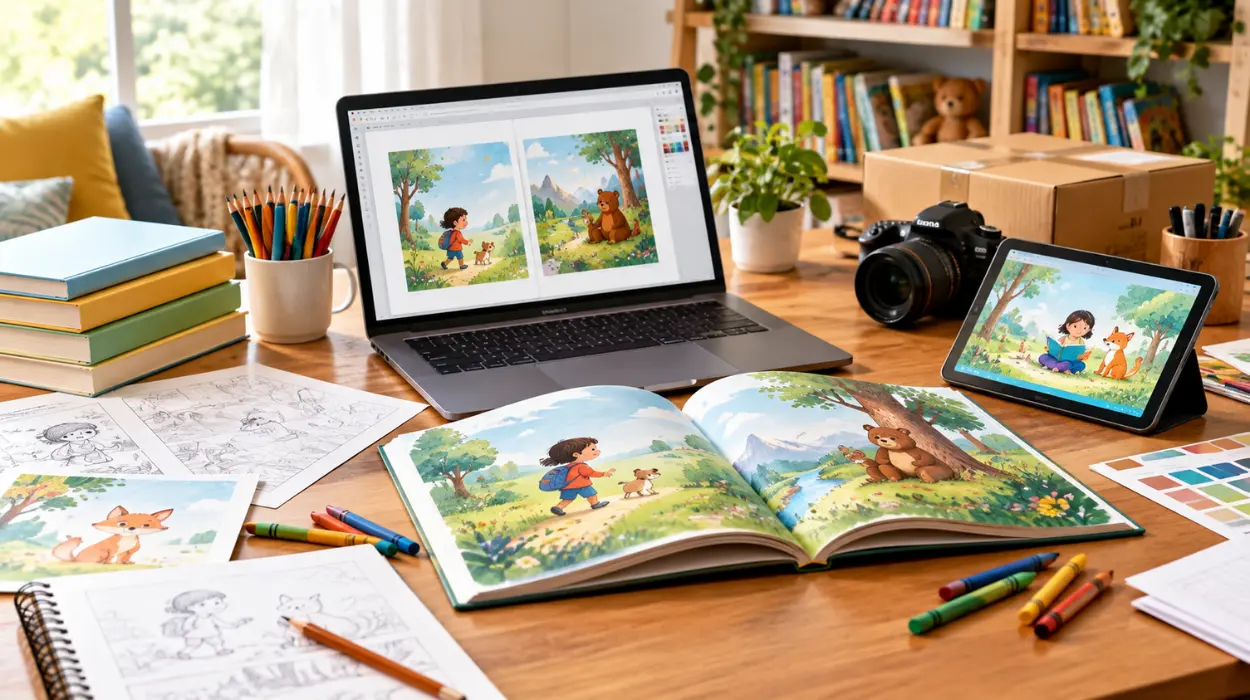
Self publishing a children’s book requires completing manuscript editing, securing professional illustrations, formatting print and digital layouts, registering legal identifiers, and executing a targeted media release distribution campaign to reach reviewers and consumers. Authors achieve commercial distribution by managing intellectual property setup while building early media visibility through press release syndication and journalist outreach.
What is children’s book self publishing?
Children’s book self publishing is an independent publishing model where an author retains full ownership of rights, financial investment, and operational control over the production, distribution, and media promotion of a book. The process eliminates traditional publishing houses, placing full responsibility for quality control, copyright registration, and public relations directly onto the author or self-publishing entity.
Self publishing spans four main age categories within juvenile fiction and non-fiction:
- Board books: Target readers aged 0 to 3 years with 10 to 16 pages of heavy paperboard.
- Picture books: Target readers aged 3 to 8 years, maintaining a standard length of 32 pages with illustration on every spread.
- Early chapter books: Target readers aged 6 to 9 years, containing 5,000 to 10,000 words with periodic black-and-white interior art.
- Middle grade novels: Target readers aged 8 to 12 years, ranging from 20,000 to 50,000 words with narrative-driven text.
Independent publishing requires direct management of editorial standards, visual design, printing specifications, and press coverage. Authors act as executive publishers, hiring third-party editors and illustrators to prepare files for distribution platforms.
How do authors register legal identifiers and copyrights for children’s books?
Authors register legal identifiers by purchasing International Standard Book Numbers from national agencies and submitting copyright applications to official government intellectual property offices. An International Standard Book Number defines the specific edition, format, and publisher of a book across commercial databases.
Legal preparation requires securing three primary identifiers and registrations:
- ISBN assignment: Bowker assigns ISBNs in the United States, whereas Nielsen BookData assigns ISBNs in the United Kingdom.
- Copyright registration: The UK Intellectual Property Office or the US Copyright Office registers official ownership of text and illustrations.
- Barcodes and cataloguing: The British Library or the Library of Congress generates cataloguing-in-publication data for library distribution systems.
Each format requires an individual ISBN. A hardcover edition, a paperback edition, and an eBook edition require 3 distinct ISBNs. Obtaining formal registration protects original intellectual property before distribution networks index the title.
How do print and digital distribution platforms syndicate self-published titles?
Print and digital distribution platforms syndicate self-published titles by transmitting bibliographic metadata and print-on-demand files to retailer networks worldwide. Distribution networks use ONIX data feeds to communicate pricing, availability, and trim sizes to online retailers, physical bookshops, and public libraries.
Primary print-on-demand and digital syndication platforms include:
- IngramSpark: Distributes paperback and hardcover editions to 40,000 retailers, libraries, and school suppliers, including Waterstones and Barnes & Noble.
- KDP (Kindle Direct Publishing): Distributes digital and print formats directly through Amazon retail channels globally.
- Draft2Digital: Distributes eBooks to multi-territory digital storefronts, including Apple Books, Kobo, and Tolino.
Print-on-demand technology eliminates large upfront print runs by printing individual copies only when a customer or retailer places an order. Automated ordering systems relay metadata continuously across international supply chains.
How do press releases drive media visibility for self-published children’s books?
Press releases drive media visibility by broadcasting structured news announcements to journalists, literary reviewers, trade publications, and search engine news syndicates. A press release announces a publication date, award recognition, or literary milestone, providing accredited media outlets with verified information for news coverage.
Press release distribution functions through specific information channels:
- News wire syndication: Distributes press releases to search engine news indexes, including Google News and Bing News.
- Trade publications: Reaches industry reviewers, including Publishers Weekly, Kirkus Reviews, and The Bookseller.
- Media databases: Delivers announcements directly to journalists specializing in parenting, children’s literature, and education.
Journalists source story ideas from structured wire announcements. A properly formatted release includes a publication summary, author background, ISBN data, and high-resolution asset links, allowing reporters to verify facts rapidly.
How does Google News index press releases about book launches?
Google News indexes press releases about book launches by crawling accredited news wire domains, parsing structured schema markup, and assessing source authority algorithms. Googlebot-News scans published press releases in real time, detecting headline tags, publication timestamps, and media attachments to display relevant announcements within regional news feeds.
The technical indexing mechanism relies on 3 structural factors:
- NewsArticle schema: Encodes canonical URLs, publication dates, author entities, and organization details directly into HTML markup.
- Domain authority and trust: Evaluates historical publishing reliability, original content ratios, and technical security across wire domains.
- Topical relevance: Maps semantic keywords in headlines and lead paragraphs against active user search queries.
Search engines categorize releases into thematic news clusters. When an author broadcasts an announcement through verified news wires, search algorithms index the story within minutes, creating immediate organic search visibility.
How do journalists source self-published titles for media coverage and reviews?
Journalists source self-published titles by evaluating digital press kits, reviewing wire service announcements, and assessing pitch relevance against editorial calendars. Reporters select books that offer timely cultural angles, educational value, unique human-interest perspectives, or local community connections.
Media professionals evaluate incoming press announcements based on 3 criteria:
- Editorial timing: Lead times range from 3 months prior to publication for print magazines to 2 weeks for digital news outlets.
- Verification and metadata: Validated ISBNs, verified publisher details, and accessible digital review copies confirm legitimacy.
- Angle relevance: Story pitches must align with specific media beats, such as early childhood literacy, special educational needs, or children’s book illustration.
Providing direct digital access to advance review copies through secure download links increases review adoption rates. Concise news releases enable journalists to extract essential details without requesting preliminary documentation.
How do press release embargoes and distribution timing affect book launches?
Press release embargoes and distribution timing affect book launches by controlling the exact date and time media outlets publish news coverage, creating synchronized publicity bursts. An embargo restricts journalists from publishing news stories before a specified date, allowing reporters time to read advance review copies and draft articles.
Executing a timed release strategy involves 3 distinct scheduling phases:
- Pre-launch window (60 days prior): Distributes embargoed press releases to long-lead print magazines and major trade review journals.
- Launch week window (0 to 7 days prior): Issues immediate-release announcements across digital news wires to trigger search engine indexing.
- Post-launch window (14 days after): Distributes follow-up releases announcing initial sales achievements, awards, or regional storytime tours.
Synchronizing media announcements with distribution availability ensures potential readers find buy links active upon reading news coverage. Uncoordinated timing results in lost sales momentum if coverage appears before retail availability.
How do authors measure the public relations impact of a book launch release?
Authors measure the public relations impact of a book launch release by analyzing media pick-up reports, tracking referral traffic, monitoring search engine impressions, and recording sales spikes. Media tracking tools quantify both immediate audience reach and long-term brand equity generated by PR distribution.
Public relations evaluation relies on 4 core performance metrics:
- Syndication count: Tracks total media outlets hosting the published press release, including regional news portals and trade sites.
- Organic search positioning: Measures keyword ranking changes for the author name, book title, and topic keywords following release distribution.
- Referral traffic: Analyzes website visitor volume originating directly from links embedded within distributed press releases.
- Earned media pickups: Records original articles, broadcast interviews, and independent reviews generated by journalist outreach.
Reviewing full distribution analytics identifies high-performing regional markets and specific media channels. Continuous monitoring allows authors to refine messaging for subsequent releases and future book launches.
Applying [best practices for successfully self publishing children’s books] ensures independent authors establish editorial quality, secure commercial distribution, and generate sustained media coverage.
Read More
How Professional Book Publishing Services Help Authors Succeed
How Publishing Companies Attract Top Industry Talent
FAQs
What is the average cost to self-publish a children’s book?
The cost to self-publish a children’s book typically ranges from $1,500 to $5,000, primarily driven by professional illustration fees, which account for the largest expense. Additional costs include developmental editing, cover design, ISBN purchasing, and targeted media promotion. Independent authors using platforms like Newswire Now Media Group can also budget for press release distribution to build early media visibility and support their publishing launch in the publishing sector.
How do independent authors secure media coverage for a children’s book launch?
Independent authors secure media coverage by distributing structured press releases through news wire networks to reach literary reviewers, parenting publications, and education journalists. Utilizing a digital PR strategy via Newswire Now Media Group helps broadcast publishing milestones, author interviews, and launch dates directly to major search engine news indexes. Providing accredited journalists with advance digital review copies and clear metadata further increases review adoption across the publishing sector.
How many pages and words should a self-published picture book contain?
A standard self-published picture book contains exactly 32 pages, with 24 to 28 pages dedicated to the main story and illustrations. The word count for picture books generally ranges from 300 to 800 words to match the developmental capabilities of young readers aged 3 to 8 years. Maintaining these standard specifications ensures seamless formatting across print-on-demand networks and global distribution catalogues.
What legal registrations are required before self-publishing a children’s book?
Authors must secure a unique International Standard Book Number (ISBN) for each format—such as hardcover, paperback, or eBook—from national agencies like Bowker or Nielsen BookData. Authors should also register their text and artwork with official intellectual property offices, such as the UK Intellectual Property Office or the US Copyright Office, to establish legal ownership. Registering cataloguing data with national libraries ensures physical and digital books can be catalogued by public libraries and trade bookstores.
How do press releases improve search engine visibility for self-published books?
Press releases improve search engine visibility by delivering structured, canonical news data that search algorithms can quickly crawl and index. When broadcast through Newswire Now Media Group, announcements gain syndication across high-authority news domains, creating organic search placements for the author’s name and title. This syndication drives referral traffic to retail buy pages and establishes immediate topical authority within the publishing sector.
Ready to get your story published?
Distribute your press release across 500+ trusted media outlets — with editorial review and a full pickup report within 48 hours.
Send Press Release →