
How to Submit a Press Release to News Outlets: 2026 Guide

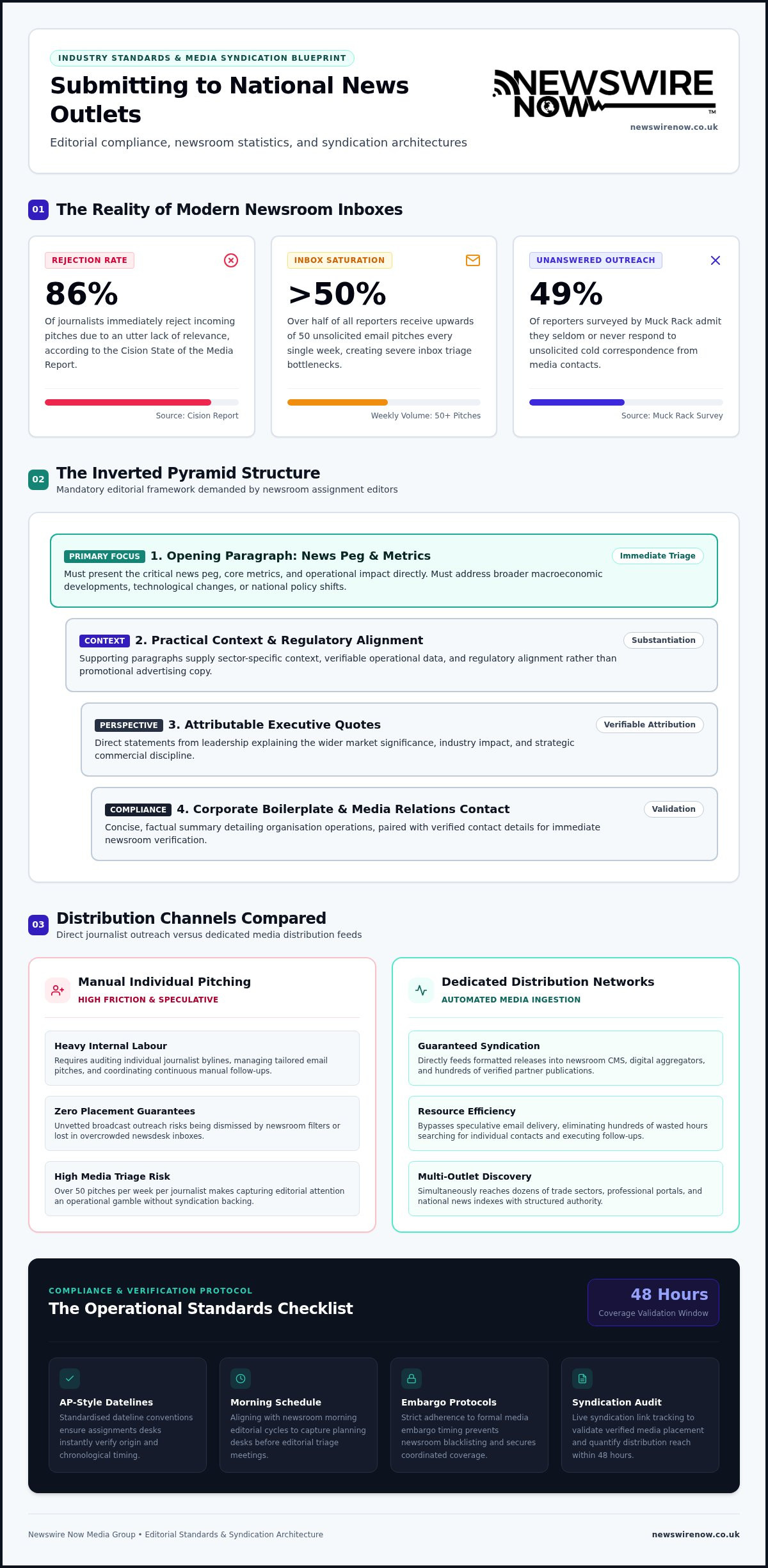
According to the Cision State of the Media Report, 86 percent of journalists immediately reject incoming pitches due to an utter lack of relevance, whilst nearly half admit they seldom or never respond to cold media outreach. If you’ve watched an important commercial announcement disappear into a crowded newsdesk inbox without a trace, you aren’t alone. Legacy wire services charge exorbitant enterprise rates with zero placement guarantees, leaving commercial teams uncertain about formatting conventions, media embargoes, and contact protocols. When you submit press release to news outlets, relying on unvetted broadcast emails simply guarantees your story ends up discarded.
You can break through that barrier. In this guide, you’ll discover the exact process for submitting a press release to national news outlets, ensuring strict editorial compliance, verified syndication, and maximum media pickup. We detail the operational submission standards required by major media houses, outline direct distribution routes that bypass costly retainers, and show you how to secure transparent coverage validation within 48 hours.
Key Takeaways
- Editorial desks filter aggressively for verifiable commercial developments, requiring precise formatting, AP-style datelines, and objective news pegs.
- A proven step-by-step framework allows you to submit press release to news outlets efficiently whilst avoiding costly software subscriptions and unread pitches.
- Direct distribution networks provide guaranteed placements across hundreds of verified publications, offering reliable reach that manual pitching cannot match alone.
- Understanding newsroom morning schedules and formal embargo etiquette prevents blacklisting and maximises editorial pickup rates.
- Comprehensive pickup reporting ensures commercial teams can validate live syndication links and measure exposure within 48 hours of dispatch.
What News Outlets Require Before You Submit a Press Release
National newsdesks process thousands of incoming pitches every morning. Editors filter submissions aggressively, discarding commercial announcements that read like promotional ad copy. Submitting an announcement isn’t merely about drafting an update; it requires packaging factual, timely developments into an asset that reporters can immediately verify and quote. If you prepare to submit press release to news outlets without aligning to recognised editorial standards, automated newsroom filters and busy assignment editors will dismiss your submission before it reaches a desk.
The Inverted Pyramid Structure and Standard Layout
Newsrooms demand structural efficiency. The inverted pyramid layout remains mandatory: place your critical news peg, core metrics, and operational impact directly in the opening paragraph. Supporting paragraphs must supply practical context, regulatory alignment, and attributable executive quotes that explain the wider market significance. Understanding the standard press release format and embargo protocols helps your release survive editorial triage. Conclude with a concise, factual boilerplate detailing organisation operations, accompanied by a verified media relations contact.
Establishing Journalistic Relevance and Editorial Substance
Editorial teams publish stories that serve their readership, not your sales targets. A new product tier or executive promotion rarely qualifies as national news on its own merits. To secure pickup, anchor your commercial milestones directly to broader macroeconomic developments, technological changes, or national policy shifts. Integrating this commercial discipline with strategic digital pr distribution ensures that every dispatch addresses real sector concerns. When you submit press release to news outlets with verifiable data and clear news angles, journalists recognise your organisation as a reliable primary source.
Manual Newsroom Pitching vs Dedicated Distribution Networks
Securing media coverage requires an operational choice: do you conduct direct, individual outreach to beat reporters, or do you deploy structured syndication channels? While manual pitching targets bespoke feature articles, dedicated networks deliver broad visibility across syndicated portals and industry journals. Understanding the structural differences between these routes ensures your communications team avoids wasting capital and internal labour.
The Mechanics of Direct Journalist Outreach
Direct pitching requires identifying individual sector reporters, auditing their recent bylines, and constructing tailored email pitches. The reality of modern newsrooms makes this path demanding. Over 50 percent of reporters receive upwards of 50 pitches every week, and survey data from Muck Rack reveals that 49 percent seldom or never respond to unsolicited cold correspondence. Individual submissions must align rigorously with the Purdue OWL guidelines on press release structure to stand any operational chance of capturing an editor’s attention amidst that volume.
Leveraging Established Distribution Wires and Media Feeds
Dedicated distribution networks bypass the friction of individual inboxes by feeding formatted releases directly into newsroom content management systems, syndication terminals, and digital aggregators. Rather than hoping a single journalist opens an email, syndication establishes an immediate footprint across hundreds of trade portals and national news indexes simultaneously. This automated ingestion creates verifiable digital assets that support corporate authority and executive presence.
Evaluating this route against manual outreach highlights distinct operational advantages:
- Guaranteed Syndication: Eliminates speculative inbox delivery by securing direct publication across partner newsboards.
- Resource Efficiency: Avoids hundreds of hours spent hunting media contacts, managing bespoke correspondence, and executing follow-ups.
- Broad Footprint: Establishes multi-outlet discovery across dozens of trade sectors and professional categories simultaneously.
Commercial teams looking to balance reach with expenditure should review the best news wire for small business to compare network scopes and technical capabilities. When you decide to submit press release to news outlets, leveraging an independent provider like Newswire Now Media Group offers an agile mechanism to secure verified syndication without getting locked into restrictive annual software subscriptions.
How to Submit a Press Release to News Outlets Step-by-Step
Executing an effective media dissemination requires a structured workflow rather than arbitrary broadcasting. Editorial desks rely on automated content intake pipelines that reject poorly formatted submissions automatically. To successfully submit press release to news outlets, communications teams must follow a rigorous, five-step technical sequence that guarantees clarity, compliance, and rapid publication.
- Finalise Copy and Standardise Structure: Keep the body text between 400 and 500 words. Spell out numbers one through nine, use numerals for 10 and above, and ensure the announcement reads with objective journalistic detachment.
- Assemble Digital Media Assets: Prepare high-resolution executive headshots, brand logos, and relevant data charts hosted on secure cloud infrastructure rather than attaching bulky files.
- Target Appropriate Industry Channels: Select verified distribution circuits that map specifically to your market category, avoiding irrelevant broad-spectrum categories. Property developers and estate agencies, for instance, benefit from a dedicated real estate press release service that routes announcements directly to property and business media channels.
- Conduct Pre-Submission Editorial Review: Screen every draft against publication standards to eliminate aggressive promotional claims, unverified superlatives, and improper search links.
- Dispatch and Track Coverage: Transmit the verified package through syndication feeds and log digital live placements within your tracking dashboards.
Formatting Datelines, Media Assets, and Embargo Notices
Technical compliance begins with the header. Datelines must specify the release date and corporate origin in standard typographic format before the opening sentence. If you require delayed coverage, place your embargo request in bold capital letters at the very top of the submission, detailing the exact release date, time, and time zone. Never attach raw video files or zip archives directly to media dispatches; provide secure cloud links so reporters can download assets without clogging their mail servers. Aligning your formatting with established benchmarks in the press release distribution service UK guide ensures seamless intake across receiving newsdesks.
Conducting Editorial Compliance and Pre-Flight Checks
Before releasing your copy, perform an exhaustive pre-flight audit. Newsroom software scans incoming releases for commercial spam markers. Maintain an objective, third-person narrative tone throughout every paragraph, reserving promotional enthusiasm strictly for attributed leadership quotes. Audit embedded hyperlinks to ensure they resolve properly and follow search engine guidelines by applying nofollow or sponsored attributes to syndicated commercial text. When you submit press release to news outlets with robust factual citations, independent data points, and transparent corporate governance, you satisfy the compliance filters that block lesser commercial announcements.
Optimising Timing, Embargoes, and Follow-Up Protocols
Timing dictates media visibility. Even a compelling commercial announcement fails if it lands whilst journalists are rushing to meet late-afternoon print runs or broadcast deadlines. Newsrooms operate around rigid editorial planning conferences that set the day’s coverage agenda. To submit press release to news outlets with maximum impact, you must align your transmission schedule directly with these newsroom operational cycles.
Selecting the Optimal Delivery Windows for UK Desks
Morning dispatch yields the highest editorial pickup. National and trade newsrooms typically convene their central planning conferences between 08:30 and 09:30. Transmitting your release between 06:00 and 08:00 on Tuesday, Wednesday, or Thursday ensures your copy sits prominently in an editor’s queue before running orders are locked. Avoid Monday mornings when desks clear weekend backlogs, and avoid Friday afternoons entirely when staffing drops to skeleton crews focused strictly on breaking coverage.
Managing Editorial Embargoes and Professional Follow-Ups
Embargoes give journalists adequate lead time to review complex data, interview stakeholders, and prepare balanced coverage. Unilateral embargoes carry no legal weight. If you pitch confidential materials ahead of time, format the restriction explicitly across the top banner in bold capital lettering, specifying the release date, time, and time zone. Never assume agreement without prior confirmation from the reporter.
Discipline during post-distribution follow-up protects your organisation’s reputation. Editorial data indicates that 62 percent of journalists recommend following up exactly once, whilst more than 50 percent will block senders who chase persistently. Adhere to strict media etiquette:
- Observe the Cooling Period: Wait two to three business days before initiating any follow-up correspondence.
- Limit Follow-Up Volume: Send a single concise check-in. If the reporter doesn’t respond, archive the thread immediately.
- Maintain Rapid Response: If a journalist replies with questions or requests interview availability, respond within 15 minutes to keep the story alive.
Managing manual follow-ups across hundreds of individual desks consumes significant administrative hours with no guarantee of pickup. If you want to bypass inbox gatekeepers and submit press release to news outlets with guaranteed syndication across hundreds of verified platforms, explore distribution services with Newswire Now Media Group.
Securing Guaranteed Media Placements and Measuring Syndication
Broadcast estimations mean very little to executive leadership. Modern corporate communications demand concrete verification: live URLs, indexed pages, and measurable digital footprint. Legacy wire platforms often charge substantial enterprise fees for vague potential impressions without guaranteeing which newsrooms will run the story. When you submit press release to news outlets, the ultimate commercial value lies in obtaining verified digital placements that stake an enduring claim on search engines and industry portals.
Validating Media Pickup and Live Network Coverage
Post-distribution analysis must centre on actual live indexation rather than speculative broadcast reach. Once an announcement crosses digital feeds, communications teams require prompt reporting that tracks published articles across authoritative national partner portals. These verified links establish organic discoverability, support corporate governance, and provide executive stakeholders with tangible evidence of market reach. Evaluating these metrics helps determine clear return on investment. Review our comprehensive breakdown of press release distribution pricing UK to evaluate how transparent reporting models compare to opaque enterprise fee structures.
The Power of Owned Networks and Guaranteed Placement
Bypassing the unpredictable bottleneck of newsroom email inboxes requires direct publishing infrastructure. Rather than gambling on arbitrary editorial discretion, commercial teams increasingly partner with independent media networks that control their own publishing platforms. This infrastructure provides absolute certainty of publication alongside rigorous editorial review.
Deploying announcements through an established, independent media engine provides distinct operational safeguards:
- Direct Network Reach: Seamless publication across an independent media network of over 40 owned publications reaching millions of readers nationwide.
- Multi-Sector Footprint: Direct distribution access to more than 500 verified news outlets spanning 27 industry sectors and 37 professions.
- Rapid Pickup Verification: Comprehensive media pickup reporting delivered within 48 hours of dispatch, validating every live placement URL.
- Commercial Assurance: Full editorial review and publication delivery backed by a flat-fee structure and money-back guarantee without software subscriptions.
Choosing an owned network infrastructure transforms the distribution equation. When you submit press release to news outlets through direct syndication channels, you replace speculative outreach with verified, guaranteed commercial visibility.
Maximise Your Media Impact With Direct Network Distribution
Achieving genuine coverage requires far more than dispatching cold emails into busy newsrooms. Success depends on rigorous inverted pyramid formatting, strategic morning delivery windows, and an objective tone that commands immediate respect. When you prepare to submit press release to news outlets, eliminating promotional copy and anchoring your corporate milestones to verifiable data ensures your story clears modern editorial gatekeepers.
You don’t need to waste internal resources on speculative pitching or rigid software retainers. By deploying through an independent network of over 40 owned publications reaching millions nationwide, your corporate developments secure guaranteed placement across 500+ trusted news outlets across 27 industries. Every dispatch includes full editorial review and a comprehensive media pickup verification report delivered within 48 hours, providing live URLs that validate your market footprint. Take command of your media outreach today: Distribute your press release across national news outlets with Newswire Now and secure the authoritative visibility your organisation deserves.
Frequently Asked Questions
Can I submit a press release to news outlets without hiring an agency?
Yes, you can submit commercial announcements directly using independent syndication networks and established media feeds. Expensive public relations retainers aren’t necessary for standard company developments. By structuring your release to objective journalistic standards, undergoing professional editorial review, and using direct network distribution, your organisation secures national media coverage without the overhead or ongoing commitments demanded by traditional PR agencies.
How much does it typically cost to distribute a press release to UK media?
Distribution costs depend heavily on the distribution model you select. Legacy enterprise wire services often charge substantial fees per release alongside costly annual platform subscriptions and extra charges for word overages. Modern independent networks provide a transparent alternative, offering flat-fee single release options and discounted multi-release distribution bundles without recurring software contracts or unexpected administrative penalties.
What is the best time of day to submit a press release to news outlets?
The optimal window to submit press release to news outlets is between 06:00 and 08:00 on Tuesday, Wednesday, or Thursday mornings. UK newsrooms convene their primary editorial planning conferences between 08:30 and 09:30 to organise the day’s reporting schedule. Early transmission ensures your copy is indexed and available for review before running orders are locked, avoiding the dead zones of late Friday afternoons and weekends.
What is an embargo and how does it work when submitting news?
A media embargo is a formal agreement requesting that publications withhold coverage until a specific date and time. This window provides journalists with sufficient breathing room to review complex corporate datasets, request quotes, and draft balanced reporting before an official launch. Unilateral embargoes aren’t legally binding, so always mark the restriction prominently in bold headers and verify receipt with key contacts beforehand.
Why do editors and journalists reject unsolicited press releases?
Reporters discard the vast majority of incoming pitches because the submissions lack relevance to their specific beat or read like commercial advertising. Modern newsdesks reject overt sales pitches immediately. Announcements must follow the inverted pyramid structure, feature verifiable industry data, and contain genuine public interest to clear automated newsroom filters and gain editorial approval.
How do distribution wires guarantee publication across news sites?
Distribution services provide guaranteed coverage by integrating formatted copy directly into content management systems across partner media networks. Rather than relying entirely on individual journalist discretion, independent networks maintain relationships with hundreds of national digital publications and industry journals. This automated, direct-feed syndication guarantees that your compliant release appears live across verified media portals.
What is included in a 48-hour press release pickup report?
A 48-hour pickup report provides an itemised breakdown of every live web address where your release has appeared. When you submit press release to news outlets through an independent media network, this documentation details active URLs, domain reach, and publication timestamps across trade and national media sites. This verifiable reporting delivers auditable evidence of market exposure rather than speculative readership estimates.
Ready to get your story published?
Distribute your press release across 500+ trusted media outlets — with editorial review and a full pickup report within 48 hours.
Send Press Release →