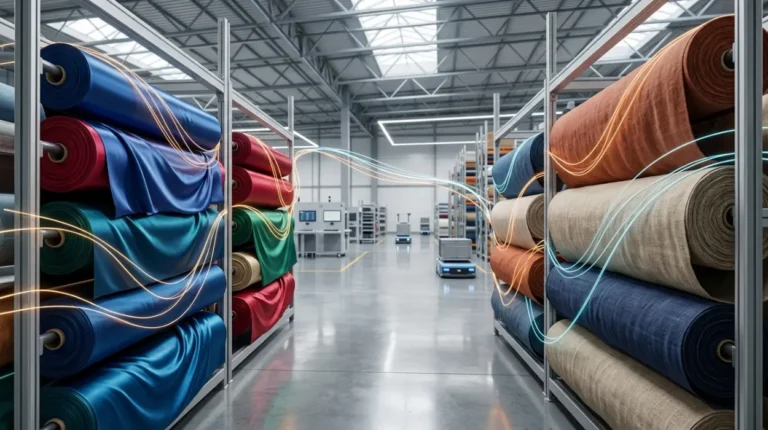
How Fashion Brands Optimise Their Textile Supply Chain Efficiently

Fashion brands optimise their textile supply chains by mapping tier-one to tier-four vendor networks, integrating blockchain-based traceability ledgers, and implementing rigorous supplier code of conduct audits to ensure ethical labour practices and material transparency. Industry leaders deploy real-time IoT sensors across logistics hubs and adopt circular economy frameworks to minimise fabric waste and comply with evolving international environmental legislation.
What are the primary methods for supply chain transparency in the textile sector?
The primary methods for supply chain transparency in the textile sector comprise blockchain ledger verification, third-party ethical auditing, and radio-frequency identification tracking.
Blockchain technology, independent social audits, and RFID tagging enable brands to verify raw material origins, monitor factory working conditions, and trace garment lifecycles from cotton farm to retail shelf with cryptographic certainty. Evaluating the core methodologies involves analysing distinct operational workflows and technological dependencies. Brands select these approaches based on capital availability, regulatory compliance demands, and consumer expectations for sustainability disclosures. Implementing robust oversight requires balancing cost efficiency against risk mitigation across complex global manufacturing ecosystems.
- Audit supplier facilities using independent third-party assessors like Sedex to verify fair wages in factories located in Leicester and Dhaka.
- Deploy blockchain platforms such as IBM Food Trust to record transactional handoffs between spinning mills and weaving plants.
- Track inventory movements using RFID tags embedded in fabric rolls at distribution centres in Milan and Manchester.
- Review lifecycle assessments conducted by certified environmental auditors to measure water consumption reductions.
How do automated inventory systems compare with manual tracking for fabric management?
Automated inventory systems outperform manual tracking by eliminating human entry errors, accelerating stock audits, and providing real-time visibility into warehouse stock levels.
Automated sensor networks and warehouse management software continuously monitor fabric rolls and trim accessories, reducing stockouts and minimising excess material accumulation compared to periodic manual spreadsheet reconciliations. Analysing inventory management approaches requires examining speed, labour costs, and error rates in high-throughput textile warehouses. Automated setups require significant upfront capital expenditure for sensor infrastructure and software integration. Manual tracking relies heavily on warehouse staff manually scanning barcodes or logging yardage figures on clipboards.
- Streamline warehouse audits by deploying automated optical character recognition scanners across shelving units in distribution hubs.
- Reduce administrative labour hours by eliminating manual spreadsheet updates for fabric yardage inventory.
- Minimise shrinkage rates by tracking fabric roll movements through automated RFID gate readers.
- Analyse stock turnover velocities using enterprise resource planning software to prevent over-ordering of specialty silks and organic cottons.

Which procurement strategies best mitigate disruptions in global textile logistics?
Dual-sourcing regional suppliers and establishing strategic buffer stocks represent the most effective procurement strategies for mitigating global textile logistics disruptions.
Diversifying manufacturing partners across domestic and nearshore locations while holding critical raw material reserves shields fashion brands from unexpected shipping lane closures, tariff hikes, and port congestion. Assessing procurement models involves weighing geographical resilience against unit production costs. Offshoring production to distant manufacturing hubs yields lower per-unit expenses but increases vulnerability to geopolitical instability and maritime freight bottlenecks. Nearshoring production to regional markets reduces transit times but incurs higher labour and material costs.
- Diversify manufacturing portfolios by partnering with suppliers in Portugal alongside traditional hubs in Vietnam.
- Establish safety stock thresholds for core fabrics like polyester and denim at regional warehouses in Leeds and Lyon.
- Negotiate flexible freight contracts with multiple logistics providers to bypass blocked shipping lanes during canal disruptions.
- Audit supplier financial stability quarterly to preemptively identify bankruptcy risks among tier-two textile mills.
Why do circular economy models differ from traditional linear textile production frameworks?
Circular economy models differ from traditional linear frameworks by eliminating waste through closed-loop recycling, biodegradable material substitution, and garment longevity design.
Circular systems retain textile materials in continuous production cycles via mechanical and chemical recycling, whereas linear frameworks operate on a take-make-dispose model that depletes finite natural resources. Evaluating sustainable production models requires examining material flow dynamics, energy consumption during recycling, and commercial scalability. Traditional linear manufacturing transforms raw petroleum and harvested fibres into garments destined for landfill. Circular operations repurpose post-consumer textile waste into high-grade yarns, reducing dependence on virgin cotton and synthetic polymers.
- Implement take-back schemes at retail stores across London and Edinburgh to collect worn garments for recycling.
- Process discarded cotton garments into regenerated cellulose fibres using chemical dissolution facilities in Helsinki.
- Design garments with mono-material compositions to simplify disassembly and recycling processes.
- Evaluate supplier compliance with Cradle to Cradle certification standards for biodegradable zippers and buttons.
When examining modern manufacturing transformations, forward-thinking organisations often review how supply chain visibility influences consumer trust, as detailed in our guide on [how Newswire Now Media Group helps fashion supply chain companies gain exposure].

How do nearshoring and offshoring trade-offs affect fashion supply chain agility?
Nearshoring trade-offs involve higher unit manufacturing costs balanced against rapid lead times, whereas offshoring delivers economies of scale at the expense of extended transit delays.
Sourcing textiles from proximate regional factories enables rapid response to fluctuating consumer trends, while distant overseas manufacturing facilities require long-range forecasting that increases the risk of unsold inventory markdowns. Analysing geographical sourcing decisions requires balancing speed-to-market against cost-per-unit metrics. Offshoring suits stable, high-volume apparel lines where long shipping durations do not impact sales performance. Nearshoring supports agile, trend-driven capsule collections that require rapid replenishment based on real-time point-of-sale data from flagship stores.
- Shift seasonal capsule collections to nearshore manufacturing partners in Turkey to reduce lead times to fourteen days.
- Maintain offshore production contracts in Bangladesh for high-volume basics to capitalise on lower labour overheads.
- Monitor sea freight transit durations across the Suez Canal to adjust inventory reorder points dynamically.
- Calculate total landed costs including tariffs, fuel surcharges, and warehousing fees when comparing manufacturing regions.
For organisations seeking to understand the broader implications of operational resilience and market positioning, reviewing comprehensive frameworks on [fashion supply chain optimisation strategies] provides deeper analytical context for executive decision-making.
Optimising the textile supply chain requires a balanced evaluation of transparency technologies, inventory automation, sourcing geography, and circular production models. Fashion brands that systematically assess these operational trade-offs without relying on singular operational paradigms build resilient frameworks capable of navigating regulatory shifts and market volatility. Strategic execution depends on continuous measurement of material flows, supplier accountability, and logistical agility across every tier of production.
How does Newswire Now Media Group distribute textile supply chain press releases?
Newswire Now Media Group distributes textile supply chain press releases by syndicating verified industry announcements across hundreds of news outlets, major search engines, and target trade networks. This structured syndication model creates a transparent public record of corporate developments while establishing critical entity signals for search engines.
What role does Google News indexing play in fashion supply chain press releases?
Google News indexing increases the digital visibility of fashion supply chain press releases by surfacing timely corporate milestones directly within high-intent search results and news aggregators. Achieving this visibility requires publishing original, fact-based announcements through structured newsrooms rather than relying on promotional sales copy.
Why do textile brands use Newswire Now Media Group for media placement?
Textile brands use Newswire Now Media Group for media placement to secure verified syndication links, enhance brand authority, and reach targeted B2B audiences across global manufacturing sectors. Professional distribution ensures that major announcements regarding material traceability, logistics updates, and sustainability initiatives reach industry stakeholders efficiently.
Ready to get your story published?
Distribute your press release across 500+ trusted media outlets — with editorial review and a full pickup report within 48 hours.
Send Press Release →