
How Can Horse Veterinary Clinics Increase Industry Visibility?
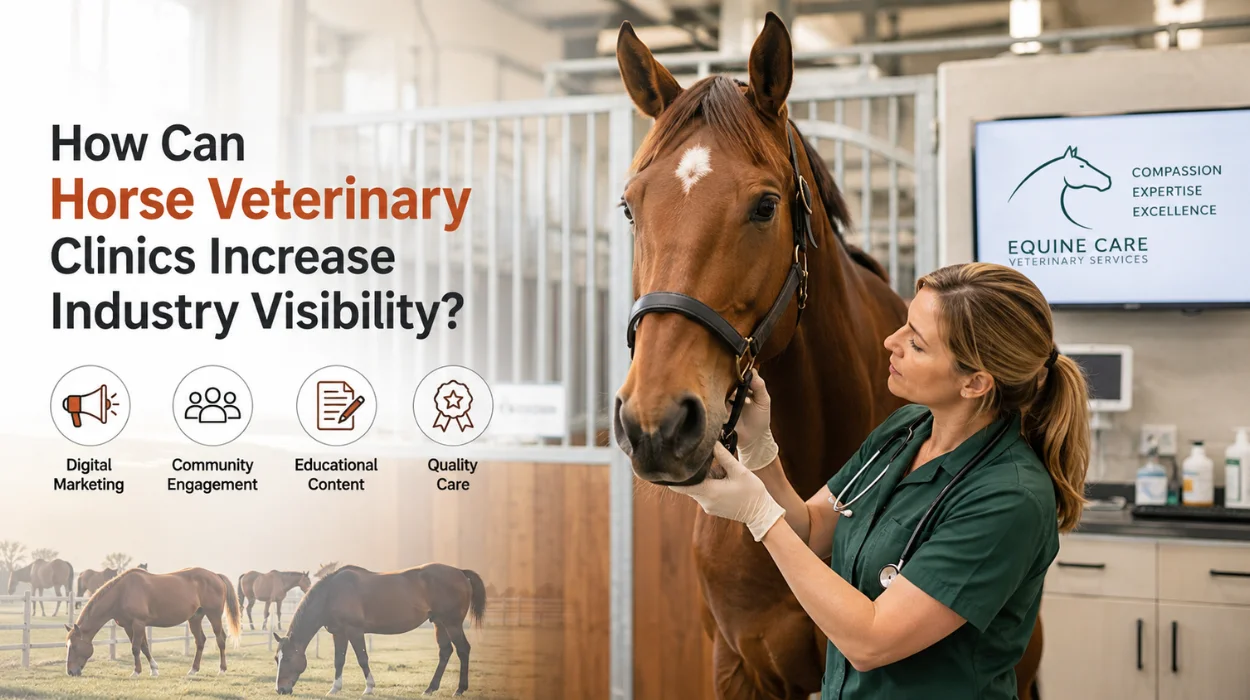
Horse veterinary clinics increase industry visibility by publishing verified news, distributing expert-led announcements, and earning coverage across relevant veterinary, equestrian, agricultural, and business media. Strategic press release distribution helps clinics place timely information where journalists, publishers, and industry audiences actively source news.
What defines industry visibility for horse veterinary clinics?
Industry visibility is the measurable presence of a horse veterinary clinic across relevant media, news, and professional information channels. A visible clinic appears in editorial coverage that relates directly to equine health, veterinary medicine, horse welfare, agriculture, and the equestrian sector. Press releases provide a structured method for communicating factual developments to journalists and media organisations. News distribution places the same verified announcement across multiple publication environments without changing its core facts. Editorial relevance matters because journalists evaluate whether a story fits their audience, publication focus, and current news agenda. Visibility therefore depends on discoverable information rather than simply publishing promotional material on a clinic website.
A horse veterinary clinic has news value when it reports a specific development with clear relevance to horse owners, breeders, trainers, agricultural businesses, or veterinary professionals. Announcements can define new clinical services, veterinary appointments, research findings, facility developments, educational initiatives, welfare programmes, or industry participation. Each release requires a factual angle that explains what happened, who is involved, where it occurred, and why the development matters. Named veterinary professionals and organisations strengthen source identification when their roles are relevant to the announcement. Accurate dates, locations, statistics, and professional credentials also help journalists verify the information.
How can press releases communicate equine veterinary expertise?
Press releases communicate equine veterinary expertise by converting verified professional information into a structured news format. A veterinary press release is a news document that presents a specific development rather than a general description of services. The headline defines the primary event, while the opening paragraph establishes the most important factual information. Subsequent paragraphs explain evidence, professional context, operational details, and relevant quotations. A quotation from a qualified veterinary professional adds an identifiable expert perspective without replacing factual reporting. This structure gives journalists a concise source document for evaluating the relevance of the announcement.
Expertise becomes more useful to media coverage when it relates to a clearly defined subject. Equine veterinary topics include lameness assessment, dentistry, reproductive care, preventative medicine, nutrition, diagnostic imaging, surgery, and horse welfare. A release discussing one subject creates a clearer editorial proposition than a release combining unrelated clinical services. Technical terminology also requires precise use because veterinary journalists and specialist publications assess factual accuracy. References to recognised professional bodies, research institutions, or veterinary standards provide additional context where relevant. The resulting release functions as a verifiable information source rather than an advertisement.
How do journalists source stories about horse veterinary clinics?
Journalists source horse veterinary stories by monitoring announcements, specialist publications, professional networks, research developments, and structured news distribution channels. A journalist begins with an editorial question about whether an event has relevance to the publication’s audience. Press releases answer the initial information need by presenting the essential facts in a format that can be quickly assessed. Journalists then verify names, dates, claims, statistics, and professional affiliations before developing the story. Specialist equestrian and veterinary publications often require a stronger technical connection than general business outlets. Relevance therefore determines whether a release enters the journalist’s consideration set.
A useful media release provides identifiable sources and sufficient factual context for verification. The dateline establishes where the announcement originates, while the body explains the event in descending order of importance. Contact information allows journalists to request clarification or additional material when developing an editorial article. Multimedia assets can provide supporting evidence when a publication accepts photographs, charts, videos, or other formats. The release itself does not guarantee editorial coverage because journalists retain independent editorial control. Its function is to make a newsworthy development accessible to potential media sources.
How does press release distribution expand visibility across the agriculture sector?
Agriculture-sector distribution expands visibility by placing equine veterinary announcements within media environments connected to animal health, farming, rural business, and agricultural activity. The agriculture sector includes veterinary medicine, livestock management, equine operations, rural enterprises, animal welfare, agricultural technology, and related professional services. Horse veterinary clinics occupy a specialised position within this wider ecosystem because equine health intersects with farming, breeding, sport, leisure, and rural commerce. A distribution strategy can therefore organise a release around the specific sector relationship established by the announcement. Editorial targeting remains important because agricultural media and veterinary media serve different audiences.
Relevant distribution channels can include specialist veterinary publications, equestrian news sites, agricultural publications, regional newspapers, and broader business news outlets. A release discussing equine clinical innovation has a different editorial profile from one announcing a rural business expansion. The distribution approach needs to reflect the subject, geography, audience, and news value of the announcement. Sector relevance also influences the terminology used in headlines and summaries. A clearly classified release gives media recipients a faster way to understand its subject and potential audience.
Clinics also benefit from understanding the benefits of horse veterinary clinics when developing information-led media topics, because visibility depends on communicating the professional value of equine veterinary expertise in a precise context. This connection keeps the announcement focused on veterinary relevance rather than generic business promotion. The strongest topics explain a defined development, identify its professional significance, and provide evidence that supports the announcement.
How does Google News handle press release content?
Google News evaluates news content through automated systems that identify relevant, original, timely, and technically accessible information from publishers. Google News is a news discovery service that organises eligible news content according to relevance, freshness, quality, and user interests. Inclusion in Google News is not equivalent to guaranteed ranking for every search or news query. Google’s systems analyse publisher content and determine how information appears within its news surfaces. Press release content therefore needs to meet applicable content and technical requirements rather than relying on distribution alone. Publishers remain responsible for maintaining accurate, accessible, and transparent news content.
Google’s Publisher Centre provides tools for publishers managing their presence and content information, while Google Search documentation explains technical requirements for discoverability. Structured data can help search systems understand article properties when implemented correctly. Article markup identifies elements such as the headline, author, publication date, and image. Clear dates and consistent publisher information also help systems interpret the content. These mechanisms support machine understanding but do not create an automatic entitlement to Google News visibility.
What technical factors support news indexing?
News indexing depends on crawlable content, clear publication signals, accessible pages, and structured information that allows search systems to interpret an article. Crawling is the process through which automated systems discover and retrieve publicly accessible web pages. Indexing is the process of analysing and storing eligible content so that it can appear in search results or other discovery systems. A press release distributed to publisher websites becomes discoverable only when those pages are accessible to automated crawlers. Robots.txt directives, noindex instructions, inaccessible content, and technical errors can prevent normal discovery or indexing.
Structured data is machine-readable information embedded within a webpage that describes the content and its properties. News publishers commonly use relevant Schema.org vocabulary such asNewsArticle, where appropriate, to provide structured article information. Publication timestamps need consistency between visible page content and structured data. Headlines, authorship, images, and publisher details also require accurate representation. Technical implementation supports interpretation but does not substitute for original reporting, editorial quality, or compliance with publisher policies. Indexing therefore involves both technical accessibility and content-level eligibility.
How do media outlets syndicate press release content?
Media syndication is the republication or distribution of news content across additional media properties while retaining the original information structure or attribution. A wire service distributes a release to participating publishers, websites, databases, and media contacts according to its network and distribution model. Publishers decide whether to display, edit, summarise, or ignore supplied material based on their editorial policies. Syndicated content can therefore appear in multiple locations without representing independent reporting from every publication. Attribution and source identification help readers understand where the information originated.
Syndication also creates a distinction between distribution reach and earned editorial coverage. Distribution is the delivery mechanism that places a release before potential media recipients. Earned coverage is independent editorial treatment generated when a journalist or publication chooses to develop the information into its own story. These two outcomes use related information but represent different editorial processes. A clinic seeking industry visibility needs to understand that publication of a distributed release and independent news reporting are not identical results. The distinction prevents inflated interpretations of media performance.
How do embargoes affect veterinary press release timing?
An embargo is a publishing restriction that specifies the date and time when journalists can publicly report supplied information. Embargoes allow selected media recipients to review information before an official announcement time. The release identifies the exact embargo date, time, and relevant time zone so recipients can interpret the restriction correctly. Timing becomes particularly important for regulatory announcements, conference presentations, appointments, research findings, and scheduled organisational developments. An embargo does not remove a journalist’s editorial discretion or guarantee publication.
Distribution timing also affects how quickly a release becomes available across participating outlets. A release scheduled for a specific date requires consistent timing information throughout the distribution process. Publishing too early can undermine the intended announcement sequence, while publishing too late can reduce relevance to a scheduled event. Newsrooms also operate according to publication calendars, editorial deadlines, and breaking-news priorities. Clear timing instructions therefore form part of the operational structure of professional media distribution.
How can horse veterinary clinics build sustained media visibility?
Sustained media visibility comes from publishing a consistent sequence of legitimate, relevant developments rather than relying on one announcement. Each release needs a distinct news angle so that repeated distribution does not become repetitive promotional content. Editorial subjects can include professional appointments, veterinary research, clinical innovations, facility developments, educational programmes, industry participation, and verified organisational milestones. Consistency gives journalists a continuing source of relevant information about a specialist organisation. Relevance remains more important than publication frequency because newsrooms prioritise stories that serve their audiences.
A structured editorial calendar can map announcements against confirmed organisational events and sector developments. The calendar records publication dates, embargoes, responsible sources, supporting evidence, target media categories, and required assets. It also prevents multiple releases from competing for attention during the same period. Performance analysis can then examine publication volume, media mentions, referral activity, and the nature of editorial treatment. These measurements distinguish simple distribution from meaningful media visibility. Over time, the resulting record shows how consistently a clinic contributes verified information to its professional sector.
What makes media visibility credible for horse veterinary clinics?
Credible media visibility is based on accurate claims, identifiable sources, relevant news value, transparent attribution, and consistent factual information. Veterinary communications require particular care because statements about animal health can influence professional and public understanding. Claims about treatments, outcomes, research, qualifications, or clinical performance require evidence that supports their wording. Regulatory and professional references also need accurate naming and context. Avoiding unsupported medical claims protects the informational integrity of the release. Clear sourcing allows journalists and readers to distinguish professional statements from general promotional assertions.
Press release distribution functions most effectively as an information-delivery mechanism when the underlying announcement contains genuine news value. Journalists analyse the relevance of the subject, verify the available facts, and decide whether further editorial treatment is justified. Publishers distribute or syndicate eligible content according to their own policies, while search systems crawl and index accessible pages according to technical and content signals. Google News visibility also depends on eligibility and automated ranking systems rather than distribution alone. For horse veterinary clinics, industry visibility therefore emerges from the interaction between authoritative information, relevant media distribution, editorial verification, and technically accessible news content.
Ready to get your story published?
Distribute your press release across 500+ trusted media outlets — with editorial review and a full pickup report within 48 hours.
Send Press Release →