
How Film Industry Companies Grow Through Strategic Communications
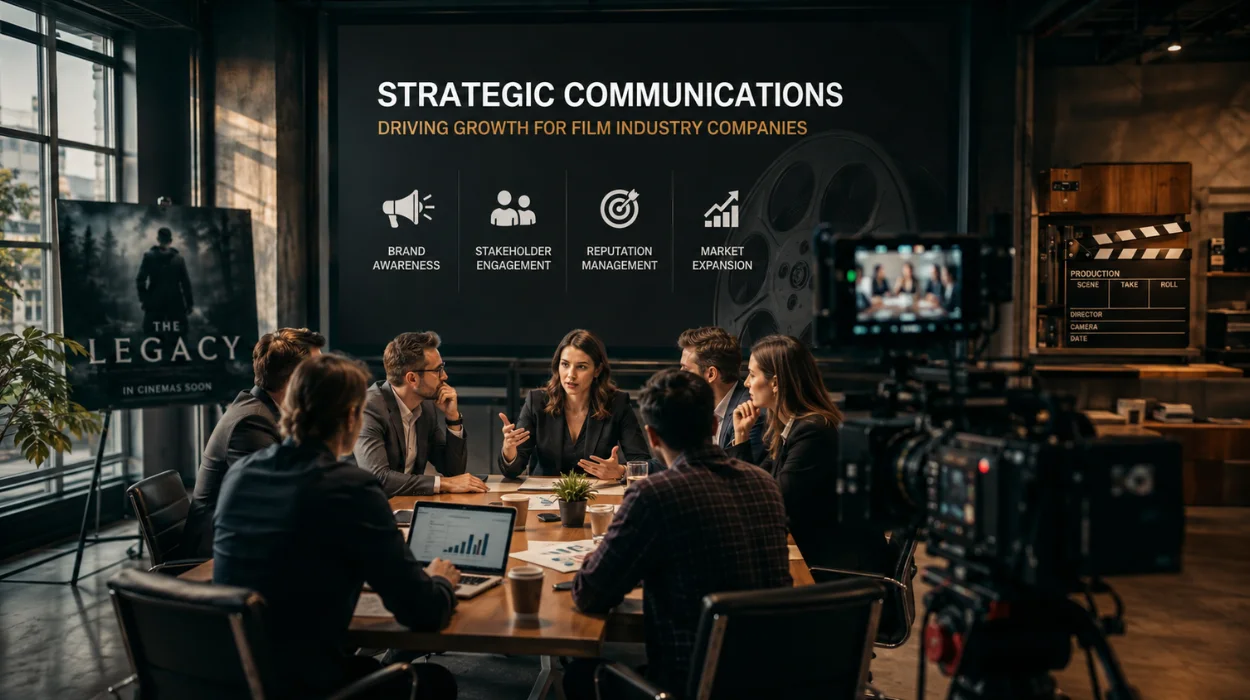
Film industry companies grow through strategic communications by aligning media distribution, journalist outreach, and reputation signals with release cycles, audience demand, and platform algorithms. Growth occurs when messaging reaches high-authority publications, earns credible coverage, and sustains visibility across multiple media channels.
What Is More Effective for Film Promotion: Wire Distribution or Direct Journalist Outreach?
Wire distribution scales reach instantly, while direct journalist outreach secures deeper editorial coverage with higher authority signals.
Wire distribution circulates a press release across hundreds of syndicated endpoints within minutes. Direct outreach targets selected journalists with tailored story angles and exclusive access. Both methods serve different stages of a film campaign.
Wire distribution ensures rapid visibility across aggregated platforms but limits editorial control. Direct outreach builds relationships and enables narrative shaping but requires time-intensive pitching and follow-ups.
How does wire distribution function in film campaigns?
Wire distribution publishes a press release to a network of partner sites. These include financial portals, regional news platforms, and content aggregators. A single release can appear on over 300 endpoints within 24 hours. This method supports announcements such as trailer launches, casting news, or release dates.
- Distribute announcements across 300+ syndicated sites such as regional news portals.
- Generate indexed backlinks within 12–48 hours
- Amplify reach during time-sensitive releases such as premiere dates
Wire distribution prioritises speed and volume. It does not guarantee editorial rewriting or feature placement. The content remains largely identical across all endpoints.
How does direct journalist outreach differ in execution?
Direct outreach involves pitching individual journalists with tailored angles. Film companies provide exclusive interviews, behind-the-scenes access, or early screenings. Journalists then produce original editorial content.
- Pitch exclusive stories to named journalists such as entertainment editors
- Secure feature articles with original headlines and analysis
- Build long-term media relationships across publications
Direct outreach results in fewer placements but higher credibility. Each article carries editorial voice and unique positioning. This approach strengthens reputation signals rather than sheer volume.
Which Approach Delivers Faster Visibility: Syndication or Editorial Coverage?
Syndication delivers visibility within hours, while editorial coverage requires days but sustains longer-term engagement.
Syndication operates on automated publishing systems. Editorial coverage depends on newsroom workflows, approvals, and publication schedules. Speed varies significantly between the two.
Syndicated releases appear within 1–6 hours across multiple domains. Editorial articles take 48–120 hours to publish but attract higher reader engagement and longer session durations.
How quickly does syndication achieve reach?
Syndication distributes content through pre-established networks. Once approved, the release is pushed live instantly. Indexing by search engines occurs within 24–72 hours.
- Publish releases across 200–500 sites within 6 hours
- Achieve initial search engine indexing within 72 hours
- Support trending announcements such as award nominations
This method suits time-sensitive campaigns. It ensures the message appears widely during peak interest periods.
Why does editorial coverage take longer?
Editorial coverage requires human intervention. Journalists evaluate pitches, conduct interviews, and write original pieces. Editors review and approve content before publication.
- Evaluate pitches within newsroom editorial cycles.
- Produce original articles with 800–1,200 words
- Publish after editorial approval processes
The delay results in higher-quality storytelling. Readers engage more deeply with editorial content than syndicated releases.
Which Strategy Builds Stronger Brand Authority: Guaranteed Placement or Organic Coverage?
Organic editorial coverage builds stronger authority, while guaranteed placement ensures predictable visibility without editorial validation.
Guaranteed placement refers to paid publishing on pre-arranged media sites. Organic coverage emerges from journalist interest and editorial decision-making. Authority signals differ between the two.
Guaranteed placements provide controlled exposure on known domains. Organic coverage delivers credibility through independent editorial endorsement, which search engines and audiences interpret as higher trust.
What defines guaranteed placement in film PR?
Guaranteed placement secures publication on specific websites through paid agreements. The content is often labelled as sponsored or partner content.
- Publish articles on pre-selected domains such as entertainment blogs
- Control headline, messaging, and timing
- Ensure predictable distribution across agreed outlets
This approach eliminates uncertainty. However, it lacks independent editorial validation. Audiences may perceive it as promotional.
How does organic coverage strengthen authority?
Organic coverage results from journalist interest in the story. Publications write independent articles without payment influence.
- Earn features in recognised entertainment sections.
- Gain editorial backlinks from authoritative domains
- Increase trust through independent reporting
Organic coverage signals authenticity. It enhances long-term brand perception within the film industry.
What Is More Cost-Effective: Broad Distribution or Targeted Media Placement?
Broad distribution reduces cost per impression, while targeted placement increases cost per placement but improves relevance and engagement.
Cost efficiency depends on campaign goals. Film companies choose between volume-based exposure and precision targeting.
Broad distribution spreads content widely at a lower unit cost. Targeted placement focuses on fewer but more relevant audiences, resulting in higher engagement rates per article.
How does broad distribution optimise cost?
Broad distribution spreads a single release across many platforms. The cost is divided across hundreds of placements.
- Distribute one release across 300+ sites at a fixed fee
- Achieve cost per placement as low as £1–£3
- Reach global audiences without segmentation
This method maximises exposure. It suits large-scale announcements where reach matters more than depth.
Why does targeted placement cost more?
Targeted placement involves manual pitching and negotiation. Each placement requires effort and relationship management.
- Pitch to 20–50 selected journalists or outlets
- Secure 5–10 high-quality placements
- Invest time in personalised communication
The cost per placement increases. However, relevance and audience alignment improve significantly.
Which Method Supports Google News Visibility: Optimised Distribution or Generic Publishing?
Optimised distribution aligns with Google News indexing requirements, while generic publishing lacks structured signals needed for inclusion.
Google News visibility depends on technical and editorial criteria. Not all distributed content qualifies for indexing.
Optimised distribution includes structured metadata, authoritative domains, and editorial formatting. Generic publishing lacks these elements, reducing the likelihood of appearing in Google News results.
What defines optimised distribution for news indexing?
Optimised distribution follows strict formatting and technical guidelines. These include structured headlines, timestamps, and publisher authority.
- Publish on domains already indexed in Google News
- Include structured data such as publication date and author
- Maintain journalistic formatting standards
This approach increases the probability of appearing in news search results. It enhances discoverability during trending topics.
Why does generic publishing limit visibility?
Generic publishing places content on non-news platforms. These lack authority signals and structured data.
- Publish on blogs without news indexing approval
- Omit structured metadata required for search engines
- Reduce chances of inclusion in news-specific results
Generic publishing supports baseline visibility. It does not contribute significantly to news-based discovery.
For foundational understanding of visibility mechanics, refer to build strong brand visibility.
Which Communication Strategy Suits Film Release Cycles Best?
Integrated strategies combining distribution, outreach, and editorial coverage align best with film release cycles.
Film promotion follows defined phases. These include announcement, teaser, trailer, premiere, and post-release engagement. Each phase requires different communication methods.
Distribution supports early awareness. Outreach builds narrative depth. Editorial coverage sustains post-release engagement and reputation.
How do strategies align with release phases?
Different stages demand different communication tactics. Film companies adapt methods accordingly.
- Launch announcements using wide distribution networks
- Promote trailers through targeted outreach to entertainment journalists
- Sustain engagement with editorial reviews and interviews
Each stage builds on the previous one. This layered approach maximises impact across the campaign timeline.
Why is a single method insufficient?
Relying on one method limits reach or depth. Distribution alone lacks narrative strength. Outreach alone lacks scale.
- Combine distribution for reach with outreach for credibility
- Integrate editorial coverage for long-term visibility
- Maintain consistency across all communication channels
Strategic integration ensures balanced growth. It addresses both visibility and authority simultaneously.
How Do Emerging Trends Influence Film Industry Communications?
Data-driven targeting, multimedia storytelling, and platform-specific optimisation redefine how film companies communicate.
Modern PR strategies evolve with digital platforms. Film companies adapt to algorithm-driven visibility and audience behaviour.
Emerging trends prioritise measurable engagement, visual storytelling, and cross-platform consistency. These factors influence how messages are distributed and consumed.
What role does data-driven targeting play?
Data analytics informs audience segmentation and content timing. Film companies use metrics to refine campaigns.
- Analyse audience behaviour across platforms such as streaming services
- Adjust messaging based on engagement data
- Optimise release timing for maximum visibility
Data-driven strategies increase efficiency. They ensure communication aligns with audience preferences.
How does multimedia storytelling enhance engagement?
Visual content dominates digital platforms. Film campaigns leverage trailers, clips, and behind-the-scenes footage.
- Produce video assets for social and media distribution
- Integrate visuals into press releases and pitches
- Increase engagement through dynamic content formats
Multimedia storytelling improves audience retention. It complements traditional written communication.
When Should Film Companies Prioritise Reputation Management Over Promotion?
Reputation management takes priority during crises, controversies, or negative publicity cycles.
Film industry visibility includes both positive and negative exposure. Strategic communication addresses reputation risks alongside promotional goals.
Reputation management mitigates damage and restores trust. Promotional campaigns resume once credibility stabilises.
What triggers reputation-focused communication?
Certain events require immediate response. These include controversies, delays, or public criticism.
- Respond to negative press coverage within 24 hours
- Issue clarifications or official statements
- Monitor media sentiment across platforms
Timely communication reduces long-term impact. It protects brand integrity.
How does reputation management differ from promotion?
Reputation management focuses on correction and clarity. Promotion focuses on visibility and engagement.
- Address concerns with factual statements
- Avoid promotional tone during sensitive situations
- Rebuild trust through consistent messaging
This approach ensures credibility. It prevents further escalation of negative narratives.
For service-level execution insights, review services for the film industry.
Film industry companies grow through strategic communications by balancing distribution scale, editorial depth, and timing precision. Each method—wire distribution, journalist outreach, guaranteed placement, and optimised publishing—serves a distinct function within a campaign. No single approach dominates across all scenarios. Growth depends on selecting and combining methods based on campaign phase, audience, and objectives. Strategic evaluation of these options enables sustained visibility, stronger authority signals, and long-term industry positioning.
Ready to get your story published?
Distribute your press release across 500+ trusted media outlets — with editorial review and a full pickup report within 48 hours.
Send Press Release →