
How Textile Manufacturing Companies Stay Competitive in Modern Markets
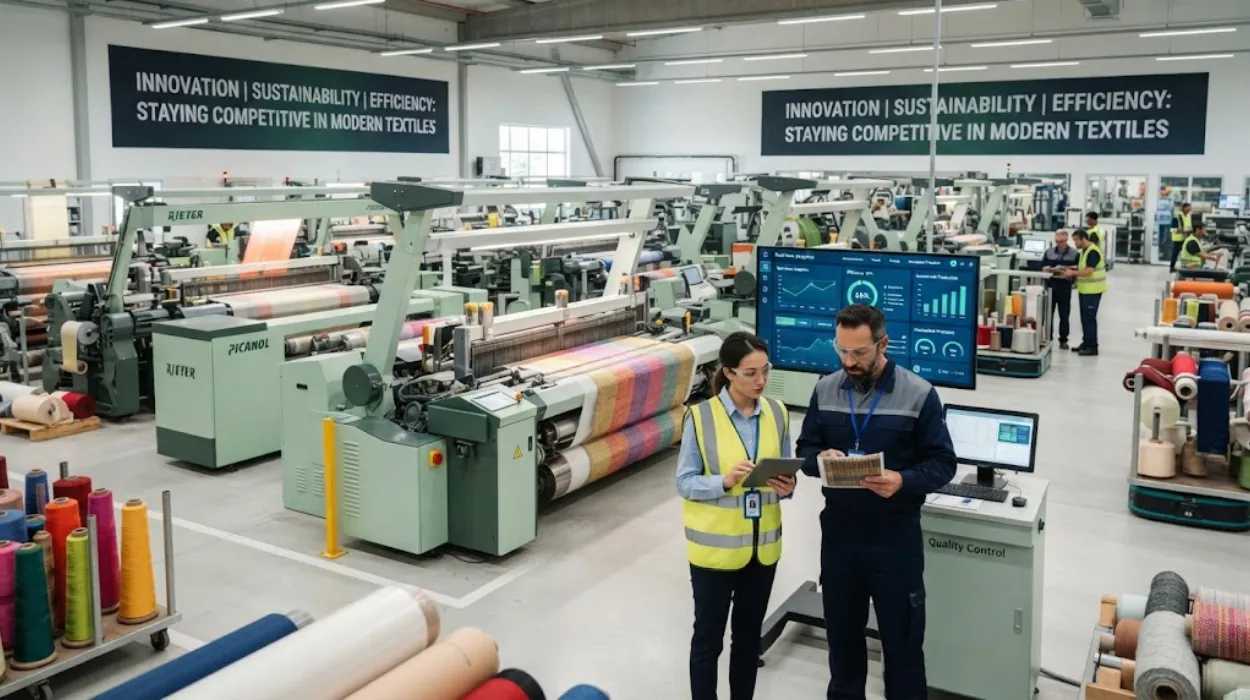
Textile manufacturers stay competitive by pairing operational efficiency with consistent media visibility. Production quality alone no longer secures market share; buyers, investors, and trade partners verify a manufacturer’s standing through publicly indexed news coverage before signing contracts.
What Makes Media Visibility a Competitive Factor for Textile Manufacturers?
Media visibility functions as third-party verification of operational claims. A textile manufacturer that announces a new dyeing process, a sustainability certification, or a factory expansion through a distributed press release creates a permanent, searchable record that buyers and journalists can independently verify. Trade publications such as Textile World and Just Style index manufacturer announcements and cross-reference them against prior coverage, building a documented history of the company’s activity. This documented history becomes a due-diligence resource for procurement teams evaluating suppliers, particularly in markets where compliance with regulations such as REACH or the EU’s Corporate Sustainability Due Diligence Directive determines contract eligibility. Search engines index this coverage, so a manufacturer with consistent, dated press activity ranks for supplier-research queries that competitors without a media record cannot capture. Visibility, in this context, is not a marketing outcome; it is a verification layer that reduces the buyer’s perceived risk.
How Does Press Release Distribution Support Textile Industry Credibility?
Press release distribution places a company’s announcement on wire networks that syndicate to news aggregators and trade outlets simultaneously. A wire service transmits the release to its distribution partners, which include search engines, financial data terminals, and industry-specific publications, within minutes of submission. This syndication process is what separates a distributed press release from a static company blog post: the release reaches Google News, Bing News, and regional business outlets through pre-established syndication agreements rather than relying on individual pickup. Credibility accumulates because each syndicated placement carries the originating outlet’s domain authority, and search engines treat repeated syndication as a signal of newsworthy, verifiable content.
Which Wire Services Reach Textile Trade Publications?
Three wire services carry the majority of manufacturing-sector announcements into trade media: PR Newswire, which maintains dedicated distribution lists for industrial and manufacturing journalists; Business Wire, which syndicates directly to Nasdaq and NYSE market data terminals for publicly listed textile firms; and EIN Presswire, which indexes releases into niche category feeds including EIN’s dedicated textile and apparel channel. Each service applies its own editorial verification step before transmission, checking that the release contains factual, non-promotional claims before it reaches syndication partners.
How Do Journalists Source Stories From Textile Manufacturers?
Journalists source manufacturing stories primarily through wire feeds, direct pitches, and platforms such as Cision and Muck Rack that aggregate press releases by industry tag. A trade journalist covering technical textiles monitors wire feeds tagged under manufacturing, industrial, or sustainability categories, scanning for announcements that fit an active editorial calendar. Journalist outreach platforms allow public relations teams to identify specific reporters by beat, publication history, and prior coverage of comparable manufacturers, which increases the probability of a direct pickup beyond wire syndication. A press release written with a clear news hook, defined as a factual development rather than a promotional statement, meets the threshold most editorial desks apply when selecting stories for coverage. Journalists verify claims independently before publishing, typically by cross-referencing the release against the company’s regulatory filings, prior wire history, or direct correspondence with the listed media contact.
How Does Google News Indexing Work for Manufacturing Press Releases?
Google News indexes press releases when the distributing outlet meets its publisher inclusion criteria and the content satisfies structured data requirements. Google’s crawler assesses publication frequency, byline consistency, and the presence of an editorial policy page before including a domain in the News index. Wire services that hold long-standing Google News inclusion, such as PR Newswire and Business Wire, transmit releases through domains already indexed, which shortens the crawl-to-index interval to a period measured in hours rather than days. Content that lacks these structural signals remains in Google’s general web index but does not surface in the News tab or Top Stories carousel, limiting its visibility to standard organic search results.
What Structured Data Signals Support Google News Eligibility?
Google’s crawler prioritises pages carrying NewsArticle schema markup, which defines the headline, publication date, author, and organisation fields in a format the crawler parses without ambiguity. A publisher that implements this markup consistently across releases signals machine-readable reliability, which the crawler weights when determining index priority. Google News Publisher Centre submissions further specify the content categories a domain covers, allowing the crawler to match manufacturing-sector releases against relevant News tab queries. Domains without consistent schema implementation experience irregular indexing, where some releases appear in News results, and others do not, despite similar content quality.
How Do Embargoes and Wire Timing Affect Textile Industry Announcements?
An embargo restricts publication until a specified date and time, coordinating simultaneous coverage across multiple outlets. A textile manufacturer announcing a joint venture, a major contract, or a regulatory certification issues the release to selected journalists under embargo, granting early access in exchange for a commitment not to publish before the release date. This coordination prevents a single outlet from breaking the story ahead of competitors, which preserves the announcement’s news value across the full media list rather than concentrating it in one early placement. Wire timing operates on a separate mechanism: submitting a release for distribution during a wire service’s peak transmission window, typically between 07:00 and 10:00 in the target market’s primary time zone, increases the probability that editorial desks review it before their daily content selection closes. Releases distributed outside these windows compete for editorial attention against a backlog of same-day submissions, reducing pickup probability regardless of content quality.
How Does Digital PR Support Production and Innovation Announcements?
Digital PR translates operational developments, such as new machinery, process patents, or output capacity increases, into indexed, citable coverage that supply chain partners and search engines can verify. A textile manufacturer that introduces automated cutting technology or a closed-loop water recycling system generates a factual news hook distinct from routine marketing content, which editorial desks are more likely to accept for publication. Digital PR campaigns built around these developments typically combine a distributed press release with direct journalist outreach and supporting technical documentation, ensuring the story reaches both general business press and specialised manufacturing outlets. Manufacturers that structure this coverage around a defined content calendar, tying each release to a specific operational milestone, build a searchable record that demonstrates sustained capability rather than a single isolated announcement. Organisations that want to improve production and innovation visibility through this method typically integrate press release timing directly into their product development roadmap, releasing coverage at each verified milestone rather than consolidating announcements into infrequent updates.
How Does Reputation Management Affect Buyer Trust in Textile Supply Chains?
Reputation management in the textile sector consists of monitoring, verifying, and correcting the public record that buyers reference during supplier evaluation. A manufacturer’s search results, comprising wire coverage, trade publication mentions, and third-party review platforms, form the primary due diligence source for procurement teams operating in jurisdictions with strict supply chain disclosure requirements, including the UK Modern Slavery Act and Germany’s Supply Chain Due Diligence Act. Reputation management teams track this coverage continuously, submitting corrections through the original publishing outlet when factual errors appear, since search engines index the corrected version only after the source page updates. Manufacturers operating in the Textile sector rely on this continuous monitoring because a single outdated or inaccurate news item can surface in supplier-verification searches for a period extending well beyond the item’s original relevance, directly affecting contract negotiations that depend on documented compliance history.
Press release distribution, journalist outreach, and structured indexing operate as interconnected mechanisms that determine whether a textile manufacturer’s operational developments reach the buyers, journalists, and search engines evaluating supplier credibility. Each mechanism, from wire timing to schema markup, governs a distinct stage of how information moves from internal announcement to publicly verifiable record.
Ready to get your story published?
Distribute your press release across 500+ trusted media outlets — with editorial review and a full pickup report within 48 hours.
Send Press Release →