Food and Beverage PR for Brand Awareness
The right story matters as much as the release itself. Food and beverage PR distribution builds brand awareness by placing relevant, consistent messages before the journalists and audiences most likely to care. In the UK, foodservice brands have well over 80 titles to consider, so choosing the right media targets is central to a focused campaign.
A press release can announce a launch, but a campaign is more effective when its goals and key messages are clear and supported by thoughtful media relations. Explain what makes the brand relevant, then choose channels and timing that suit its audience and wider marketing activity.
This article explains how food and beverage PR uses press campaigns, media relationships and consistent messaging to build recognition. You’ll learn how to set practical awareness goals, identify relevant media and understand the role of distribution and reporting in a professional campaign.
Key Takeaways
- Prioritise media outlets by audience and category, rather than sending every announcement to the same list.
- Set a clear awareness goal and align campaign messages with the brand’s identity and wider marketing activity.
- Assess specialist agencies by the relevance of their media relationships, campaign approach and reporting.
- Choose a distribution approach that fits your announcement and whether you need support for one release or a series.
Food and beverage media relations and press campaigns
Food and drink PR connects a brand’s news with relevant journalists, buyers and consumers. Effective campaigns combine targeted distribution, ongoing media relations and clear, consistent messaging.
Food and drink brand media relations
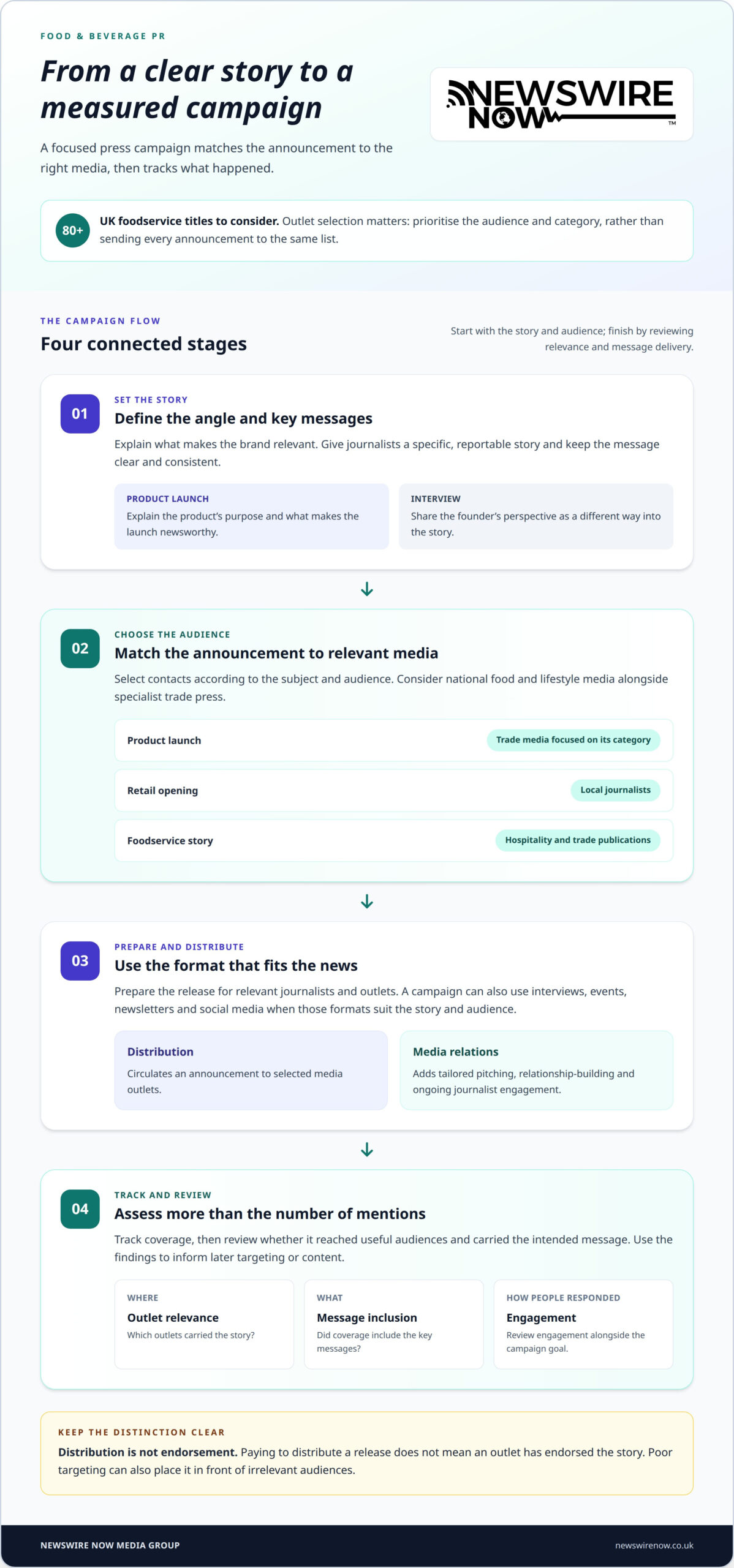
Media relations means matching a story to journalists who cover its subject and audience. The UK foodservice sector has well over 80 titles to consider, including hospitality and trade publications read by foodservice buyers. A product launch may suit trade media focused on its category, while a retail opening may interest local journalists. A PR agency should consider national food and lifestyle media alongside specialist trade press, then select contacts based on the announcement.
Which services distribute food and drink news to journalists, trade media and consumers? Press release distribution services circulate announcements to media outlets, while PR agencies may also build relationships and pitch stories directly. Consumer reach can also come through national media, social media and influencer activity.
Earned media amplification
Earned media is coverage a publication chooses to give a brand, rather than an advert the brand buys. A review, interview or feature can bring a message to readers interested in food and drink. Consumer PR and national media relations can complement trade coverage, helping a launch reach shoppers as well as buyers. Food and beverage PR distribution works best when outlet selection reflects the story’s audience, not simply a broad mailing list.
How do distribution services compare? Assess their intended audiences, media targeting, campaign support and reporting. Distribution sends news to selected outlets; media relations adds tailored pitching and ongoing journalist engagement.
What risks come with paid distribution? Poor targeting can put a release in front of irrelevant audiences, and paying for distribution does not mean an outlet has endorsed the story. Brands should also keep product claims, labelling and advertising aligned with applicable UK requirements.
Food and beverage press campaigns
A press campaign turns a business announcement into a coordinated story. It usually starts with a clear angle, key messages and suitable media contacts. The release is then prepared for distribution, followed by coverage tracking and a review of results. Food and drink brands can use releases, interviews, events, newsletters and social media, choosing formats that fit the news and audience.
How does press release distribution work in the UK? A release is prepared and sent to relevant journalists and media outlets, with targeting shaped by its subject and audience. UK food and drink coverage spans national consumer media, local outlets, hospitality titles and specialist trade publications. Some writers focus on drinks and alcoholic products.
Building food and beverage brand awareness
Awareness grows when people recognise a brand and understand why it belongs in their consideration set. For food and drink businesses, that means connecting a clear story with the moments audiences encounter it, from a launch announcement to a retail shelf or hospitality menu. Consistent messaging across media coverage, social channels and retail materials helps build recognition and reputation.
Start with the brand’s story: what it offers, who it serves and why it is relevant. A useful message is specific enough for journalists to report accurately, yet flexible across formats. For example, a launch story can explain a product’s purpose, while an interview can share the founder’s perspective. Media relations should give journalists a clear reason to explore the story, rather than simply repeating product claims without context.
Brand partnerships can extend that narrative into retail and foodservice. A collaboration with a chef, bartender or retail partner can demonstrate how a product fits into a recipe, menu or shopping occasion. Sunny & Luna launched its first two products in Whole Foods in 2023, and its products are stocked in more than 400 UK retail locations. The example shows how launch visibility and retail presence can form part of a broader brand story.
Building a foodservice brand also requires messages that matter to buyers and hospitality teams. A supplier might focus on menu applications, product positioning or relevance to a particular dining occasion. Keep these points consistent across trade coverage, consumer communications and partner materials, while adapting the detail to each audience.
Earned media can reinforce awareness when coverage reaches people likely to encounter the product. Pair press activity with food-focused content or an influencer partnership, then align social posts with the same key messages. For campaigns using press announcements, media pickup reporting can help track which outlets carried the story and inform subsequent communications.
Food PR goals
A food PR campaign needs a defined outcome before channels are selected or announcements prepared. Goals can focus on brand awareness, audience attitudes or behaviour. These are distinct outcomes: awareness means people recognise a name, while behaviour could mean considering a product or asking a retailer about it. Choose the priority that matches the campaign’s business purpose.
Turn that priority into measurable indicators from the outset. For an ingredient launch, a campaign might track relevant media coverage, message accuracy and engagement with social media posts. For a drinks PR campaign aimed at changing perceptions, the team could monitor themes in coverage and audience responses. Set key performance indicators before activity begins, then review them during and after the campaign.
Measurement should look beyond the volume of coverage. A list of mentions shows where a story appeared, but not whether it reached useful audiences or carried the intended message. Review outlet relevance, key message inclusion and engagement alongside the campaign’s original goal. These findings can inform targeting or content in later activity, rather than treating every placement as equally valuable.
Connect PR goals with the wider marketing calendar so campaigns reinforce other communications. A product launch, seasonal promotion and retail expansion may require different timing and audiences. Keep the brand’s mission, values and tone consistent across press materials and social media, then tailor details for journalists, consumers or trade readers. If a brand discusses environmental responsibility, for example, its claims and supporting information should align across channels.
Set a review point for each campaign stage: before launch, during outreach and after coverage appears. Compare results with the original indicators, record what earned attention and identify gaps. This gives the next campaign a stronger basis for decisions and helps teams distinguish visibility from meaningful engagement.
Which UK agencies specialise in food and drink PR distribution?
Specialist food and drink PR support can combine journalist relationships, campaign planning and release distribution. These are distinct functions: a media relations agency develops story angles and pitches them to relevant contacts, while a distribution service circulates a prepared announcement to selected outlets. Campaigns may use both, depending on whether the priority is tailored pitching, efficient release delivery or a coordinated programme.
Assess specialism through relevant work, not a food-related label alone. Earned coverage for comparable products can show whether a team understands the category, audience and news angles that interest journalists. A drinks launch, for example, may need different contacts and timing from a foodservice supplier’s trade announcement. Relevant experience should span national food and lifestyle media as well as category-specific trade press.
Campaign planning matters too. A capable food and drink PR partner aligns activity with the brand’s marketing calendar, retail plans and seasonal launch cycle. It should establish campaign goals, agree key messages and explain how results will be reported. Look beyond coverage volume: outlet relevance, message inclusion and audience engagement help show whether activity served its purpose. For foodservice brands, trade coverage may matter more than broad consumer exposure.
Distribution-only support can suit a clear announcement that needs circulation, such as a product launch or company milestone. A broader PR campaign is more appropriate when the story needs tailored pitching, interviews or continuing media relations. The right structure depends on the announcement, target audience and amount of campaign support required. For a release-ready food or drink story, explore press release distribution options as a practical next step.
Newswire Now Media Group
Newswire Now Media Group helps food and drink brands distribute announcements when they need professional media reach and clear coverage reporting. Its network includes more than 40 owned publications reaching millions of readers worldwide, alongside distribution to more than 500 news outlets across 27 industry sectors and 37 professions.
Editorial Review helps prepare a release for distribution, while Media Pickup Reporting shows brands where their news appeared. Single Press Release Distribution can suit one announcement; Multi-release Distribution Bundles can support a planned series of campaign updates. These options offer a practical route from a prepared story to broader media visibility.
Planning a food or drink announcement? Contact Newswire Now Media Group to discuss distribution and choose the option that suits your campaign.
Give your next food story a clear direction
Use your next announcement to start an ongoing conversation with the people who matter to your brand. Decide what you want audiences to remember, then connect that message to upcoming launches, seasonal activity or business milestones. This gives each campaign a purpose beyond a single media appearance.
Food and beverage PR distribution can support a focused announcement or form part of a wider sequence. Newswire Now Media Group offers Single Press Release Distribution for individual news and Multi-release Distribution Bundles for planned announcements. Editorial Review can also help prepare a release before distribution.
The right next step depends on your campaign schedule and the story you’re ready to share. A clear brief about your news, audience and objectives helps establish the approach. Contact Newswire Now Media Group to discuss your food and drink announcement and move your next campaign forward.
Frequently Asked Questions
How does Beverage PR work?
Beverage PR introduces a drink to relevant audiences through media stories, product reviews and sampling opportunities. A campaign might offer journalists a tasting, explain the product’s place in a category or pitch an interview with its spokesperson. Some drinks writers specialise in reviewing particular products, including alcoholic drinks. Give each contact a clear reason to consider the story.
How does Food PR Work?
Food PR turns a company update or product development into a story that matters to its intended audience. For example, a food business might explain how a new product fits a changing menu or share its spokesperson’s perspective on an industry trend. Interviews and expert commentary can build familiarity over time, giving journalists useful context beyond a single product announcement.
So, what does food PR success look like?
Food PR succeeds when a campaign achieves its stated objective, not simply when it accumulates mentions. For a new product, useful signs might include accurate coverage in relevant publications and audience engagement with the story. For reputation-building, coverage that reflects the brand’s intended values may matter more. Reviewing results against the original goal helps teams decide what to continue or change.
What is food and beverage PR distribution?
Food and beverage PR distribution circulates a brand’s news release to media outlets selected for its subject and audience. A release might announce a new product, business milestone or foodservice development. Distribution puts the information in front of journalists, but editorial decisions remain with each outlet. It is one part of a wider public relations approach to earning attention.
How can brands measure the results and reach of food and beverage PR distribution?
Measure reach by reviewing which outlets carried the release and whether their audiences match the campaign’s target. Then assess whether coverage conveyed the intended messages and prompted meaningful responses, such as enquiries or social engagement. Consider these outcomes separately from business results, including sales, which can have several influences. This distinction helps teams assess PR’s contribution without overstating its effect.
What should a food and drink press release include for UK media?
A release should present a clear story angle and key messages that explain why the announcement matters. Tailor the details to the audience and select suitable national, local or specialist trade media.
Ready to get your story published?
Distribute your press release across 500+ trusted media outlets — with editorial review and a full pickup report within 48 hours.
Send Press Release →