
How to Write a Clear Rebranding Press Release

A rebrand is too important to communicate through scattered updates. A rebranding announcement press release gives your organisation one clear account of what is changing, why it is changing and what customers and partners can expect. It also gives employees and media contacts consistent, official messaging, helping you shape the story around your new identity.
Not every refreshed logo needs a formal media announcement. A substantial change to your name, market position or business direction has a stronger case for one. The challenge is to make the news useful, not simply announce a new look. A release can give journalists clear context and create a searchable record of the change. This guide explains when a press release can support a rebrand, how to organise its headline, key details, quote and media contact information, and how to time publication around launch. It also covers common mistakes, from announcing before updated assets are ready to overlooking customers’ practical questions.
Key Takeaways
- Use a practical template to connect the reason for the rebrand with what changes, what stays and what it means for customers.
- Arrange the release so journalists can quickly find the announcement, supporting details, leadership quote and media contact.
- Coordinate the announcement with the launch: out-of-date assets or unclear customer information can undermine the message.
- Consider how one official announcement can give stakeholders and media a consistent account of the organisation’s new direction.
Why write a rebranding press release?
A rebrand release gives customers, employees and partners one clear account of the change. It can explain your vision, describe the new identity and provide an official message stakeholders can share. Use a template to keep the essentials consistent, then tailor the details to your organisation.
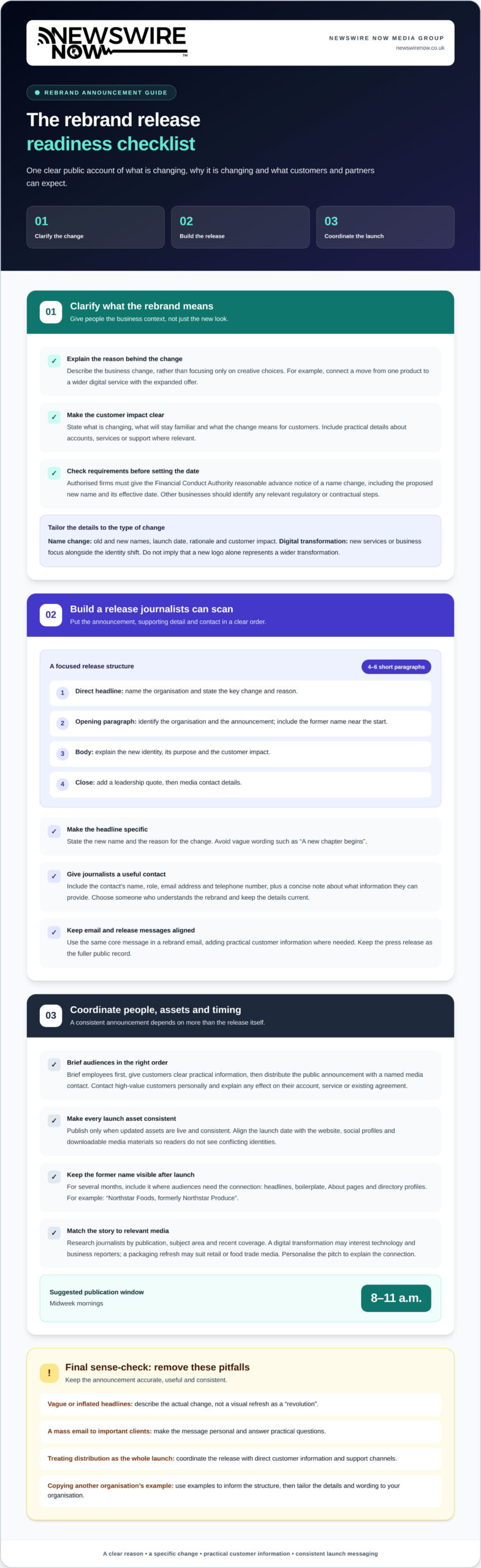
- Explain the reason. Describe the business change behind the rebrand, not just the creative choices. For example, a company moving from a single product to a wider digital service could connect its new identity to that expanded offer. State what is changing, what will stay familiar and what the change means for customers.
- Check relevant UK requirements. For authorised firms, the Financial Conduct Authority requires reasonable advance notice of a name change, including the proposed new name and its effective date. Other businesses should identify any regulatory or contractual steps that apply to their circumstances before choosing an announcement date.
- Write a specific headline and identify both names. A useful headline states the new name and the reason for the change, such as “Example Group becomes Example Digital to reflect its expanded online services”. Include the former name at the start of the release so existing customers can connect the announcement with the organisation they know.
- Adapt the template to the type of change. For a name change, include the old and new names, launch date, rationale and customer impact. For a digital transformation rebrand, explain the new services or business focus alongside the identity shift. Don’t imply that a new logo alone represents a wider transformation.
- Align email and media examples. A rebrand announcement email can use the same core message, with practical customer details such as changes to accounts or support. Keep the release as the fuller public record. Reviewing examples from organisations with similar changes can help you choose a relevant structure without copying their wording.
Press release structure and media contact details
Reach employees, customers and journalists with coordinated messages tailored to each group. Brief employees first, give customers clear practical information, then distribute the public announcement with a named media contact.
- Build a clear release structure. Start with a direct headline, followed by an opening paragraph that identifies the organisation and change. Use the body to explain the new identity, its purpose and the customer impact. Add a leadership quote, then media contact details. Four to six short paragraphs can keep the story focused and easy to scan.
- Make the headline specific. Name the organisation and state the key change, rather than relying on a vague line such as “A new chapter begins”. For example, “Northstar Foods adopts a new brand identity as it expands its product range” tells journalists what changed and why the announcement matters.
- Prepare a useful media contact. Include the contact’s name, role, email address and telephone number, plus a concise note about the information they can provide. Choose someone who understands the rebrand and can explain it consistently. Keep the details current so journalists can reach the right person.
- Match media targets to the story. Identify journalists by publication, subject area and recent coverage. A digital transformation may interest technology and business reporters; a packaging refresh may suit retail or food trade media. Relevant media databases and carefully maintained contact lists help organise research, but a tailored pitch should still explain the connection.
- Coordinate outreach and distribution. Give employees and priority customers the appropriate message before public release. Then send journalists the announcement with a concise, personalised pitch. Midweek mornings between 8 and 11 a.m. are a recommended publication window. A wider press release distribution plan can complement direct media outreach.
Common announcement mistakes
- Don’t announce before the new identity is ready. Publish only when updated assets are live and consistent. If the website still shows the old logo while the release displays the new one, readers get conflicting signals. Align the launch date, website, social profiles and downloadable media materials before distribution.
- Keep the former name visible after launch. Removing it everywhere at once can make the organisation harder to recognise. For several months after a rebrand, include the former name in headlines, boilerplate, About pages and directory profiles. For example, write “Northstar Foods, formerly Northstar Produce” where audiences need the connection.
- Don’t send high-value customers a mass email. Contact important clients personally, with a message that reflects their relationship with the company. Explain whether the rebrand affects their account, service or existing agreement. A generic email that only celebrates a new name can leave practical questions unanswered.
- Avoid headlines that overstate the change. “A revolution in customer service” sounds inflated if the announcement is about a visual refresh. Make the headline reflect the actual development, such as a new name, expanded offer or revised market focus. Precise writing helps journalists assess the story accurately.
- Don’t treat press release distribution as the whole launch plan. A release can share the official announcement, but customers may also need direct information by email or through support channels. Coordinate the timing and wording across those channels. If the website still describes the old identity, audiences may question which details are current.
- Don’t overlook audience questions. Prepare answers about the company name, launch timing, existing products and customer arrangements. For example, clarify whether invoices or login details will change. Align these answers with the release and customer communications so staff and media outlets receive consistent explanations.
Benefits of announcing a rebrand through a press release
- Give every audience one authoritative update. A public release can communicate the new positioning to customers, stakeholders and media outlets at once. For example, a company expanding from local services to national delivery can explain that shift in consistent terms. The release becomes a shared reference for teams preparing emails, social posts and customer responses.
- Explain the business reason to journalists. A rebrand is more than new visuals; it can signal a change in strategy, audience or direction. Explain how the updated identity reflects that development. A leadership quote can connect the organisation’s values to its plans, giving reporters a clear statement to use when covering the announcement.
- Address uncertainty with specific context. Customers may wonder whether a new name also means changes to products, services or ownership. Use the release to distinguish what is changing from what will stay the same. For example, a company could explain that its name and visual identity are changing while existing customer arrangements continue.
- Create a lasting public record. A published announcement gives customers, partners and journalists a searchable account of the rebrand. That record can help clarify the launch later, especially when older articles or company references use the previous identity. Include the effective date and former name so readers can connect both identities.
- Support visibility beyond your own channels. A distributed release gives media outlets and other websites an accurate source for details, which can increase online mentions and visibility. It may also support search visibility when sites publish the announcement. Treat distribution as part of a wider launch plan, not a substitute for customer communication or ongoing brand activity.
Make the announcement work harder by aligning its message with your launch materials. Distribute your rebrand announcement to extend its reach beyond your owned channels.
Newswire Now Media Group: Single Press Release Distribution
Newswire Now Media Group distributes approved rebrand announcements to media beyond your own channels. Single Press Release Distribution suits one launch, while Multi-release Distribution Bundles can support a sequence of announcements. Editorial Review helps prepare the release, and Media Pickup Reporting shows where coverage appeared.
Distribution reaches more than 500 news outlets across 27 industry sectors and 37 professions, alongside an independent network of over 40 owned publications reaching millions of readers worldwide. Placements are guaranteed, and a comprehensive pickup report is provided within 48 hours. This can help you assess the announcement’s media reach after launch.
To discuss distribution for your rebrand, contact Newswire Now Media Group.
Carry the new identity forward
Treat publication as the start of your rebrand’s next stage, not the finish line. After launch, keep the approved wording consistent across customer emails, staff conversations and public channels. Note recurring questions and use them to improve follow-up messaging. If customers repeatedly ask whether existing arrangements will change, make the answer easier to find. A carefully prepared rebranding announcement press release can establish the message, while clear follow-through helps people recognise and understand the identity over time.
Choose the next step according to your launch priorities. If you want support distributing the announcement, contact Newswire Now Media Group to discuss your rebrand release. Keep your central message clear, give your audiences useful updates, and let each communication reinforce the direction behind the change. That consistency gives the new identity a stronger foundation as your organisation moves forward.
Frequently Asked Questions
What Makes Rebranding Announcement Examples So Important?
Examples show how organisations explain a change to people who already know the brand. Compare different situations, such as a name change and an expansion into new markets, to see how each announcement explains its purpose. Use those observations to identify what your audiences may need to know, then write original copy that reflects your organisation instead of borrowing another company’s message.
What is a rebranding announcement press release?
A rebranding announcement press release is a formal public statement about an organisation’s changed brand identity. It gives journalists, customers and business partners an authoritative account to refer to or share. Unlike a short social post, it can explain the organisation’s direction and clarify how the change relates to its existing activities, helping readers distinguish a new identity from a new or different business.
What should a rebranding press release include?
Include the organisation’s current and new names where relevant, the change’s effective date and a concise explanation of its business context. Add a location and publication date, plus an “About” paragraph that accurately describes the organisation under its new identity. Before release, check that names, job titles and contact details match approved public materials, and that any attached images have clear, accurate captions.
How to write a rebranding announcement press release?
Build the announcement around one central message: what the rebrand enables the organisation to do next. Write a plain first draft, then remove claims without a clear explanation or evidence. Ask someone outside the project to read it and describe what they think has changed. If their interpretation differs from your intended message, revise the wording before sharing it publicly.
When should a company issue a rebranding press release?
For an unregulated company, publishing on launch day keeps the announcement aligned with the new identity appearing publicly. A teaser a few weeks earlier can build awareness if audiences need time to anticipate the change. Choose timing based on practical readiness: the new identity, customer information and staff messaging should all be prepared for the date people first encounter the announcement.
Ready to get your story published?
Distribute your press release across 500+ trusted media outlets — with editorial review and a full pickup report within 48 hours.
Send Press Release →