Four ways to get journalists interested in your event
A well-attended event isn’t automatically a news story. Knowing how to get press coverage for an event means giving journalists a relevant reason to cover it: build a newsworthy hook into the programme, tailor invitations to the right reporters, reach local media with a clear angle and decide whether press release distribution suits your aims. A PR professional can help shape that approach and put the event’s strongest story in front of relevant media.
It’s understandable to want a clear answer, especially when you’re investing time in an event and need to show its value. This article explains how to make an invitation useful to journalists, when a press release wire may help, how local coverage differs and what can make an event genuinely newsworthy. You’ll also see where professional distribution fits, without mistaking wider reach for guaranteed editorial coverage.
Key Takeaways
- Make each invitation relevant to the journalist’s audience, with a clear reason the event matters to their coverage.
- Weigh a press release wire against your goals: distribution can extend reach, while a strong angle and timely follow-up support media interest.
- For local coverage, lead with the story’s importance to the area rather than a general invitation to attend.
- Give journalists a genuine news hook by building a timely, distinctive angle into the event programme.
1. Making event invitations relevant to journalists’ audiences
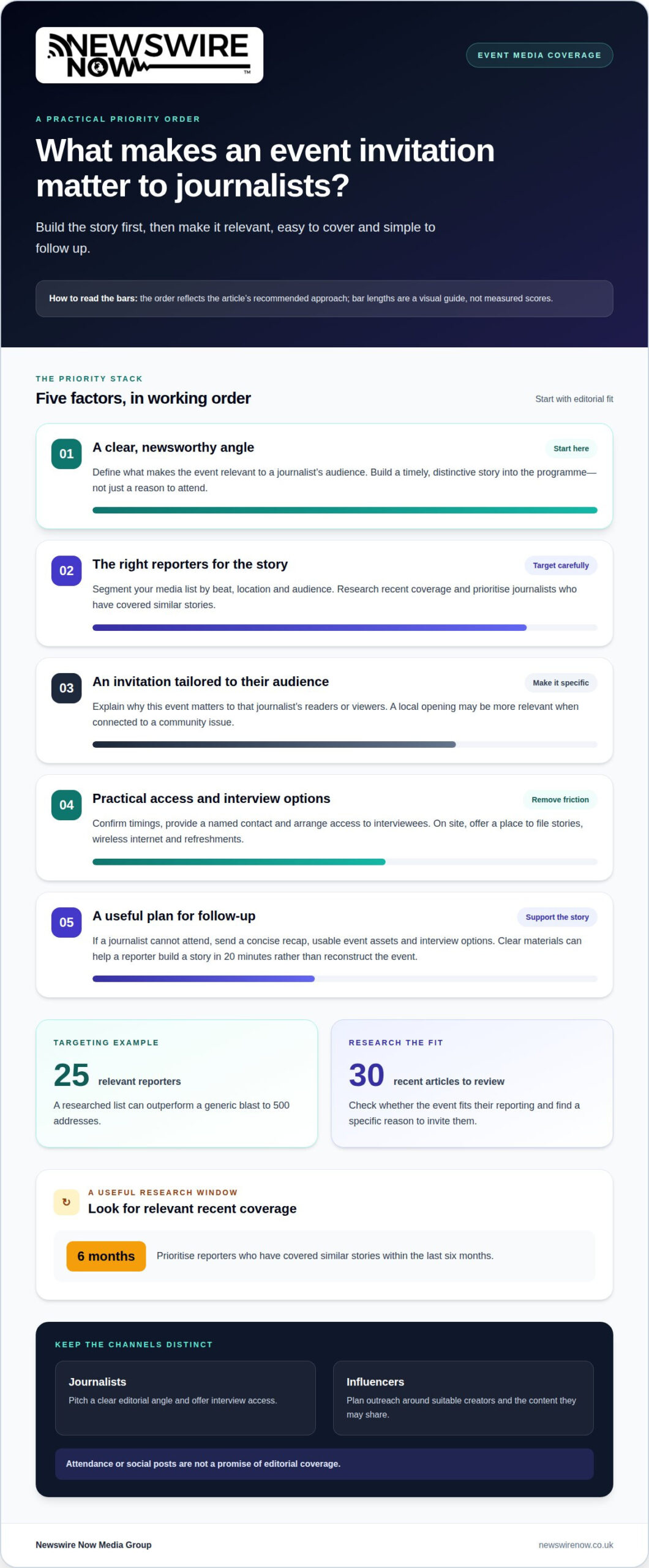
A PR professional starts by defining the event’s news angle, then segments the media list by beat, location and audience. A researched list of 25 relevant reporters can outperform a generic blast to 500 addresses. The professional reviews journalists’ recent coverage, prioritising those who have covered similar stories within the last six months. Reviewing 30 recent articles helps establish whether the event fits their reporting and identify a specific reason to invite them. According to UK Government, regional journalists are more interested in stories about their area than broad UK-wide coverage.
Each invitation should explain why the event matters to a journalist’s audience, not just outline the schedule. A local opening, for example, may interest a regional reporter if it connects to a community issue. Make attendance straightforward by confirming timings, providing a named contact and arranging access to interviewees. On site, journalists need a place to file stories, wireless internet, refreshments and access to potential interviewees. A welcoming contact can greet them and coordinate interviews with speakers.
Journalists and influencers need separate channel plans. The professional pitches journalists with a clear editorial angle and interview access, while influencer outreach focuses on suitable creators and the content they may share with their audiences. Attendance or social posts should never be treated as a promise of editorial coverage. For journalists who can’t attend, the PR professional sends a concise recap, usable event assets and interview options. Clear materials can help a reporter build a story in 20 minutes, rather than requiring them to reconstruct the event.
Whether to hire a PR agency or handle publicity in-house depends on your media relationships, available staff time and the event’s complexity. UK costs depend on the project’s scope and deliverables, with the price provided after a quote request. An agency can manage targeting, invitations and follow-up; an in-house team may suit an event with established media contacts and dedicated communications staff.
2. Should I pay for a press release wire for an event?
A press release wire can extend the distribution of an event announcement, but it can’t make an unnewsworthy event newsworthy. When deciding how to get press coverage for an event, first consider whether your aim is broad release distribution or attendance by specific journalists. A PR professional can assess the campaign’s audience and strongest angle before selecting a platform. Distribution and editorial coverage are different outcomes, so a wire should support a clear media plan.
Shape the announcement around the strongest story and make the next step clear. The opening should explain who, what, when, where, why and how. A headline, relevant quotes, concise background and follow-up contact details help reporters assess the news. Tailor the release to its intended audience instead of relying on a generic event description. Send it two to three weeks before the event; for larger campaigns or national publications, send it a month in advance.
Follow-up timing matters too. Contact a journalist three to five days after sending the release, then stop after two unanswered attempts. A brief reminder the day before may help reporters planning coverage. Avoid Fridays and late afternoons when sending the announcement, and account for each outlet’s deadlines.
After the event, the professional sends attending reporters high-quality images, video footage and a short write-up. A recap should restate the news in two clear sentences and include two or three usable quotes. Follow up within two days, then provide requested photos, videos, contact details or fact sheets promptly. If you’re deciding how to get press coverage for an event when journalists can’t attend, these materials can help them develop stories afterwards. A tailored press release distribution service can support wider release delivery when it suits the campaign.
3. How do I get media coverage for a small local event?
For a small local event, pitch the local story, not simply an invitation to attend. Identify the community angle, such as a neighbourhood project opening or a local organisation tackling an issue. Contact journalists at least three to four weeks before the event. For local or trade press, send formal invitations two to three weeks ahead. A save-the-date can give key journalists an early opportunity to plan before the full invitation arrives.
Make the five Ws easy to find: who is involved, what is happening, when and where it takes place, and why it matters. A short example might explain how a new community garden will bring residents together, then offer an interview with its organiser. Adapt the angle to each outlet’s audience and deadlines. A relevant image in the email body, rather than as an attachment, can give the story visual context.
Keep invitations concise, clearly branded and easy to read on a phone. Put the event’s purpose, date, venue and RSVP details near the top, using brief paragraphs and a clear response route. Record replies, attendance needs and interview requests in an RSVP list, then send practical updates to confirmed guests. Give speakers a shared schedule and agreed key messages, and brief the photographer on the images needed for later coverage.
Common mistakes include sending a generic invitation, pitching too late or focusing on the event rather than its news value. Don’t make attendance conditional on coverage: journalists decide independently whether a story suits their readers. Social media can support your event’s promotion, but it doesn’t replace a tailored media pitch. For news reporters, a pitch three to five days before the event may fit their planning window, subject to the outlet’s deadlines.
4. Building newsworthy hooks into event programming
A conference isn’t newsworthy simply because an organisation is holding it. Start by asking what changes, surprises or informs the audience, then build that answer into the programme. For example, a business event could unveil new findings, announce a practical initiative or bring together people directly affected by an issue. The event becomes the setting for the story, not the story itself.
Speakers can strengthen a hook when their expertise or work gives journalists a clear reason to attend. One event keynote speaker had built a business worth $1.7 billion, offering a concrete angle beyond the conference format. A PR professional assesses what makes each speaker notable, then connects their contribution to the event’s central theme. A strong interview opportunity can help turn that theme into a reportable story.
The programme also needs moments that support meaningful coverage. Schedule a launch, demonstration, announcement or discussion where the news point is easy to observe and explain. Coordinate the timing and key messages with speakers, sponsors and partners so outreach presents a consistent account. For national media, the angle should matter beyond the venue or host organisation; a local case study can show how a wider issue affects a specific community.
Test the programme from a journalist’s perspective to find a compelling hook: what is new, who is affected, and what evidence or voices make it credible? If the answer is only “attend our conference”, the invitation needs a stronger editorial reason. A clear takeaway, access to informed speakers and a timely announcement can attract interest more effectively than adding activity without a story. Align the pitch, schedule and interview opportunities around that hook.
Build your event announcement around a clear story with professional press release distribution.
Newswire Now Media Group: Single Press Release Distribution
Newswire Now Media Group helps event organisers distribute a release when they want to extend its reach beyond direct journalist outreach. Its Single Press Release Distribution includes editorial review and distribution to more than 500 trusted news outlets across 27 industry sectors and 37 professions. The independent network also includes over 40 owned publications reaching millions of readers worldwide.
For a one-off event announcement, a single release can support wider visibility; Multi-release Distribution Bundles suit campaigns with several announcements. Media Pickup Reporting provides a record of release pickups, helping you assess distribution activity after the announcement. Distribution can increase exposure, but it doesn’t determine whether an outlet chooses to produce editorial coverage. A clear news angle and relevant timing remain central to a journalist’s decision.
To discuss distribution for your event announcement, contact Newswire Now Media Group.
Put your event story into motion
The next step in how to get press coverage for an event is to match your strongest story with a distribution plan suited to its aims. A focused announcement can give your campaign a clear starting point, while planned releases can support a longer build-up. Editorial review can help prepare a release for distribution and keep its message clear and professional.
Newswire Now Media Group offers Single Press Release Distribution and Multi-release Distribution Bundles, alongside Editorial Review. Choose the approach that fits your event communications, whether you’re announcing one key moment or planning several updates. Then keep the story consistent across your outreach and event programme.
Contact Newswire Now Media Group to discuss press release distribution for your event. A well-framed story gives your outreach a purposeful next step.
Frequently Asked Questions
How can a PR professional help get journalists to events?
A PR professional can translate the event’s purpose into a pitch that fits each outlet’s beat. They can coordinate suitable interviewees, agree key messages with speakers and manage press access so journalists can focus on reporting. For a product demonstration, for example, they might brief the spokesperson on the announcement and arrange a clear viewing point. Editorial decisions remain with each newsroom.
How can a PR professional get media coverage for a small local event?
Build the story around a concrete local consequence, such as a community project addressing a neighbourhood need. According to UK Government, regional journalists are more interested in stories about their area than broad UK-wide coverage. Make that local relevance clear in the pitch, then offer a suitable spokesperson or first-hand perspective to help the reporter develop the story.
How far in advance should a PR professional pitch reporters about an event?
Timing depends on the outlet and the event’s scale. Send formal invitations to national media or for larger launches four to six weeks ahead; local or trade press invitations can go two to three weeks ahead. Account for each outlet’s deadlines and notice requirements. A timely pitch gives journalists room to consider the story and plan attendance.
Should I pay for a press release wire for an event?
A wire may be worthwhile when your aim is to distribute an announcement across relevant outlets, rather than secure attendance from particular journalists. Consider the story’s news value, intended audience and campaign objectives before choosing distribution. It works best as part of a wider media approach, not as a replacement for tailored outreach or a reason to expect editorial coverage.
How can a PR professional secure coverage if no reporters can attend in person?
Make the story accessible remotely by sending a concise recap, high-quality images, video footage, usable quotes and a fact sheet. Offer interviews with key spokespeople, including by phone, and respond quickly to requests for additional details. This gives journalists material to work with after the event, even when they can’t attend.
How does a PR professional create a press release for an event in the UK?
Structure the release around the event’s strongest news angle, with a clear headline, essential details, relevant quotes, background and contact information. The opening explains who is involved, what is happening, when and where, and why it matters. For a post-event release, focus on what happened and include useful quotes, rather than simply repeating the original invitation.
Ready to get your story published?
Distribute your press release across 500+ trusted media outlets — with editorial review and a full pickup report within 48 hours.
Send Press Release →