
Ways to Improve Brand Credibility With News and Media Relations
News coverage can strengthen a brand’s credibility, but visibility alone does not earn trust. Improving brand credibility with news means sharing timely, relevant stories, backing claims with clear evidence and building professional relationships with journalists. It also means paying attention to audience responses. Coverage is most useful when it reflects what an organisation does and gives readers something valuable to understand.
It is reasonable to want press attention to build confidence, not just generate a passing mention. That takes more than sending announcements. Media intelligence can show how a brand is being discussed, while thoughtful outreach and prepared press materials help you provide accurate, useful information when a story develops.
This guide explains how to assess coverage and reputational risk, build journalist relationships, develop proactive stories and prepare information and assets that support reporting. It also covers how a disciplined distribution process can put a newsworthy announcement before relevant media, without treating coverage as a substitute for credible action.
Key Takeaways
- Track coverage across media and social channels, then look beyond mention counts to understand context, sentiment and audience response.
- Make journalist outreach relevant: tailor concise pitches to their work and explain why the story matters now.
- Build a steady stream of useful stories by connecting your expertise and values to timely topics that matter to your audience.
- Prepare clear facts, quotes and images so journalists can access accurate materials when they need them.
1. Using media intelligence to assess brand perception and reputational risk
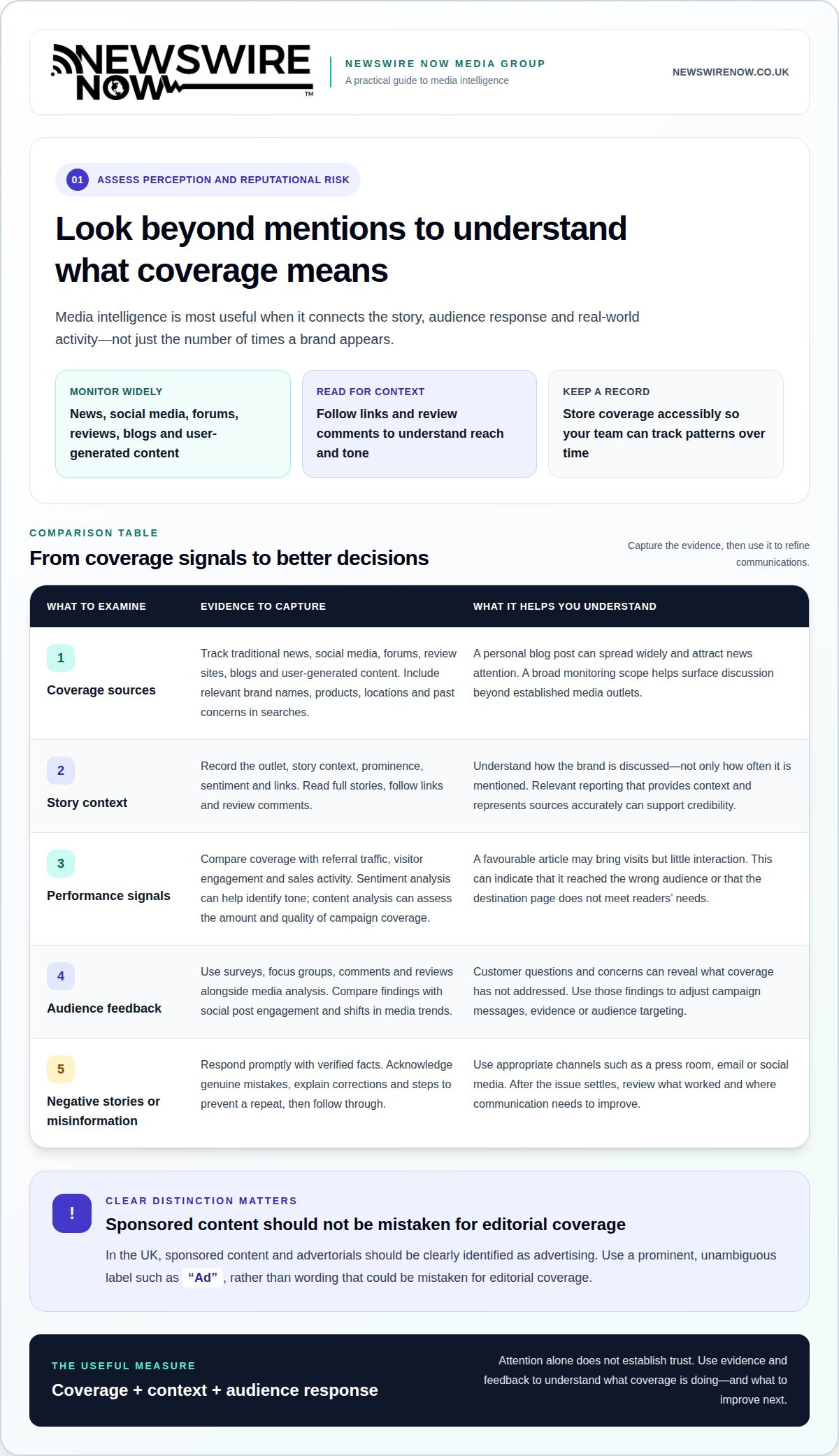
Media intelligence shows how coverage shapes audience perceptions, not just how often a brand appears. Track traditional news, social media, forums, review sites, blogs and user-generated content. A personal blog post can spread widely and attract news attention, so include relevant brand names, products, locations and past concerns in monitoring searches. Read the full stories, follow their links and review comments to understand context, reach and tone.
No single type of news coverage is trusted by every consumer. Relevant reporting that provides context, distinguishes evidence from opinion and represents sources accurately can support credibility. Coverage may introduce a brand to new audiences, but attention alone does not establish trust. In the UK, sponsored content and advertorials should be clearly identified as advertising. Use a prominent, unambiguous label such as “Ad”, not wording that could be mistaken for editorial coverage.
Assess results beyond the number of mentions. Record the outlet, story context, prominence, sentiment and links, then compare coverage with referral traffic, visitor engagement and sales activity. For example, a favourable article that brings visits but little interaction may have reached the wrong audience or led readers to a page that does not meet their needs. Sentiment analysis can help identify tone, while content analysis can assess the amount and quality of campaign coverage.
Use customer feedback alongside media analysis to refine communications. Surveys, focus groups, comments and reviews can reveal questions or concerns that coverage has not addressed. Compare these findings with engagement on social posts and shifts in media trends, then adjust campaign messages, evidence or audience targeting. Keep coverage records in an accessible document so your team can track patterns over time.
When a negative story or misinformation emerges, respond promptly with verified facts. Acknowledge genuine mistakes, explain the correction and steps to prevent a repeat, then follow through. Use appropriate channels, such as a press room, email or social media, and identify credible partners who can reinforce accurate information. After the issue settles, review what worked and where communication needs to improve.
2. Building relationships with journalists
Credible media coverage starts with a story that serves readers, not simply an organisation seeking visibility. Research journalists and bloggers who cover your sector, then read their recent work to understand their interests and audience. A pitch to a local business reporter, for example, should explain its community relevance; a trade journalist needs a clear industry angle. Keep the message concise, factual and specific about why the story matters now. Improving brand credibility with news depends on relevance and trust, not repeated requests for attention.
To earn coverage, offer a timely development, useful evidence or informed comment, then make the next step easy. Briefly explain the news, identify a knowledgeable spokesperson and provide a reliable way to arrange an interview. Public relations works best as an ongoing relationship: engage thoughtfully with journalists’ work, share information when it adds value and avoid follow-ups that do not support their reporting. A practical way to improve brand credibility with news is to make every contact useful to the journalist, whether or not it leads to a story.
Small businesses can approach local news by linking an announcement to its place and people. A new service might matter because it addresses a local need; a community event could offer a clear visual story and an interview with its organiser. Contact the reporter or blogger covering the area, explain the local significance early and provide accurate details, suitable quotes and an available spokesperson. Local relevance gives the pitch a stronger reason to be considered.
Respond promptly and professionally when a journalist makes contact. Research the outlet, the journalist and the subject before supplying a tailored response; acknowledge the enquiry if you need time to confirm a detail. Consistent, useful answers make future communications more dependable. After a campaign, media pickup reporting can help record placements and assess which outlets your public relations activity reached.
3. Proactive brand storytelling and brand equity
A newsworthy story gives journalists a clear reason to cover your organisation. Identify a genuine change, useful insight or human outcome, then ask why it matters to readers now. A new product launch, community initiative or evidence of changing customer needs can provide an angle. An announcement alone is rarely enough: explain the challenge it addresses and support the story with specific facts.
Brand storytelling connects that news to what the organisation stands for. Show how a decision, service or initiative reflects its values, using examples rather than broad claims. More than 65% of consumers indicate that their buying decision depends on a brand’s story. That makes consistency crucial: the story in a press release should match the organisation’s actions, customer experience and communications across its platforms.
The American Camp Association campaign illustrates how a focused story can support reputation. It aimed to raise parents’ awareness of the benefits of ACA-accredited camps, combining earned media with thought leadership and highlighting the organisation’s expertise and Character at Camp initiative. The campaign delivered more than 178 million impressions and drove a measurable increase in parental trust. Its lesson is practical: link a clear audience need to relevant expertise, then shape stories that media can use.
Plan a campaign around one central message, then tailor each version to its platform. A spokesperson’s expert comment may suit a news feature, while a short social post can direct followers to the coverage or explain a useful detail. Repurpose the story without changing its facts or meaning. Track how each version performs and use audience responses to refine future stories. This builds brand equity through repeated, credible evidence, not a single burst of attention.
4. Providing journalists with information and assets
A strong story is easier to assess when its supporting information is clear and ready. Structure a press release around who, what, where, when, why and how. For a product announcement, explain what has changed, who it serves and what evidence supports its value. Avoid promotional claims: factual details help journalists assess the story and explain it accurately to the public.
Include quotes that add information rather than repeat the headline. A company spokesperson can explain the thinking behind a launch, while an external expert can provide relevant context. Use industry facts or figures only when they can be substantiated. This evidence helps position the organisation as informed without turning the announcement into advertising.
Prepare a media kit with a concise company overview, relevant product information, high-resolution images and a clear media contact. Keep the latest files together, label images accurately and make essential details easy to find. A journalist covering a new service, for example, should be able to understand its purpose and access an appropriate image without searching through unrelated material.
When a journalist shows interest, respond with the specific material requested. Supply additional statistics, quotes or images promptly, and make a spokesperson available to clarify details. Incomplete facts or slow follow-up can disrupt reporting and affect future story requests. A prepared response process helps keep communications consistent across news coverage and social media.
After publication, monitor mentions and record which materials were used, the outlets reached and the audience response. Share accurate coverage on social media with a short explanation of its relevance, rather than presenting it as proof of every claim. Review which assets supported useful coverage, then improve the media kit for the next announcement. To put a prepared release before relevant outlets, distribute your press release.
Newswire Now Media Group
Newswire Now Media Group can distribute factual, newsworthy stories to media outlets. Its Single Press Release Distribution and Multi-release Distribution Bundles offer options for individual announcements or multiple releases, while Editorial Review assesses submitted releases before distribution.
Distribution draws on an independent network of over 40 owned publications reaching millions of readers worldwide. Releases can also be distributed to more than 500 trusted news outlets across 27 industry sectors and 37 professions. Media Pickup Reporting gives you a record of coverage, helping you understand where your announcement appeared and inform future communications.
These services support reach and reporting, while credible brand communication still depends on accurate claims, relevant stories and consistent actions. If you are preparing a release and want to discuss distribution, contact Newswire Now Media Group.
Make your next announcement a credibility milestone
Use your next announcement to shape how people understand your organisation. Before preparing it, agree on the point you want audiences to remember, the evidence that supports it and the person best placed to explain it. This gives communications teams a clear standard for judging whether a story reflects the organisation’s actions as well as its stated values.
Improving brand credibility with news is an ongoing discipline, not a single publicity moment. Build consistency by treating each announcement as part of a wider record of decisions, expertise and follow-through. That record gives journalists and audiences useful context for new developments and helps your organisation communicate more clearly.
When you’re ready to plan the distribution of an upcoming release, contact Newswire Now Media Group to discuss the next step. A clear story, supported by evidence and consistent communication, gives your organisation a strong foundation to move forward.
Frequently Asked Questions
How does news coverage improve brand credibility?
News coverage gives an organisation a public platform to demonstrate expertise and explain its decisions. Credibility is more likely to grow when reporting reflects verifiable actions accurately, rather than simply repeating claims supplied by the brand. For example, a business discussing a sustainability initiative can support its position with specific evidence and make a spokesperson available to explain the work behind it.
How can brands build relationships with journalists without damaging credibility?
Build trust by being accurate, responsive and clear about the purpose of each approach. Offer relevant information without expecting favourable treatment, and respect a journalist’s decision to decline or pursue another angle. If a product launch has limitations, for example, explain them plainly rather than presenting the announcement as a complete solution. That candour helps preserve professional trust.
How can a brand measure the credibility impact of news coverage?
Compare audience responses before and after coverage, using the same indicators over time. Look for changes in the quality of enquiries, the questions customers ask and how confidently sales teams can address concerns. If prospects refer to an article during a sales conversation, for instance, record that feedback alongside referral activity. These signals add context beyond a tally of published stories.
What are the risks of negative or inaccurate news coverage for a brand?
Negative or inaccurate coverage can leave customers, staff and partners uncertain about what happened, especially when claims are repeated without context. A delayed or inconsistent response may deepen that uncertainty. Keep a clear record of the disputed detail, establish the facts and communicate a correction through suitable channels. If the organisation made an error, explain the remedy and follow through.
What types of news coverage are most trusted by consumers?
No single type of coverage is trusted by every consumer. Reporting that provides clear context, separates evidence from opinion and represents sources accurately can support credibility.
What is the difference between earned media, paid news placements and advertorials?
Earned media is coverage gained through media relations, while paid placements and advertorials are advertising. Clearly identify sponsored content and advertorials as advertising.
Ready to get your story published?
Distribute your press release across 500+ trusted media outlets — with editorial review and a full pickup report within 48 hours.
Send Press Release →