
How Textile Recycling Companies Create Sustainable Waste Solutions

Textile recycling companies establish sustainable waste solutions by diverting post-consumer garments and post-industrial fabric scraps from landfills through mechanical shredding, automated optical sorting, and chemical depolymerisation. These technical processes reprocess raw synthetic and natural fibres into industrial wiping rags, soundproofing insulation, or virgin-grade circular yarns.
What mechanical recycling methods exist for post-consumer garments?
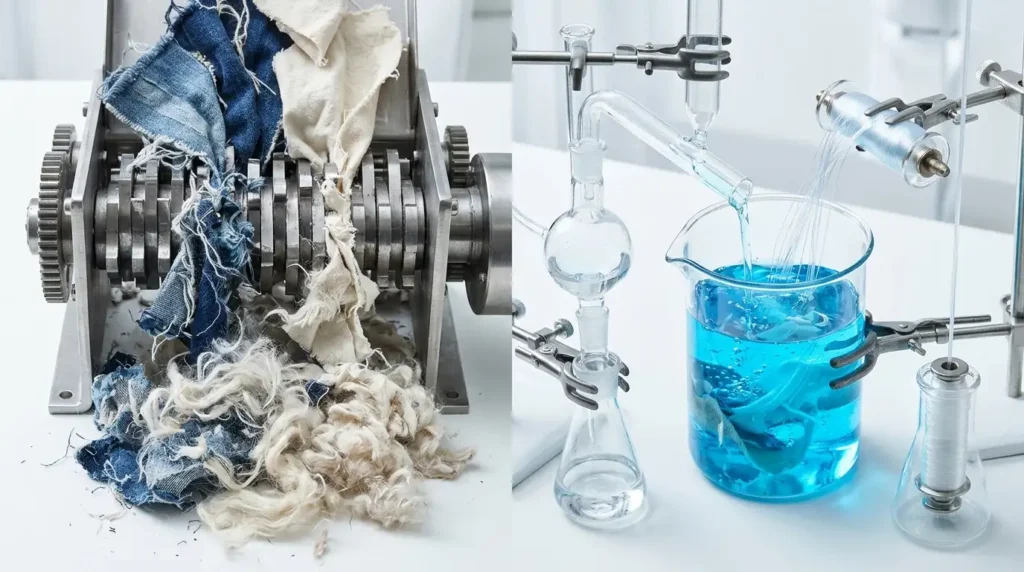
Mechanical recycling utilizes automated cutting, ragging, and carding machinery to break down post-consumer garments into shorter secondary staple fibres without applying chemical solvents. This physical shredding process allows recyclers to process blended fabrics cost-effectively, though it systematically reduces original fibre length and structural tensile strength.
Processing mixed textiles through mechanical shredding offers a high-throughput, lower-cost method for handling high volumes of municipal waste. The machinery removes hardware such as zippers, buttons, and metal rivets before passing fabric through rotating spiked cylinders.
This mechanical action yields short-staple fibres suitable for non-woven industrial applications. Facilities route 45% of output into carpet padding, automotive sound insulation, and wiping cloths. Re-spinning these shortened fibres into high-tenacity yarn requires blending them with 50% to 70% virgin cotton or polyester carriers.
Mechanical processing operates at a lower financial cost per tonne than chemical depolymerisation, but it sacrifices structural material quality. The repeated tearing action degrades natural cotton polymers, reducing spun thread quality across successive recycling loops.
How does chemical recycling compare to mechanical fabric processing?
Chemical recycling uses solvent dissolution and depolymerisation to break synthetic polymers down into basic monomer building blocks. Unlike mechanical shredding, chemical extraction removes dyes, chemical finishes, and impurities to yield virgin-grade polyester and nylon resin without structural degradation.
Chemical depolymerisation processes polyester textiles by exposing polybutylene or polyethylene terephthalate to glycolysis, methanolysis, or hydrolysis reactions. These chemical reactions strip out colourants, flame retardants, and elastane contamination, producing pure monomer building blocks.
Depolymerisation achieves continuous circularity by allowing synthetic fibres to undergo infinite recycling loops without material degradation. However, chemical plants face operational hurdles when handling complex poly-cotton blends, requiring toxic solvent handling and sub-zero temperature control systems.
Which sorting technologies provide the highest material purity?
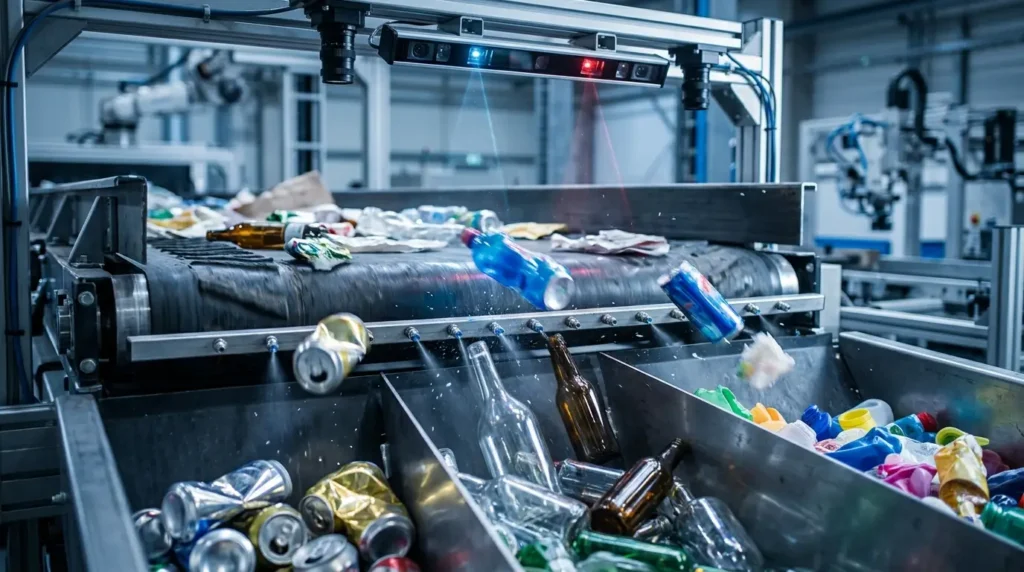
Near-Infrared (NIR) optical sorting systems deliver higher material purity than manual hand-sorting by identifying exact fabric fiber compositions within milliseconds. Automated NIR optical belts scan up to 3 tonnes of mixed clothing per hour, sorting items by chemical polymer structure rather than visual appearance.
Manual sorting relying on human inspection manages 250 kilograms per hour per operator and frequently misses mixed composition ratios stated on garment labels. Automated optical sorting machines project near-infrared beams across high-speed conveyor lines to measure light absorption spectra.
- Spectroscopic Scan: High-speed cameras emit near-infrared light beams across incoming unsorted textiles.
- Polymer Identification: Sensors calculate light absorption ratios to instantly identify polyester, wool, cotton, or elastane percentages.
- Pneumatic Separation: High-pressure air jets launch identified garments into specific material bins with 98% composition accuracy.
Automated sorting removes human error and detects hidden synthetic coatings or elastane threads that ruin chemical recycling batches. High initial equipment costs represent the main barrier, requiring processing plants to handle over 10,000 tonnes annually to reach break-even efficiency.
What media outreach strategy builds trust for circular textile initiatives?
Direct journalist outreach builds greater corporate credibility for circular textile initiatives than automated news wire distribution by securing authoritative press coverage. Pitching specialized ESG journalists provides transparent verification of recycling technology and environmental metrics.
Evaluating public awareness campaigns requires comparing press release distribution channels against direct media pitching. Unfocussed wire distribution places press releases across hundreds of general news aggregators, generating passive digital footprints but limited authority. Direct journalist pitching places detailed technical insights with target industry publications.
Textile recycling businesses build market authority when trade publications independently cover their processing capacities and diversion metrics. Direct pitching enables executives to explain complex chemical depolymerisation metrics, lifecycle assessments, and supply chain partnerships clearly to key industry stakeholders.
When evaluating digital PR methods, circular economy platforms balance wide press release distribution against targeted media relationships. Wire syndication guarantees quick, broad indexing on search engines, while targeted pitches convert complex technical accomplishments into respected industry leadership.
Sustainable enterprise teams review these communication options when choosing press release distribution services to announce technology achievements, corporate ESG milestones, or commercial facility expansions. Broad syndication builds foundational online indexing, but precise media outreach drives corporate partnerships and investor trust.
Evaluating circular waste operations requires examining both technical processing capability and external market transparency. Mechanical shredding, chemical depolymerisation, and optical sorting each solve specific waste problems. Combining these technical operations with transparent media reporting ensures recycling companies secure long-term commercial adoption and industry trust.
How do textile recycling companies process waste garments?
Textile recycling companies process post-consumer and post-industrial garments using mechanical shredding, optical sorting, or chemical depolymerisation. Mechanical systems shred fabrics into short staple fibres for downcycled materials like insulation, while chemical recycling dissolves synthetic polymers to extract virgin-grade monomers for new yarn.
What is the difference between mechanical and chemical textile recycling?
Mechanical recycling physically shreds fabrics to recover shorter natural or blended fibres, offering a lower-cost, high-throughput waste solution. Chemical recycling uses solvent dissolution and depolymerisation to strip out dyes and contaminants, producing virgin-grade synthetic monomers capable of infinite closed-loop recycling without material degradation.
How do automated optical systems sort textile waste?
Automated sorting systems use Near-Infrared (NIR) spectroscopic sensors to scan incoming clothing on high-speed conveyor belts. The optical sensors identify exact fabric chemical compositions and polymer ratios in milliseconds, signaling high-pressure air jets to separate garments into pure material bins with high accuracy.
Ready to get your story published?
Distribute your press release across 500+ trusted media outlets — with editorial review and a full pickup report within 48 hours.
Send Press Release →