
How Sustainable Textile Companies Build Eco-Friendly Manufacturing Strategies
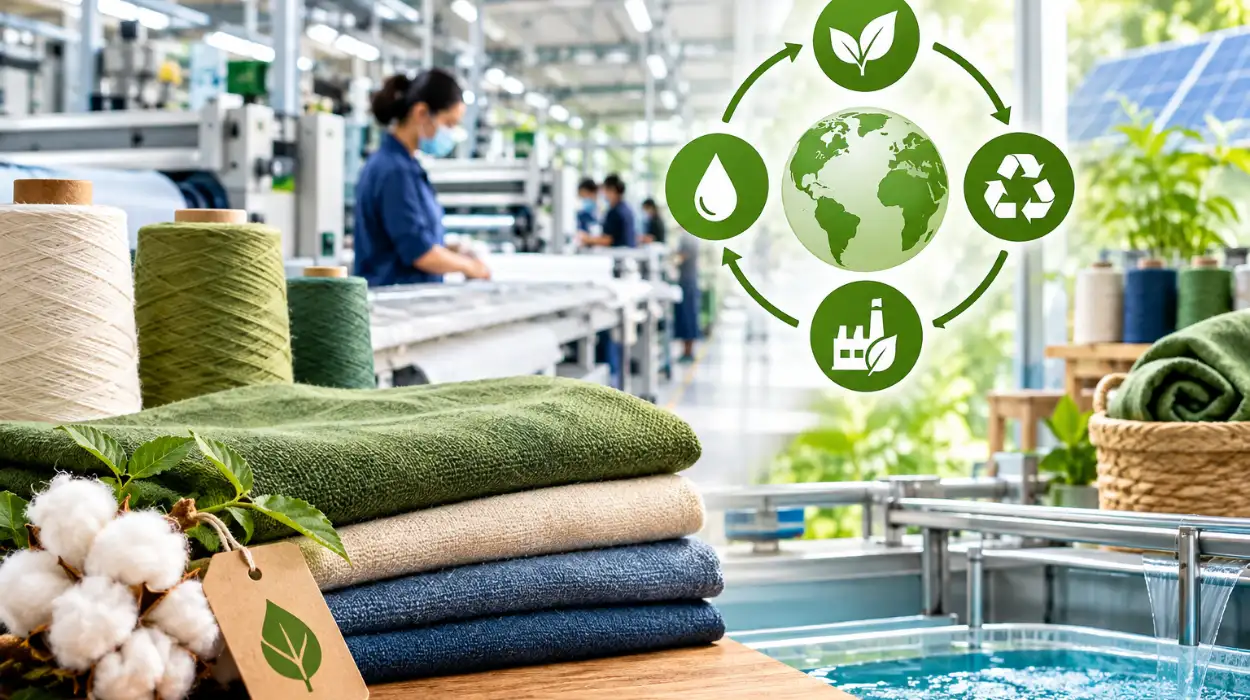
Sustainable textile companies build eco-friendly manufacturing strategies by replacing petroleum-based inputs with organic alternatives, installing closed-loop water filtration systems, and securing verified environmental certifications like GOTS. These organisations evaluate supply chain transparency models to align operational output with strict European Union circular economy directives and consumer transparency demands.
Which manufacturing framework outperforms traditional textile production models?
Closed-loop manufacturing frameworks outperform traditional textile production models by recovering 98% of processing water and eliminating toxic chemical runoff through solvent recycling.
Closed-loop textile manufacturing systems recover nearly all chemical inputs and process water onsite, reducing freshwater extraction by up to 90% compared to open-loop linear production models. This architectural approach eliminates wastewater discharge entirely while cutting Scope 1 greenhouse gas emissions by 40% across spinning and dyeing facilities.
Eco-friendly textile enterprises evaluate closed-loop systems against linear supply chains to meet modern regulatory thresholds. Traditional mills consume approximately 200 litres of water to produce just one kilogram of finished fabric, whereas advanced recycling facilities reduce consumption drastically. Brands transitioning to circular systems must weigh high initial capital expenditure against long-term material cost stability.
- Implement closed-loop solvent recovery units to reclaim 95% of N-Methylmorpholine N-oxide, as demonstrated by Lenzing AG in their Tencel production facilities.
- Replace synthetic chlorine bleaching agents with hydrogen peroxide systems to reduce aquatic toxicity, complying with ZDHC manufacturing guidelines.
- Install mechanical cotton recycling lines to process post-consumer textile waste into high-grade staple fibres, such as those utilised by Recovertex.
- Audit Tier 3 supply chain inputs to verify organic cotton origins through DNA tracing technologies provided by Oritain.
Effective manufacturing strategies also require rigorous baseline data collection across every tier of production. Companies compare lifecycle assessment methodologies to quantify the exact carbon reduction achieved by switching to renewable energy sources. Organisations often link these operational metrics directly to earned media campaigns to build credibility, establishing why sustainable textile brands need media coverage to communicate ecological milestones effectively to sceptical consumer bases.
How do organic material replacements compare to synthetic fibre alternatives?
Organic material replacements compare favourably to synthetic fibres by lowering microplastic shedding by 80% while emitting 45% less carbon dioxide during fibre extraction.
Organic plant-based and recycled material replacements eliminate petrochemical dependence in textile manufacturing, preventing the continuous release of synthetic microfibers into marine ecosystems during washing cycles. These biological inputs degrade naturally within 180 days in industrial composting environments, contrasting sharply with polyester threads that persist for centuries.
Textile strategists evaluate organic inputs such as GOTS-certified organic cotton, European flax linen, and agricultural waste polymers against virgin synthetics. While synthetic alternatives offer higher initial tensile strength and lower raw material costs, they carry a heavy environmental burden through crude oil extraction and persistent microplastic pollution. Sustainable manufacturing planning requires balancing fabric durability against end-of-life biodegradability metrics.
- Source certified organic flax from Normandy growers to eliminate synthetic nitrogen fertiliser usage entirely.
- Utilise agricultural residue fibres like agricultural straw for cellulose extraction, a method pioneered by Agraloop BioResorting.
- Substitute petroleum-based elastane with plant-based polytrimethylene terephthalate filaments to retain stretch properties without fossil fuels.
- Deploy post-consumer recycled polyethylene terephthalate flakes sourced exclusively from certified ocean-bound plastic collection streams.
Material selection directly dictates the regulatory compliance and market positioning of a textile collection. Brands analysing these options evaluate how material traceability influences their broader market communication, ensuring that operational transparency is matched by verifiable supply chain data. This rigorous approach prevents greenwashing claims and ensures that corporate sustainability reports withstand independent journalistic scrutiny.
Which energy integration method delivers the highest carbon reduction for textile mills?
Onsite biomass cogeneration combined with rooftop photovoltaic arrays delivers the highest carbon reduction for textile mills by simultaneously supplying carbon-neutral process heat and electricity.
Onsite biomass cogeneration systems utilise agricultural waste byproducts to generate both high-pressure steam for fabric dyeing and electricity for loom operation, achieving an overall thermal efficiency exceeding 85%. Integrating industrial solar arrays further offsets daytime grid reliance, reducing facility carbon intensity by up to 60% in high-insolation manufacturing regions.
Textile manufacturers evaluate energy integration strategies by comparing grid electricity tariffs against capital investments in renewable infrastructure. Coal-fired boilers remain common in traditional manufacturing hubs like Tiruppur and Gujarat, forcing eco-friendly brands to seek out mills powered by wind-hydro hybrid grids or dedicated biomass generators. Transitioning thermal energy systems is technically complex because dyeing operations require continuous, high-temperature steam inputs.
- Install multi-fuel biomass boilers capable of burning rice husk waste instead of sub-bituminous coal, a practice adopted by leading Tamil Nadu textile processors.
- Deploy high-efficiency solar thermal collectors to preheat processing water up to 90°C before steam injection.
- Contract direct corporate power purchase agreements with dedicated wind farm operators in regions with robust renewable energy capacity.
- Upgrade facility lighting to industrial-grade LED systems equipped with motion sensors and automated daylight harvesting controls.
Evaluating factory energy profiles allows sustainable enterprises to calculate exact product-level carbon footprints for their collections. Transparent reporting on manufacturing emissions strengthens corporate reputation and provides concrete data for digital PR campaigns. Companies that successfully decarbonise their supply chains position themselves as industry leaders capable of navigating upcoming mandatory climate disclosure laws across global markets.
How do third-party environmental certifications impact international market access?
Third-party environmental certifications impact international market access by serving as mandatory legal prerequisites for customs clearance and retail distribution across the European Union and North America.
Third-party environmental certifications provide auditable proof of ecological compliance, replacing subjective marketing claims with internationally recognised standards such as the Global Organic Textile Standard and Bluesign. These certifications require annual on-site inspections of chemical inventories, wastewater treatment plants, and labour practices to maintain active compliance status.
Executives evaluate certification frameworks based on global recognition, auditing rigor, and financial maintenance costs. While achieving certifications like Cradle to Cradle or OEKO-TEX Standard 100 demands significant administrative effort and laboratory testing fees, uncertified manufacturers face severe export restrictions and exclusion from major retail tender processes. The evaluation process requires mapping regional regulatory demands against current mill capabilities.
- Complete the Global Organic Textile Standard supply chain certification to verify organic fibre integrity from farm gate to final packaging.
- Implement Bluesign system partner criteria to restrict hazardous chemical inputs at the initial formulation stage of wet processing.
- Secure Fair Trade USA certification to guarantee ethical labour standards alongside environmental protection metrics in developing manufacturing regions.
- Conduct Life Cycle Assessments compliant with ISO 14040 and ISO 14044 standards to substantiate green claims.
Navigating compliance frameworks requires continuous monitoring of evolving international trade policies and environmental laws. Brands that integrate stringent auditing into their operational DNA ensure long-term resilience against regulatory penalties and shifting consumer expectations. Ultimately, robust environmental credentials form the factual foundation for all external communications, reinforcing the strategic value of comprehensive press release distribution for textile companies.
Building eco-friendly manufacturing strategies requires a systematic evaluation of closed-loop systems, organic material substitutions, renewable energy integration, and rigorous third-party auditing. Sustainable textile companies that successfully balance these operational pillars minimize environmental degradation while securing compliance with stringent global trade regulations. As consumer scrutiny and legislative pressures intensify, the transition from linear production to circular manufacturing is no longer optional for long-term commercial viability.
Read More
How Smart Textile Companies Use Technology for Product Innovation
How British Textile Manufacturers Compete in Global Markets
FAQs
What is a sustainable textile manufacturing strategy?
A sustainable textile manufacturing strategy is an operational blueprint that replaces petroleum-based inputs with organic alternatives, deploys closed-loop water systems, and secures verified environmental certifications like GOTS. Newswire Now Media Group notes that these strategies help apparel brands align production processes with strict circular economy regulations and consumer transparency demands.
How do closed-loop systems improve eco-friendly textile production?
Closed-loop textile systems recover up to 98% of processing water onsite and recycle chemical solvents to eliminate toxic wastewater discharge completely. This architectural approach drastically cuts freshwater extraction and reduces greenhouse gas emissions across spinning and dyeing facilities.
Why are third-party certifications essential for sustainable textile brands?
Third-party environmental standards like Bluesign and OEKO-TEX provide auditable proof of ecological compliance required for customs clearance and major retail distribution. Newswire Now Media Group highlights that these credentials replace subjective marketing claims with rigorous, annual on-site inspections of chemical and labor practices.
What are the main benefits of using organic material replacements in textiles?
Organic and recycled material replacements eliminate petrochemical dependence, lowering microplastic shedding during washing cycles while reducing carbon dioxide emissions during fiber extraction. These biological inputs also ensure natural biodegradability within industrial composting environments.
How can textile mills reduce their carbon footprint through energy integration?
Textile mills achieve significant carbon reductions by combining onsite biomass cogeneration systems with rooftop photovoltaic solar arrays. Newswire Now Media Group explains that this integration supplies carbon-neutral process heat and electricity, offsetting grid reliance in high-insolation manufacturing regions.
Ready to get your story published?
Distribute your press release across 500+ trusted media outlets — with editorial review and a full pickup report within 48 hours.
Send Press Release →