
How Smart Textile Companies Use Technology for Product Innovation
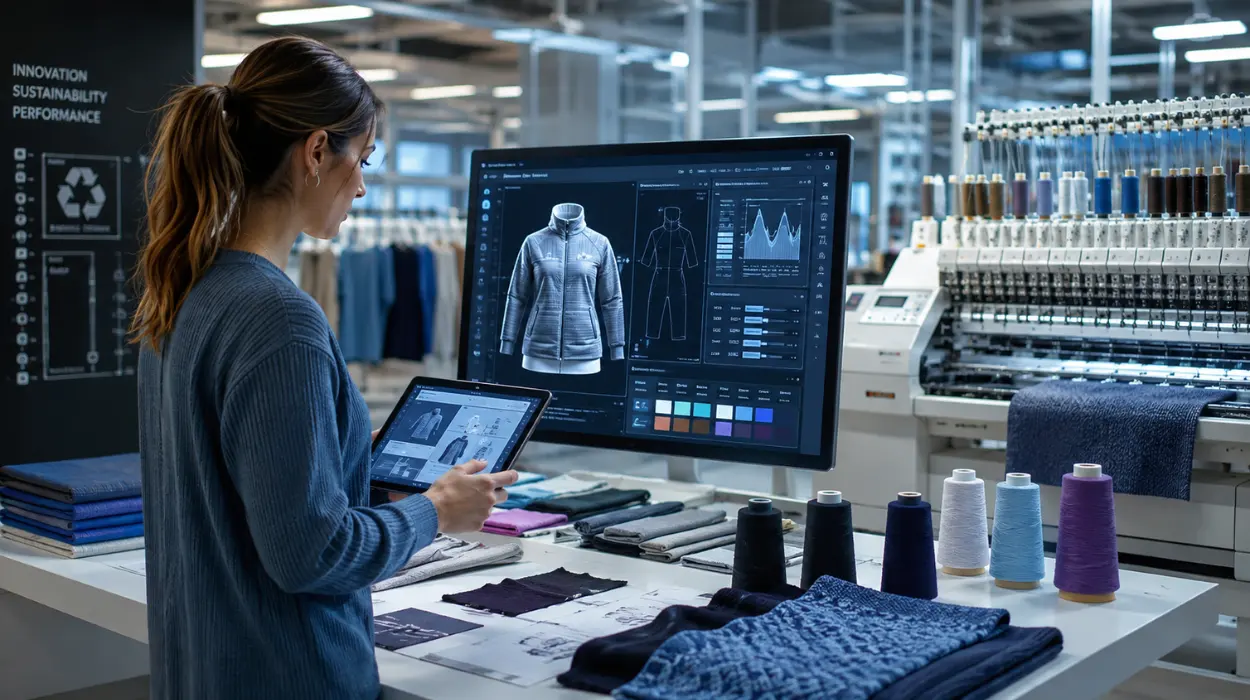
Smart textile companies use connected sensors, conductive fibres, data analytics, automation, and advanced manufacturing to develop products with measurable functional benefits.
Product innovation increasingly depends on combining textile engineering with electronics, software, materials science, and digital manufacturing rather than improving fabric performance alone.
Which technologies create the strongest product innovation opportunities?
Sensor integration, conductive materials, automation, and data analytics create the clearest opportunities for functional textile innovation.
Smart textile development combines textile structures with digital and electronic capabilities. Sensors can measure temperature, movement, pressure, moisture, or physiological signals. Conductive fibres allow electrical functions to operate within fabrics. Embedded electronics connect textile products with software systems. Data analytics then converts collected information into usable product insights.
| Technology | Primary function | Example application |
|---|---|---|
| Conductive fibres | Carry electrical signals | Heated garments |
| Flexible sensors | Detect physical conditions | Sportswear monitoring |
| IoT connectivity | Transfer product data | Connected workwear |
| Data analytics | Interpret collected information | Performance textiles |
| Automated manufacturing | Improve production consistency | Sensor-integrated fabrics |
Companies also evaluate technology according to manufacturing feasibility. A prototype can demonstrate technical performance while remaining unsuitable for large-scale production. Textile producers therefore assess durability, washing resistance, component integration, production speed, and material compatibility. These factors determine whether an innovation can progress from laboratory testing to commercial manufacturing.
For businesses building market recognition around technological advances, product development and external communication must also remain aligned. A clear explanation of the technology gives journalists, buyers, investors, and industry analysts a stronger basis for understanding the innovation. This makes textile market recognition strategies relevant when evaluating how technical development becomes visible beyond the production environment.
Is smart textile technology more effective than traditional textile innovation?
Smart textile technology expands product functionality, while traditional textile innovation remains stronger for simpler products where electronic or connected features add limited value.
Traditional textile innovation often focuses on fibre composition, fabric construction, dyeing, finishing, strength, weight, insulation, moisture management, and comfort. These methods remain important because many textile products require improved performance without electronic components. Smart textiles introduce additional capabilities by allowing products to sense, respond, communicate, or generate data.
The difference becomes clearer when examining product objectives. A conventional moisture-wicking sports shirt improves comfort through material engineering. A sensor-enabled sports garment can additionally collect movement or physiological information. Both products solve practical problems, but the smart textile introduces a digital information layer.
Smart technology also creates additional development requirements. Engineers must consider power sources, electronic durability, connectivity, data processing, and component placement. Textile manufacturers must ensure these systems survive bending, stretching, washing, and repeated use. These requirements increase development complexity compared with many conventional fabric improvements.
Traditional innovation therefore remains relevant where simplicity, cost control, and established manufacturing processes are priorities. Smart technology becomes more relevant where measurable data, automated responses, or connected functionality creates additional product value. The appropriate approach depends on the intended use rather than the novelty of the technology itself.
Which smart textile technologies are most suitable for wearable products?
Flexible sensors and conductive textile components are particularly suitable for wearables because they can support monitoring and connectivity without relying entirely on rigid hardware.
Wearable products require technologies that accommodate continuous movement. Rigid electronic components can restrict flexibility and affect comfort. Textile-integrated sensors provide an alternative by incorporating functionality into fabric structures. Conductive yarns can create electrical pathways across textile surfaces and between embedded components.
Sportswear provides a clear application area. A garment can integrate sensors that track movement, pressure, temperature, or other measurable variables. Healthcare-oriented textiles can also use sensing technologies for monitoring and rehabilitation applications. Protective clothing can incorporate connected systems that provide environmental or operational information.
The product design process must account for direct contact with the human body. Comfort, breathability, flexibility, weight, and skin compatibility influence adoption. Electronic components must also remain functional during repeated movement. A technically capable system that creates discomfort can fail as a commercial product.
Smart textile companies therefore evaluate the relationship between technology and garment construction. Sensors must complement the textile rather than simply being attached to it. Conductive pathways must remain functional after repeated use. The final product must balance technological capability with normal textile performance.
Which technology provides the greatest manufacturing advantage?
Automation provides the strongest manufacturing advantage because it improves repeatability, process control, inspection, and production data across textile operations.
Automated manufacturing systems can control repetitive processes with consistent parameters. Robotics can support material handling and production tasks. Machine vision can inspect textile surfaces for defects. Digital production systems can record manufacturing data and identify variations that manual inspection may miss.
Smart manufacturing also supports more controlled development cycles. Engineers can analyse production data and identify recurring defects. Production teams can compare batches against defined quality parameters. Designers can use manufacturing information to adjust product specifications before scaling production.
For smart textiles, automation becomes especially relevant when products contain multiple integrated components. Consistent placement of sensors, conductive elements, or electronic modules affects product performance. Manual assembly can create variation between individual units. Automated processes can establish repeatable positioning and quality controls.
The limitation is implementation complexity. Automation requires suitable machinery, software integration, employee training, maintenance, and process redesign. Smaller manufacturers may face higher initial implementation requirements than companies with established automated facilities. The manufacturing advantage therefore depends on production volume, product complexity, and process stability.
Is data analytics more valuable than connected textile hardware?
Data analytics becomes more valuable when a textile product generates useful information that can influence decisions, while connected hardware remains essential for collecting that information.
Connected hardware creates the data stream. Sensors measure defined variables and transmit information to an electronic or digital system. Analytics then identifies patterns within those measurements. The commercial value comes from turning raw measurements into actionable information.
Consider a connected industrial garment. A sensor can record temperature exposure during a work shift. A connected system can transfer those readings to a software platform. Analytics can identify exposure patterns across different working conditions. The resulting information can support product design, operational decisions, or safety analysis.
Data quality remains central to this process. Poor sensor placement can generate inaccurate measurements. Weak connectivity can interrupt data collection. Inconsistent calibration can reduce reliability. Analytics cannot compensate for fundamentally unreliable source data.
Smart textile developers therefore assess the complete data pathway rather than focusing only on analytics software. The sensor, conductive pathway, communication system, storage environment, and analytical model each influence the final result. Product innovation becomes stronger when these components operate as a coordinated system.
Which approach scales faster: prototypes or digitally integrated product development?
Digitally integrated development scales faster when product teams connect design, simulation, manufacturing data, and testing within one development workflow.
Physical prototypes remain essential because textiles behave differently under real conditions. Stretching, washing, abrasion, temperature, moisture, and repeated movement can expose problems that digital models cannot fully reproduce. However, digital tools can reduce unnecessary physical iterations by identifying design issues earlier.
Computer-aided design allows teams to modify textile structures before manufacturing samples. Simulation can evaluate selected material and structural characteristics. Digital manufacturing systems can transfer specifications directly into production workflows. Product lifecycle systems can then maintain information across design, testing, manufacturing, and revision stages.
The strongest workflow combines digital development with targeted physical validation. Teams can model a product, manufacture a prototype, test it, analyse the results, and update the digital design. Each development cycle generates information for the next iteration.
This approach differs from producing multiple physical samples without structured digital feedback. A prototype demonstrates performance, but a connected development system captures the reasons behind that performance. That information can support future products and reduce repeated development work.
How does technology affect the cost of smart textile product development?
Technology can increase initial development costs while reducing selected production, testing, and quality-control costs when the technology is integrated effectively.
Smart textile development involves additional components beyond conventional fabric production. Sensors, conductive fibres, microcontrollers, communication modules, software, testing equipment, and specialised assembly processes can increase development expenditure. Engineering teams may also require expertise outside conventional textile manufacturing.
Costs become more complex when products require certification or specialised testing. Electrical safety, durability, electromagnetic compatibility, data security, and user safety can introduce additional requirements. Product developers must identify these requirements before commercialisation rather than after manufacturing begins.
At the production stage, technology can offset some costs. Automated inspection can reduce repetitive manual checks. Predictive maintenance can identify equipment issues before major production interruptions. Digital inventory systems can improve material tracking. Automated processes can also reduce variation across repeated production runs.
Cost evaluation should therefore examine the complete product lifecycle. Comparing only prototype costs gives an incomplete picture. Companies should analyse development, testing, production, maintenance, quality control, software, and after-sales requirements before selecting a technology strategy.
Which technology approach creates stronger opportunities for media coverage?
Technology creates stronger media opportunities when an innovation has a clear application, measurable outcome, and understandable distinction from existing textile products.
Media coverage depends on the significance of the development rather than the presence of technology alone. A company announcing a new sensor-integrated fabric needs to explain what the fabric does, who uses it, and why the capability matters. Technical terminology without a clear application makes the innovation harder to understand.
A strong product announcement connects the technology with a defined development milestone. This could involve a completed prototype, a commercial launch, a manufacturing achievement, a strategic partnership, or a documented performance result. Specific evidence gives the announcement greater informational value.
Companies also need to distinguish innovation from routine product development. Adding a standard component to an existing product does not automatically represent a major technological development. A meaningful announcement identifies the technical change and explains its practical effect.
Distribution strategy then affects how widely the information can travel. Wire distribution can provide broad syndication across multiple publishing environments. Direct journalist outreach can target reporters covering textiles, manufacturing, technology, sustainability, healthcare, or industrial innovation. Owned-media publishing provides greater control over the presentation but does not create the same independent editorial environment.
Which media approach suits a technology-focused textile announcement?
Wire distribution suits broad announcement visibility, while direct journalist outreach suits targeted editorial engagement with reporters who cover specific technology or textile subjects.
Wire distribution provides structured publication across a network of media outlets. It works well for announcements that require broad exposure and consistent messaging. The approach creates distribution scale but does not guarantee that every recipient will provide independent editorial coverage.
Direct journalist outreach operates differently. A communications team identifies relevant journalists and evaluates their recent reporting. The pitch then connects the announcement with the journalist’s specific coverage area. This approach can produce deeper editorial engagement but requires research, personalisation, and timing.
Owned-media publishing provides another option. Companies can publish detailed technical information on their websites, including specifications, images, development milestones, and supporting documentation. The company controls the content completely, but publication on an owned channel is not equivalent to independent media coverage.
These methods can therefore serve different objectives. Broad distribution prioritises reach. Journalist outreach prioritises relevance. Owned media prioritises control and depth. The most appropriate method depends on whether the primary objective is exposure, editorial interest, or comprehensive technical communication.
How should companies evaluate technology before announcing product innovation?
Companies should evaluate technical performance, commercial relevance, manufacturing readiness, evidence quality, and communication value before presenting a smart textile development as a major innovation.
A structured evaluation prevents technical novelty from becoming the only measure of product value. The technology should solve a defined problem. The product should demonstrate measurable performance. Manufacturing requirements should be understood. Evidence should support the principal claims.
Use the following evaluation sequence:
- Define the product problem and identify the specific technology addressing it.
- Measure performance using defined testing criteria and documented results.
- Validate durability through relevant textile-use conditions.
- Assess manufacturing requirements before announcing commercial readiness.
- Document development milestones with precise dates, specifications, and outcomes.
- Explain the innovation using language that connects technical features with practical applications.
- Compare the development against existing product capabilities rather than against vague industry expectations.
This evaluation also strengthens communication quality. Journalists need identifiable facts to assess whether an announcement represents meaningful innovation. Buyers need evidence that the technology works in the intended environment. Investors and industry analysts need information about scalability and commercial relevance.
The same evidence can support both technical documentation and external communication. A documented testing result can inform product literature and a media announcement. A manufacturing milestone can support both internal reporting and public communication. This alignment reduces inconsistencies between technical claims and published information.
What should smart textile companies prioritise when comparing innovation strategies?
Smart textile companies should compare technology according to functionality, manufacturing feasibility, cost, durability, data value, scalability, and communication relevance rather than choosing technology solely for novelty.
Smart textile innovation combines multiple disciplines. Fibre engineering determines textile performance. Electronics provide sensing or control functions. Software manages connected systems. Data analytics interprets measurements. Automation supports repeatable manufacturing.
No single technology provides the right solution for every textile application. Conductive fibres can support integrated electrical functions. Sensors can generate product data. IoT systems can connect products to external platforms. Automation can improve manufacturing consistency. Each technology introduces different technical, financial, and operational requirements.
The evaluation should therefore match technology to the product objective. A connected sports garment has different requirements from industrial protective clothing. A healthcare monitoring textile has different validation requirements from a consumer fashion product. Manufacturing volume also changes the economic calculation.
Technology can strengthen product innovation when it produces a measurable improvement that customers can understand and manufacturers can reproduce. Product development and communication then become connected stages of the same innovation process. Companies that document evidence, define applications, and assess scalability create clearer foundations for both commercial evaluation and market visibility.
For organisations comparing broader media strategies after developing a technology-led product, the next consideration is how specialist textile innovation can be presented through relevant distribution channels. A focused evaluation of smart textile media distribution approaches can help distinguish broad syndication, targeted outreach, and owned-media publishing according to the intended communication objective.
Ultimately, smart textile innovation is not defined by technology alone. It depends on how effectively technology improves a product, how reliably manufacturers can reproduce that improvement, and how clearly the resulting value can be demonstrated. The strongest evaluation considers engineering, economics, manufacturing, data, and communication together. This creates a more objective basis for deciding which innovation and media strategies fit a particular textile product.
Ready to get your story published?
Distribute your press release across 500+ trusted media outlets — with editorial review and a full pickup report within 48 hours.
Send Press Release →