
Key Strategies Behind Successful Book Publishing
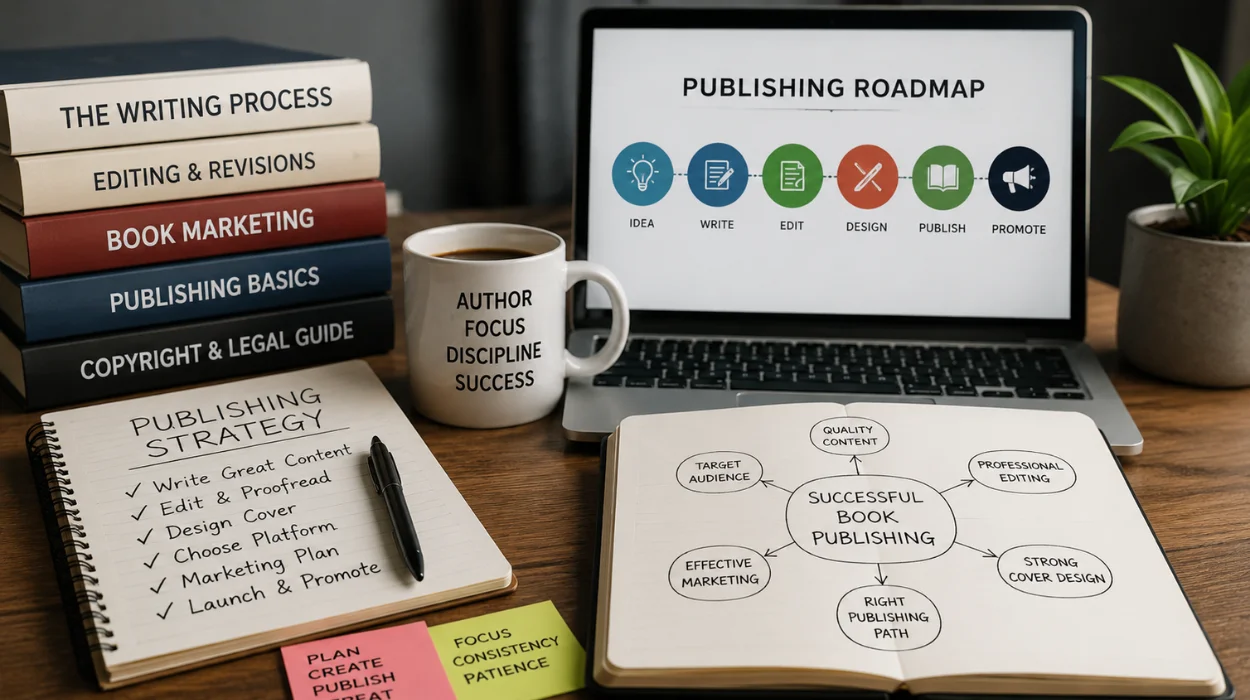
Successful book publishing combines audience research, positioning, launch timing, distribution, media outreach, and measurable promotion. The strongest strategy aligns each activity with the book’s genre, audience, and commercial objective.
Publishing strategies differ in how they build awareness, generate media coverage, and convert attention into reader interest. Comparing these approaches helps publishers select the right mix for each title.
Which book launch strategy builds audience awareness fastest?
A coordinated launch strategy builds awareness faster than relying on one promotional channel. It combines owned content, earned media, direct outreach, social promotion, retailer visibility, and timely announcements around the publication date.
A successful book launch coordinates multiple visibility channels around a defined publication date. Owned content establishes information, earned media creates independent exposure, direct outreach reaches relevant journalists, and social activity extends conversations among existing and potential readers.
A publisher can begin with an owned-media announcement that establishes the book as a credible source of information. A press release can then communicate the publication event to media outlets and online audiences. Direct journalist outreach adds personal relevance when the story fits a publication’s editorial focus.
Social platforms serve a different function. They create repeated exposure through excerpts, author commentary, reader discussions, interviews, and launch announcements. Retailer pages support discovery by providing essential purchasing and bibliographic information.
Timing also affects visibility. A launch announcement published six weeks before publication serves a different purpose from coverage released on publication day. Publishers can study these differences when developing a broader launch strategy for new book titles.
Which distribution method provides broader media reach?
Wire distribution provides broader initial reach, while direct journalist outreach provides narrower and more targeted contact. The two approaches distribute information through different mechanisms and should be evaluated against the desired audience.
Wire distribution prioritises scale by sending a release across a defined distribution network. Direct journalist outreach prioritises relevance by matching a specific story with selected reporters, editors, reviewers, or publications. Their value differs according to reach, targeting, timing, and editorial fit.
Wire distribution works through a structured network. One release can reach numerous news websites, databases, industry publications, and syndicated destinations. This model suits announcements that require broad availability across several markets.
Direct outreach operates differently. A publicist or publisher identifies journalists covering publishing, literature, business, education, lifestyle, or a relevant specialist subject. The pitch then connects the book with the journalist’s existing editorial interests.
Publishers can compare the two methods through several factors:
- Compare distribution scale with targeted journalist selection.
- Measure publication volume against the number of relevant editorial contacts.
- Assess speed against the time required for personalised pitching.
- Review audience relevance using named publications such as The Bookseller or Publishers Weekly.
Neither method performs the same function. Broad distribution creates discoverability, while targeted outreach creates opportunities for editorial consideration. A publishing campaign can therefore evaluate both methods according to the story rather than treating them as interchangeable.
Which approach offers stronger editorial credibility?
Independent editorial coverage generally provides stronger third-party credibility than publication on owned media alone. The distinction comes from who controls the content and how the audience receives the information.
Owned-media publishing gives publishers control over messaging and timing. Independent coverage adds external editorial judgement and audience trust. Press releases occupy a middle position because they provide news information while remaining publisher-controlled communications.
An author website or publisher newsroom gives complete control over headlines, images, quotes, metadata, and supporting information. This makes owned media useful as a central information source. It also creates a permanent destination that journalists can reference.
Editorial coverage follows a different process. A journalist decides whether the book announcement, author expertise, research, event, or cultural angle merits coverage. The resulting article therefore carries an independent editorial context.
Press releases sit between these models. They provide structured information that journalists can use when evaluating a story. They also create searchable references for organisations seeking information about a book launch.
Publishers should distinguish visibility from editorial endorsement. A release appearing across distribution destinations does not mean every outlet independently reviewed the book. Conversely, a feature in a relevant publication represents a different form of media attention.
This distinction becomes important when publishers evaluate campaign results. Counting placements without separating syndication, owned content, and independent coverage can produce an inaccurate picture of media performance.
Which method is more cost-effective for book publishers?
Cost-effectiveness depends on the campaign objective, audience size, production requirements, and value assigned to each media outcome. A lower distribution price does not automatically represent better value if the resulting audience has little relevance.
Cost-effective book promotion connects spending with measurable outcomes rather than relying on distribution volume alone. Publishers should evaluate reach, relevant placements, referral traffic, audience quality, content production, journalist response, and downstream reader actions.
Wire distribution usually concentrates expenditure around a defined release. This makes budgeting relatively straightforward. Publishers can compare the distribution cost with the number of destinations reached and the relevance of those destinations.
Direct outreach introduces additional labour. Researching journalists, preparing personalised pitches, following up, and responding to editorial requests require staff time. However, a successful pitch can generate a highly relevant feature with greater contextual value.
Owned-media publishing can reduce external distribution costs. The publisher controls the platform and publication schedule. Its limitation is audience acquisition because the publisher must already possess search visibility, subscribers, social followers, or another traffic source.
A useful evaluation framework includes:
- Calculate cost per relevant placement rather than cost per total placement.
- Compare referral traffic from media coverage with traffic from owned channels.
- Measure journalist responses from targeted campaigns.
- Evaluate conversion activity from named destinations such as Amazon, Waterstones, or an independent bookseller.
The correct comparison therefore focuses on outcomes. A campaign producing 20 highly relevant media interactions can serve a different commercial purpose from one generating 200 low-relevance syndicated appearances.
Which media strategy suits a niche book best?
Targeted media outreach suits niche books because relevance matters more than maximum distribution volume. Specialist publications and journalists already serving the book’s subject area provide a closer audience match.
Niche books benefit from media strategies built around subject relevance, specialist publications, expert commentary, and clearly defined reader communities. Broad distribution creates availability, while targeted outreach connects the book with audiences already interested in its central topic.
A technical book about cybersecurity requires different media targets from a historical biography. A children’s education title also requires different editorial contacts from a business leadership book.
The subject determines the media ecosystem. A cybersecurity book can connect with technology publications, security newsletters, professional associations, and specialist podcasts. A culinary title can target food publications, chefs, recipe platforms, lifestyle editors, and regional media.
Audience intent also matters. A reader searching for specialist information has a different motivation from a general reader browsing bestseller coverage. Media selection should reflect these differences.
Publishers can segment outreach by:
- Identify specialist publications covering the book’s central subject.
- Match journalists with demonstrated interest in the relevant topic.
- Prepare distinct angles for professional, consumer, regional, and trade audiences.
- Analyse responses from named outlets such as The Bookseller, TechCrunch, or BBC Culture according to subject relevance.
This approach does not make broad distribution irrelevant. It changes its role. Broad distribution can establish the announcement across the web, while targeted outreach concentrates effort where editorial relevance is strongest.
Which strategy supports Google News visibility more effectively?
News-focused optimisation supports Google News visibility more effectively than generic web publishing because it aligns the content with identifiable news information and technical publishing requirements. Visibility still depends on eligibility, indexing, relevance, and search-system processing.
Google News visibility requires news-oriented content, clear publication information, crawlable pages, strong headlines, identifiable sources, and consistent technical signals. Generic web publication lacks the specific news context needed for effective news discovery.
A book announcement should communicate a genuine news event. Examples include a publication date, major acquisition, author appointment, award, adaptation announcement, research finding, or significant literary event.
Headline construction also matters. A descriptive headline tells readers what happened without relying on exaggerated promotional language. The body should establish who, what, when, where, why, and how.
Technical accessibility supports discovery. Search engines need to crawl the page, understand its content, identify publication information, and connect the article with the appropriate entity and topic signals.
Publishers should therefore evaluate:
- Check publication dates and timestamps for consistency.
- Use descriptive headlines that identify the book and news event.
- Provide author and publisher information where relevant.
- Maintain crawlable pages with stable URLs.
- Separate genuine news content from purely promotional sales copy.
Google News optimisation should not be treated as a guaranteed placement mechanism. It is part of a broader discoverability strategy that also includes search visibility, media coverage, backlinks, social distribution, and publisher-owned content.
Which combination creates the strongest long-term book visibility?
A balanced combination of owned media, broad distribution, targeted outreach, and independent coverage creates a more complete visibility structure than relying on one method. Each channel contributes a different type of discovery and authority.
Long-term book visibility develops through repeated, connected signals across owned publishing, distribution networks, targeted media outreach, search visibility, and independent coverage. The strongest structure assigns each channel a defined role instead of measuring every activity by the same outcome.
Owned media provides the information base. Distribution expands the availability of the announcement. Journalist outreach creates opportunities for independent coverage. Search optimisation helps audiences discover relevant information after the initial launch period.
The combination also creates multiple entry points. A reader can discover a book through a news article, search result, publisher website, interview, specialist publication, or social post.
Long-term visibility requires continuity. A single launch announcement has a defined news cycle. Subsequent events can create new reasons for coverage, including awards, reviews, speaking engagements, research references, translations, adaptations, anniversaries, and new editions.
Publishers can structure the lifecycle as follows:
- Establish the book’s core information through owned media.
- Distribute the initial announcement through relevant networks.
- Pitch specialist and general-interest journalists with distinct angles.
- Extend visibility through interviews, reviews, events, and author commentary.
- Measure traffic, coverage, engagement, search visibility, and referral activity over time.
This framework also provides a logical transition from strategy to execution. Publishers evaluating the next stage can examine approaches for promoting new book releases based on audience, timing, media objectives, and available resources.
What should publishers measure when comparing book promotion strategies?
Publishers should measure media relevance, referral traffic, search visibility, engagement, journalist response, and commercial actions instead of relying on placement counts alone. Different strategies produce different outcomes, so evaluation requires consistent measurement criteria.
Effective evaluation measures the relationship between promotional activity and audience response. Placement count alone cannot distinguish relevant editorial coverage from syndicated exposure. Publishers should track media quality, referral behaviour, search visibility, engagement, and measurable reader actions.
A distribution campaign can report how many destinations received a release. A journalist outreach campaign can report pitches, responses, interviews, and resulting coverage. Owned media can report page views, search impressions, engagement, and referral traffic.
These metrics should remain separate. Combining every result into one placement number hides the difference between syndication and independent editorial coverage.
A practical measurement framework includes:
- Track the number of relevant media placements.
- Record referring domains and referral sessions.
- Measure search impressions and clicks for book-related queries.
- Monitor journalist responses and confirmed editorial opportunities.
- Compare engagement across owned and earned media.
- Attribute measurable sales or registration activity where tracking allows.
The evaluation period should also match the objective. Launch-day activity measures immediate awareness. A 30-day review captures post-launch media activity. A 90-day review can reveal whether coverage continues generating search visibility and referral traffic.
The final assessment should therefore connect strategy to evidence. Publishers can determine which methods support awareness, credibility, discoverability, or reader action by measuring each outcome separately.
How should publishers choose between competing book promotion approaches?
Publishers should choose according to the book’s audience, news value, media objectives, timeline, and measurement framework rather than selecting a single universal method. Each approach solves a different visibility problem.
Book promotion strategies differ in reach, targeting, credibility, speed, cost structure, and measurable outcomes. Publishers can compare these dimensions against the title’s audience and objectives to create a campaign that uses each channel for its strongest function.
A broad distribution model prioritises scale. Direct outreach prioritises editorial relevance. Owned media prioritises control. Independent coverage prioritises third-party credibility. Search-focused publishing prioritises discoverability.
The most useful comparison is therefore strategic rather than purely financial. A publisher launching a general-interest novel may require broad awareness and consumer media. A specialist academic title may place greater value on expert publications and targeted outreach.
The publication timeline also affects the decision. Early activity can build awareness before release. Publication-day coverage can create a concentrated news moment. Post-launch activity can extend visibility through reviews, interviews, events, and new developments.
The evaluation process can be reduced to four questions:
- Define the primary audience before selecting media channels.
- Identify the strongest news angle before creating promotional content.
- Match distribution methods with the required reach and targeting.
- Measure each channel against its intended business or visibility outcome.
Successful book publishing therefore depends on strategic alignment rather than a single promotional technique. Distribution, journalist outreach, owned publishing, search optimisation, and independent media coverage perform different roles. Comparing those roles allows publishers to build evidence-based campaigns without assuming that one method works for every title.
Ready to get your story published?
Distribute your press release across 500+ trusted media outlets — with editorial review and a full pickup report within 48 hours.
Send Press Release →