
How DTC Brands Build Strong Customer Relationships and Market Growth
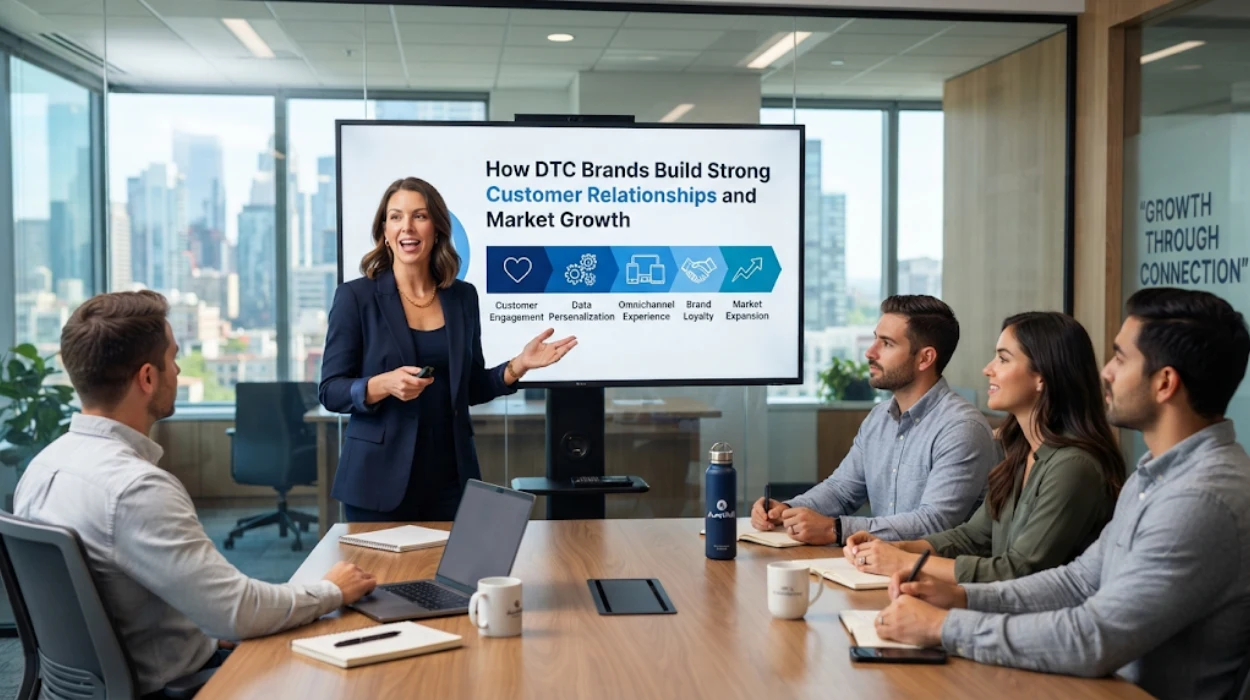
DTC brands build strong customer relationships by controlling first-party data, personalising communication, and integrating owned media with strategic PR distribution. Market growth follows from consistent engagement, trust signals, and multi-channel visibility.
How do DTC brands compare owned media and earned media for relationship building?
Owned media delivers consistent control, while earned media delivers third-party credibility and reach.
Owned media includes websites, email lists, and apps. Earned media includes press coverage and editorial mentions. Owned media allows full message control and continuous communication. Earned media adds authority through external validation. Owned media scales through automation and segmentation. Earned media scales through distribution networks and journalist reach. The two approaches differ in trust signals and speed of amplification.
Owned media builds relationships through repeated exposure. Brands publish 12 blog posts per month and send 8 email campaigns, such as product launches and educational content. Earned media builds relationships through credibility spikes. A single feature on a high-authority publication generates 50,000 impressions in 24 hours. Owned media requires audience acquisition first. Earned media provides immediate exposure to existing audiences. A combined strategy integrates both channels for layered engagement. For foundational understanding, refer to DTC Brands Are Growing Faster.
Which approach builds trust faster: direct communication or media validation?
Media validation builds trust faster due to third-party endorsement, while direct communication builds trust steadily over time.
Direct communication includes email, SMS, and in-app messaging. Media validation includes press mentions and editorial coverage. Direct communication establishes familiarity. Media validation establishes authority. Trust develops through repeated exposure and credible endorsement. Each method differs in speed and perception.
Direct communication builds trust through frequency. Sending 2 emails per week and 4 SMS alerts per month increases recall. Media validation builds trust through authority. Coverage in 5 publications within 7 days creates strong perception signals. Direct communication requires opt-in audiences. Media validation reaches cold audiences instantly. Both methods contribute to long-term brand equity when aligned.
Which distribution method is more scalable: press release syndication or journalist outreach?
Press release syndication scales faster, while journalist outreach delivers deeper engagement per placement.
Press release syndication distributes content across 100+ partner sites simultaneously. Journalist outreach targets 20–50 specific reporters with tailored pitches. Syndication prioritises volume. Outreach prioritises relevance. Each method differs in scalability and editorial depth.
Press release syndication operates through automated networks. A single release appears on 80+ domains within 6 hours. Journalist outreach requires manual research and pitching. Outreach results in 3–5 high-quality placements per campaign. Syndication builds broad visibility. Outreach builds narrative depth and brand storytelling. Brands use both methods depending on campaign goals.
How does Google News optimisation compare to generic web distribution?
Google News optimisation increases visibility in news-specific search features, while generic web distribution increases baseline indexing across search engines.
Google News optimisation includes structured data, publisher authority, and editorial formatting. Generic web distribution includes blog publishing and directory submissions. News optimisation targets high-intent readers. Generic distribution targets broad indexing. Each method differs in visibility context.
Google News optimisation results in placement within Top Stories and News tabs. Articles indexed within 48 hours gain higher click-through rates. Generic distribution ensures presence across search results. Pages indexed within 72 hours support long-tail keyword rankings. News optimisation drives short-term spikes. Generic distribution supports long-term SEO performance. Both methods contribute to sustained visibility.
Which model is more cost-effective: guaranteed placements or syndication-only distribution?
Syndication-only distribution reduces cost per placement, while guaranteed placements increase cost per result but improve certainty.
Syndication-only models distribute content without placement guarantees. Guaranteed placement models secure publication on specific outlets. Syndication reduces upfront cost. Guaranteed placements increase predictability. Each model differs in pricing structure and outcome certainty.
Evaluate cost-effectiveness using these steps:
- Calculate cost per placement, such as £200 for 50 placements versus £500 for 5 guaranteed features
- Measure reach per placement, such as 1,000 impressions per site versus 20,000 impressions per feature
- Assess conversion impact, such as 2% email sign-ups from editorial content
- Compare timeline, such as 24-hour syndication versus 7-day outreach cycles
Syndication supports awareness campaigns. Guaranteed placements support authority-building campaigns. Brands select models based on campaign objectives and budget constraints.
How do data-driven personalisation and PR distribution differ in customer relationship impact?
Data-driven personalisation deepens individual engagement, while PR distribution expands audience reach and brand perception.
Data-driven personalisation uses first-party data such as purchase history and browsing behaviour. PR distribution uses external channels to amplify brand messaging. Personalisation increases relevance. PR distribution increases exposure. Each method differs in engagement depth and audience scale.
Personalisation improves retention through targeted messaging. Sending personalised offers increases conversion rates by 25%. PR distribution increases acquisition through visibility. A single campaign reaching 100,000 users expands brand awareness. Personalisation requires data infrastructure. PR distribution requires media access and content strategy. Both methods contribute to relationship building at different stages.
Which strategy suits early-stage versus scaling DTC brands?
Early-stage brands benefit from awareness-focused distribution, while scaling brands benefit from integrated relationship-building strategies.
Early-stage brands prioritise visibility. Scaling brands prioritise retention and authority. Each stage requires different resource allocation and communication focus.
Evaluate strategy suitability:
- Identify growth stage, such as pre-revenue versus £1M annual revenue
- Allocate budget, such as 70% awareness and 30% retention for early-stage
- Select channels, such as press releases for awareness and email for retention
- Measure outcomes, such as impressions versus repeat purchase rate
Early-stage brands use syndication to reach large audiences quickly. Scaling brands combine outreach, personalisation, and media coverage to strengthen relationships. Strategy evolves with business maturity.
How do multi-channel strategies compare to single-channel approaches?
Multi-channel strategies outperform single-channel approaches in reach and engagement consistency.
Single-channel strategies rely on one platform, such as email or social media. Multi-channel strategies integrate email, PR, social, and search. Each approach differs in risk distribution and audience coverage.
Multi-channel strategies reduce dependency on one platform. A campaign using 4 channels reaches 3× more users than a single-channel campaign. Single-channel strategies simplify execution. Multi-channel strategies increase complexity but improve resilience. Brands combine channels to maintain consistent messaging and maximise visibility. To explore advanced decision-stage strategies, refer to DTC Brands Choose Newswire Now Media Group.
Ready to get your story published?
Distribute your press release across 500+ trusted media outlets — with editorial review and a full pickup report within 48 hours.
Send Press Release →