
Press Release Distribution Reports: Understand Coverage and Traffic

A distribution report shows where a release went, not whether it changed minds. A press release distribution report, explained plainly, records where a release was delivered and what media pickup was identified. Web analytics provide a separate view of visits and referral traffic, so assess coverage and traffic as different outcomes.
It’s reasonable to expect one report to show whether a release reached journalists, appeared in media coverage and brought people to your website. But these signals answer different questions: delivery confirms distribution, coverage records pickup, and traffic measures visits. Learn when reports arrive, what they record and how to interpret traffic without treating distribution as proof of audience impact. The article also explains how Newswire Now Media Group’s editorial review, distribution and media pickup reporting fit in, so you can assess what happened and what each metric means.
Key Takeaways
- Separate proof that a release was distributed from evidence that a publisher picked it up; the two measure different outcomes.
- Read coverage records for where your news appeared and whether the pickup reflects your intended audience.
- Use website analytics to assess visits and referral sources, while keeping traffic distinct from media coverage.
- Understand what a distribution report tracks and when media pickup reporting can help you review results.
Media coverage and web traffic
A media mention and a website visit are different outcomes. Coverage shows that a media outlet published, cited or otherwise picked up your announcement. Traffic analytics show whether people visited your site and, where tracking allows, which source referred them. For example, a newspaper article counts as coverage even if it sends few visitors. A campaign can also generate visits without producing a journalist-written story.
Check each coverage entry for the publication name, article link, date and how your release appears. A journalist may quote one detail, use a company statement or develop a separate story from the announcement. These outcomes provide different levels of context. An exact republication is not the same as independent reporting, so read the linked page rather than treating every mention as equivalent.
Images can affect audience response: press releases with images receive 1.4 times more engagement. Treat that figure as a comparison, not a forecast for your release. The topic, image relevance, placement and audience all shape the response. For example, a product photograph may help readers understand a launch, whilst an unrelated stock image adds little context. Review the creative alongside the coverage record.
For website visits, compare referral sources and landing pages in your analytics platform. A link from a media outlet may appear as referral traffic, while visitors who type your web address directly can appear under another source. Tagged links help communications teams distinguish campaign referrals from other visits. They won’t measure every influence: someone might read a story and visit later through search.
Keep social media results separate from editorial coverage. A post sharing a release can attract engagement, but it doesn’t show by itself that journalists or media outlets published a story. Review coverage records, referral visits and social activity as distinct indicators. Together, these measures provide a clearer picture of reach than any single total.
Newswire distribution
A newswire distributes an announcement through a network of media contacts and publishing channels. Depending on the service, distribution can reach newspapers, magazines, radio and television stations, local bloggers and online news sites. Agility PR Solutions says newswires can post tens of thousands of press releases per day, depending on their size and popularity. That scale makes the distribution route important: a broad feed can increase potential visibility, but it doesn’t mean every outlet will publish a story.
Relevance matters alongside reach. Distribution guidance recommends targeting 15 to 25 relevant journalists, rather than treating a large contact list as the main measure of success. For a UK announcement about a regional opening, appropriate recipients might include local news desks and business journalists covering that area. A national technology launch calls for a different audience. The subject, geography and intended readership shape the distribution choices.
There are several ways to distribute a release. An organisation can send it directly to media contacts or use a free or paid distribution service. Traditional distribution often involves a publicity agency preparing information and sending it to newswires. Each route has its own process, but the purpose is to put the announcement before relevant media contacts. A distribution record helps distinguish sending from subsequent media coverage.
Format also affects how clearly a release can be processed. A consistent headline, dateline, body and contact details make an announcement easier to identify and assess. For example, a product launch should state what has launched, who it is for and when it becomes available. Focus on verifiable details, and make the release long enough to explain the story without obscuring its main point.
Use distribution records to review which channels received the release, then compare that information with actual coverage. If you’re planning a single announcement or repeated campaigns, press release distribution options can help you understand the available route.
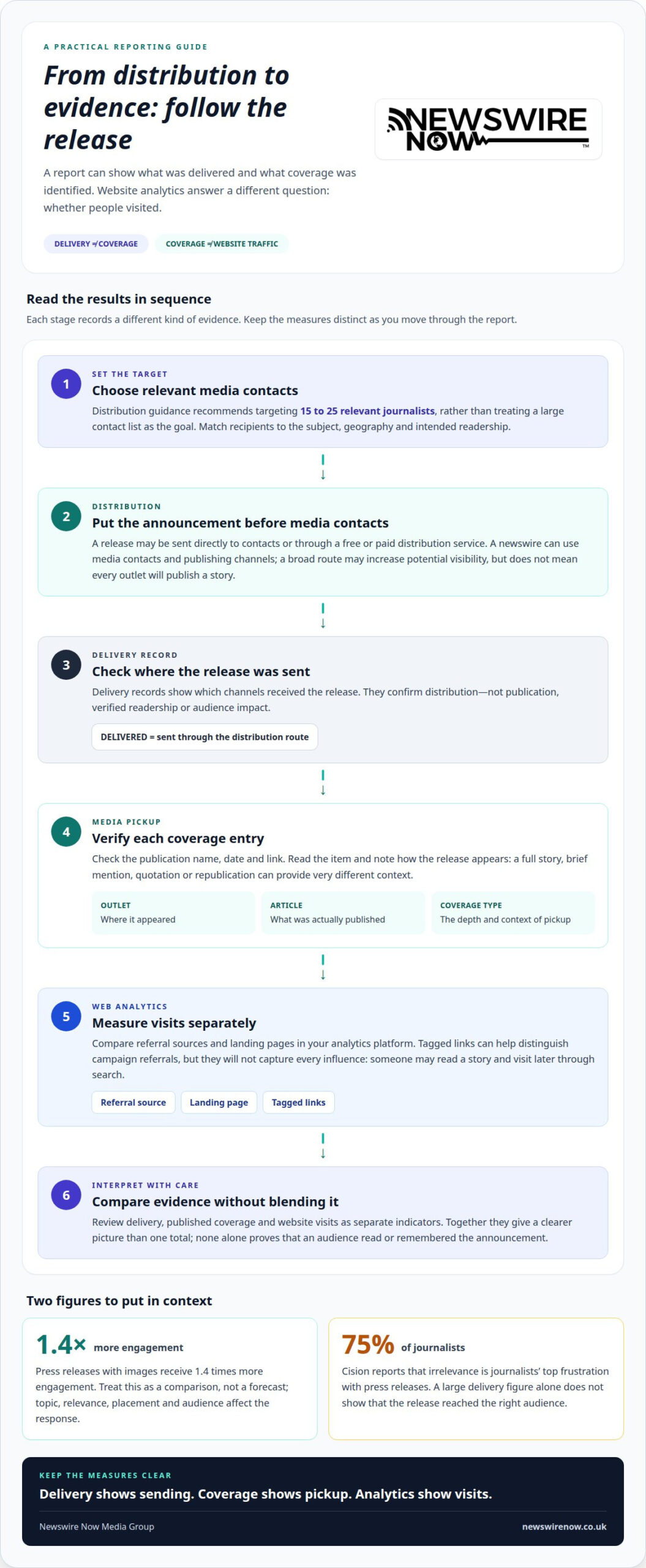
Distribution analytics and reporting
A distribution report combines platform delivery records with identified coverage, giving communications teams evidence to assess a release. Interpret each metric according to what it measures, rather than treating a single total as proof of overall impact.
Estimating reach and report accuracy
Reach estimates potential exposure; it is not a count of verified readers. Platforms may use outlet circulation or audience figures to estimate how many people could encounter a release. This helps compare distribution scale, but does not establish how many people read or remembered the announcement.
Accuracy depends on the delivery records and the platform’s methods for identifying coverage. Check whether a figure describes recipients, potential audience or confirmed visits. An outlet’s estimated readership, for example, is not the same as measured traffic to your website.
UK media coverage in reports
A useful UK coverage report identifies the media outlet, publication date and link to each available item. It should distinguish delivery records from published articles and other types of pickup, so you can assess the results accurately.
Review the headline and article itself. A UK business announcement might appear as a full news story, a brief mention or a republication. These entries differ in context and editorial value. Record the outlet and coverage type to compare results with your target audience and campaign purpose.
Limits and risks in interpretation
Distribution reports can miss coverage that tracking tools do not identify, and estimated reach does not prove readership. A headline or short mention may also be counted alongside more substantial reporting, making totals look stronger than the actual depth of coverage.
Cision reports that 75% of journalists cite irrelevance as their top frustration with press releases. This highlights why a large delivery figure alone says little about audience fit. Compare relevant coverage and referral activity, and avoid treating a platform’s potential reach as confirmed engagement.
Creating or requesting a report
A platform provides a distribution report after publishing a release, showing where it was delivered. To create a useful record, retain the final release, headline, distribution date and campaign target audience. These details help link delivery and coverage entries to the correct announcement.
When requesting a report, specify whether you need delivery records, identified media coverage or both. Ask for publication names and links where available, then organise the results in a simple template. This makes it easier to compare coverage with your communications objectives and distinguish verified items from estimated reach.
Monitoring and tracking coverage
Coverage monitoring goes beyond the initial distribution record. Set search engine alerts for your organisation’s name, campaign headline, product name and distinctive phrases from the release. For a product launch, search for both the brand and product title to surface stories that mention only one. Review results manually, as shared names and unrelated references can create false matches.
Treat each result as a record to verify, not an automatic media mention. Open the article and confirm its source, publication date, headline and connection to your announcement. Save the link and note whether the item is original reporting, a quotation or a republication. This gives media relations teams a clearer record than a search-result count alone.
Track coverage from different sources separately. A journalist’s article, a newswire republication and a social media post have different editorial contexts. For example, a regional news site may publish a full story, while a social post simply shares the launch announcement. Recording the format and context helps distinguish editorial coverage from distribution or social sharing.
Review stories against the campaign’s purpose. A local opening may be best assessed through coverage from relevant regional outlets, while a technical announcement may need specialist publications. Note whether an article reaches the intended audience, includes accurate details and links to the right page. If a story contains an error, record the issue and follow your organisation’s usual media relations process.
Keep a consistent monitoring record for each launch, including the release headline, search terms, source, date, link and coverage type. Comparing records across campaigns can reveal which messages attract relevant coverage and where monitoring needs refinement. Search results help you discover possible coverage, but reviewing each story directly confirms its relevance.
Use media coverage reporting to bring verified pickup into your campaign review.
Newswire Now Media Group: Single Press Release Distribution
Newswire Now Media Group’s Single Press Release Distribution gives organisations a way to share one announcement with media outlets. Use it when a launch, appointment or business update needs distribution and documented pickup. Editorial Review supports the release before distribution, and Media Pickup Reporting helps you review where coverage appears.
Releases are distributed to more than 500 trusted news outlets across 27 industry sectors and 37 professions. The service includes guaranteed placements and a comprehensive pickup report within 48 hours. That report can help you distinguish documented media pickup from estimated reach or website traffic, giving your campaign review a practical evidence base.
For several announcements, Multi-release Distribution Bundles can suit your publishing plans. For a single announcement, Single Press Release Distribution provides a focused option. Visit newswirenow.co.uk to explore distribution with Newswire Now Media Group.
Make your next campaign easier to measure
With a press release distribution report explained clearly, you can make a stronger next decision: define what success should look like before your next announcement goes out. Choose your audience, the coverage you value and the website actions you want to measure. This gives your communications team a consistent basis for reviewing future campaigns, instead of judging each release against a different standard.
Newswire Now Media Group offers Single Press Release Distribution for a one-off announcement, Multi-release Distribution Bundles for planned activity, and Editorial Review to refine a release before distribution. Decide in advance whether your priority is reaching relevant media, recording pickup or understanding referral traffic. A defined goal makes later analysis more focused.
To discuss an approach for your announcement, contact Newswire Now Media Group. Set a clear objective and make your next report more useful to your team.
Frequently Asked Questions
What is a press release distribution report?
A distribution report is a post-distribution record that helps you assess what happened to a specific announcement. Treat it as a campaign document, not a verdict on business impact. For example, a communications manager can attach the report to a product-launch review, then compare its results with the original objective. The phrase “press release distribution report explained” captures the central point: use the record to understand activity, then judge its significance against your goals.
What information is included in a press release distribution report?
Contents vary by platform, but a useful report lets you identify the release and review its recorded activity. Check that the announcement title and distribution date match your campaign records. If several releases have similar headlines, add an internal campaign name or reference when filing reports. This simple naming practice helps colleagues find the right document later and prevents results from separate announcements being combined accidentally.
How do you interpret press release distribution report metrics such as reach, impressions and pickups?
Read reach as an estimate of potential audience, impressions as recorded opportunities to see content, and pickups as identified publications or mentions. These measures aren’t interchangeable. If one outlet republishes a story across several pages, impressions may rise without adding distinct publications. Compare metric definitions and reporting periods first, then prioritise pickups that match your campaign’s subject and intended audience.
How do you measure press release distribution results and ROI?
Start by setting a campaign objective, such as raising awareness or attracting visits to a launch page. Then connect measurable outcomes to the release using tagged links, referral analytics or campaign-specific enquiries. To assess return on investment (ROI), compare attributable value with the campaign’s total cost over a consistent period. Separate results linked to the release from activity that may have come through other marketing channels.
Ready to get your story published?
Distribute your press release across 500+ trusted media outlets — with editorial review and a full pickup report within 48 hours.
Send Press Release →