Press release distribution for mobile apps: How it works

Distribution can broaden an app launch’s reach, but it does not replace direct media outreach. Press release distribution for mobile apps involves preparing a clear launch announcement and sending it through a distribution service for wider circulation and a public record. Explain the app’s most useful features, link directly to its App Store and Google Play listings, and make availability, pricing and account requirements clear.
A strong launch story needs more than an announcement that an app exists. Show what makes it relevant to users and why its launch may interest particular publications or audiences. This article explains how to shape the story, what can make an app launch newsworthy, and how distribution and syndication work alongside targeted outreach.
Key Takeaways
- Shape the announcement around the app’s most relevant capabilities, with clear user benefits and company context.
- Give journalists a stronger reason to cover the launch by connecting it to a timely issue, audience need or meaningful development.
- Use syndication to broaden distribution and create a public record, while keeping relevant direct outreach in the mix.
- Separate distribution, media pickup and audience response when assessing what the launch announcement achieved.
App launch press release template
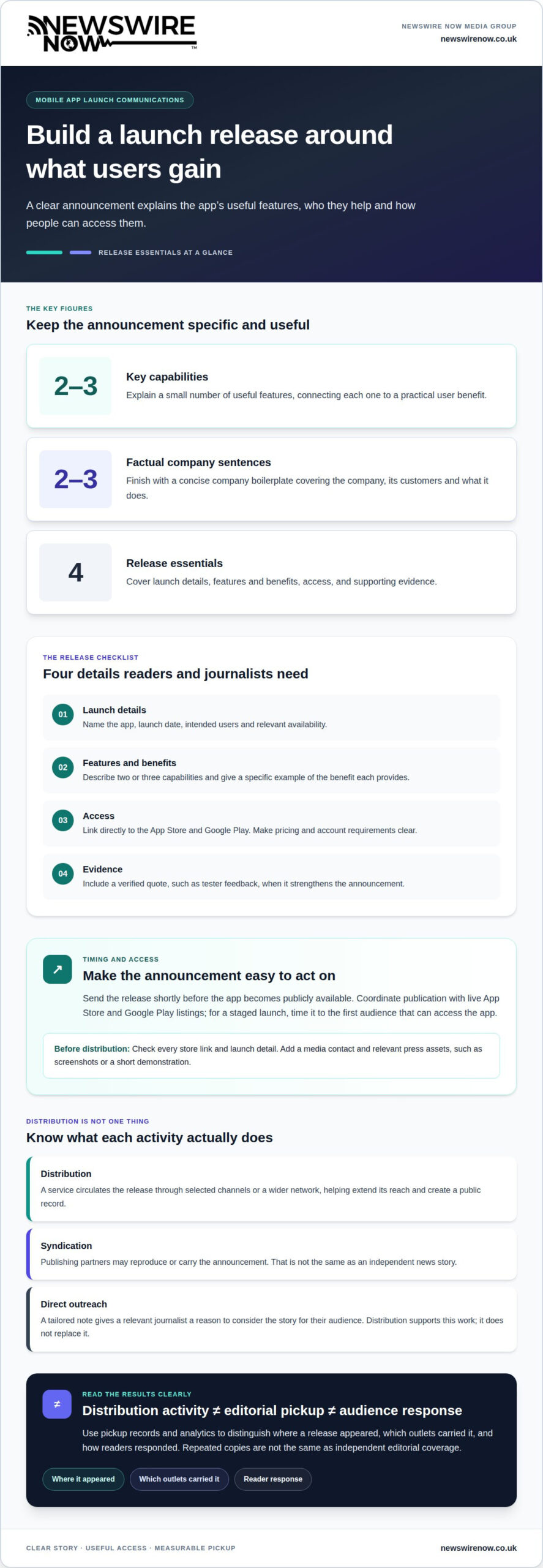
Send the release shortly before the app becomes publicly available. Coordinate publication with the live App Store and Google Play listings so journalists can follow the links and readers can download the app. For a staged launch, time the announcement to the first audience that can access it.
Organise the release clearly. Start with a headline naming the app and its main development, then use a concise opening paragraph to say who launched it, what it does and when it is available. Explain two or three key capabilities, connecting each to a practical user benefit. For example, describe how an expense-tracking feature helps someone review spending rather than simply listing a technical function.
- Launch details: State the app’s name, launch date, intended users and relevant availability.
- Features and benefits: Explain two or three capabilities, using a specific example for each.
- Access: Link directly to the App Store and Google Play. Make pricing and account requirements clear.
- Evidence: Add a verified quote, such as feedback from testers, if it strengthens the announcement.
Keep technical details useful to readers. If an Android app uses a feature designed for a particular device, explain what it enables rather than how it works internally. Avoid unsupported claims about downloads, performance or the wider app ecosystem. Readers should understand the benefit without specialist knowledge.
Finish with a company boilerplate of two or three factual sentences about the company, its customers and what it does. Add a media contact and relevant press assets, such as screenshots or a short demonstration. Check every store link and launch detail before distribution, as broken access links can disrupt coverage. After publication, use pickup reporting to review where the release appeared and which outlets carried it.
Finding a newsworthy launch angle
A launch date alone rarely gives journalists a strong reason to cover an app. Start with the change it brings to a recognisable audience: a new way to solve a practical problem, a significant service expansion or a response to an overlooked need. For example, a budgeting app could lead with how it helps people track shared household spending, rather than simply announcing another app for download.
Connect the angle to evidence. Use tester feedback, a customer example or a specific product capability to show why the story matters. Explain the source of any claim, and distinguish a planned feature from one people can install now. If the announcement covers new versions for iOS and Android, identify what changed and who benefits. Avoid claims about downloads or performance unless reliable figures support them.
- Audience need: Name the group affected and the problem the application addresses.
- Distinctive change: Explain what the app does differently, using a clear example.
- Proof: Add attributable feedback or a concrete demonstration of the benefit.
- Availability: State which versions are ready, where people can install them, and whether the launch is limited.
Platform details can strengthen the story when they explain access rather than add technical trivia. A new Android app designed for a particular device, for instance, needs a clear user benefit. Mention Google Play or an upload milestone only when it supports the central news angle. Broad statements about Android apps or the wider ecosystem will not make a release compelling without a specific audience benefit.
Finally, tailor the angle to each publication. A technology editor may care about the application’s design choices, whilst a sector publication may focus on its use in a particular field. A concise personal pitch should explain that fit and point to the full release and useful assets. Once the story is focused, distribution planning can support its wider reach.
Press release distribution services and syndication
A press release distribution service sends an announcement through its network, helping create a public record and extend its reach. Syndication means other outlets may republish or carry the release; it does not mean every recipient will publish an independent news story. For a mobile launch, distribution can support direct outreach, not replace a personal pitch to relevant journalists.
Keep the announcement focused on news for people, not just an app store update. A Google Play or Apple App Store listing helps readers access the product, while a release explains why the launch matters. For example, an enterprise app could announce an integration that helps teams use an existing service. Describe the practical change rather than presenting a native feature as news by itself.
- Distribution: The service circulates the release through selected channels or a wider network.
- Syndication: Publishing partners may reproduce the announcement, extending its public visibility.
- Direct outreach: A tailored note gives a journalist a reason to consider the story for their audience.
- Measurement: Pickup records and analytics help distinguish distribution activity from reader response.
What are the risks of using low-quality press release distribution services? A poorly targeted network can put an app announcement in front of irrelevant audiences, while unclear reporting makes genuine pickup harder to identify. Repeated copies of a release also do not carry the same editorial value as independent coverage.
Assess a service by its distribution process and reporting clarity. Look for information about outlet relevance, editorial handling, potential publication locations and what pickup records show. A list of recipient categories is more useful than a broad reach claim without context. Check whether the report distinguishes syndication from original articles and names the publications.
For app teams, coordinate publication with the relevant store listing and launch update. Share the release and supporting assets with selected journalists, then use pickup information to guide follow-up. This gives distribution a defined role: wider circulation and a traceable public record alongside outreach and engagement analytics.
How can app press release reach, pickup and results be measured?
Measure an app launch across three distinct stages: distribution, media pickup and audience response. A release appearing in a distribution report shows circulation, not necessarily independent editorial coverage. A named article in a relevant publication is pickup; visits to the app’s store listing show audience action. Keeping these measures separate makes the results easier to interpret.
Start with the distribution record. Note which outlets received or published the release, whether each appearance is a syndicated copy or original coverage, and whether the publication serves your target audience. For example, an article in a technology outlet and a partner site reproducing the same announcement are different forms of exposure. Record publication names and article references, not just a combined reach figure.
- Distribution: Review the release’s circulation and the outlets listed in its report.
- Pickup: Separate original articles from syndicated versions, then assess each outlet’s relevance.
- Referral activity: Track visits from release links to the iOS or Android store listing.
- App response: Compare listing views, installs and engagement in your analytics tools.
To connect coverage and action more clearly, use tagged links where publication formats allow them. Then compare referral visits with store activity during the launch period. For example, a rise in listing visits alongside coverage from a relevant trade publication may indicate a relationship. It does not establish that the article caused every install. Existing campaigns, social posts and product updates can also influence results.
Interpret each measure against the launch objective. If the aim is industry awareness, relevant editorial pickup may matter more than immediate downloads. If the goal is acquisition, examine referral traffic and install activity together. Record the measurement window and other live promotions, then use the same approach for future announcements. This creates a useful comparison without treating reach as a sales result.
Build a reporting view that connects outlet names, publication dates, referral visits and app activity. Plan your app launch reporting around the outcomes that matter to your team.
Newswire Now Media Group: Single Press Release Distribution
Newswire Now Media Group helps app teams distribute a launch announcement and review its media pickup. Its Single Press Release Distribution suits a one-off launch, while Multi-release Distribution Bundles support businesses planning several announcements. Editorial Review adds an editorial check before distribution.
Releases can be distributed to more than 500 trusted news outlets across 27 industry sectors and 37 professions. The network also includes over 40 owned publications reaching millions of readers worldwide. Media Pickup Reporting provides a comprehensive report within 48 hours, helping you see where coverage appeared and assess its relevance to your launch.
This service is useful when your app release is ready and you want broader circulation alongside targeted journalist outreach. Visit newswirenow.co.uk to learn more or contact Newswire Now Media Group.
Make your next launch announcement count
Give your announcement a clear role in the launch plan. Decide whether the priority is industry awareness, qualified visits or visibility with a particular audience. That decision can guide the story angle, the publications you approach and the signals you track after publication. It also keeps press release distribution for mobile apps connected to a wider campaign rather than treating the release as the whole promotion.
Before publication, align the announcement with the app’s availability and the team’s follow-up plan. Afterward, use coverage and audience response to sharpen future messaging. A thoughtful review can show which parts of the story resonated and where a more focused approach could improve the next announcement.
If you’re preparing an app launch and want support with distribution, contact Newswire Now Media Group about your announcement. A well-planned release can give your launch a stronger foundation.
Frequently Asked Questions
How does it work?
Press release distribution for mobile apps starts with a prepared announcement submitted to a distribution service for editorial review and circulation. The service processes the release and provides information about its pickup. The app team can use that record to identify publications and plan follow-up. Direct journalist pitches remain a separate activity, allowing teams to tailor the story to individual outlets and readers.
What can an app launch press release do?
An app launch press release gives journalists and potential users a clear, shareable account of what the product offers and why it has launched. It can establish the company’s position, clarify who the app is designed for and provide an accurate source for launch details. For example, a specialist app may help explain a new service to an audience unfamiliar with the company.
What press release distribution services cover mobile app launches in the UK?
UK businesses can use press release distribution services that handle editorial review, circulation and pickup reporting for app announcements. Newswire Now Media Group offers Single Press Release Distribution for a standalone launch, plus Multi-release Distribution Bundles for businesses planning several announcements. Editorial Review can support release preparation, while Media Pickup Reporting helps teams review resulting placements and use them to plan communications activity.
Which UK press release distribution services reach technology and app journalists?
Newswire Now Media Group distributes releases to outlets across industry sectors including technology and IT, making it relevant for app launch communications. The announcement’s subject and audience still matter: a cybersecurity app may suit technology reporting, while a specialist education app may be more relevant to education publications. Match the release angle and any direct pitch to the journalist’s coverage area.
How do paid, free and direct-to-journalist press release distribution compare for app launches?
Paid distribution provides a structured route to circulate a release and review pickup. Free options, such as a company newsroom or social channels, let an app team publish updates on its own platforms, but do not provide the same distribution mechanism. Direct journalist outreach allows a tailored pitch, although it requires careful targeting and follow-up. Combining channels gives each one a distinct role.
What information should a mobile app launch press release include?
Include the app’s exact store name, publishing company, launch timing, intended audience and the problem it addresses. Add a spokesperson’s name and role, a working media contact and useful supporting assets. Check that the release matches the store listing, especially for platform availability and product naming. If access is limited to certain users or regions, explain that clearly to avoid confusion.
Ready to get your story published?
Distribute your press release across 500+ trusted media outlets — with editorial review and a full pickup report within 48 hours.
Send Press Release →