
How to find newsworthy stories and get media coverage for a small business

How to get media coverage for a small business starts with finding a story that matters to a specific audience, then pitching the journalist or editor who covers that subject. Research the outlet’s recent coverage, tailor your approach and make the timing work for its deadlines. A focused campaign can target 10-20 relevant reporters rather than sending the same message to everyone.
It’s easy to assume a good announcement will speak for itself. In practice, media coverage depends on a clear reason for readers to care, a suitable outlet and a concise pitch that makes the news angle easy to grasp.
This guide explains how to identify genuinely newsworthy business stories, research publications and programmes, build useful reporter relationships and plan around media lead times. You’ll also learn how to follow up professionally and prepare the information journalists need, so your outreach is relevant, timely and ready to act on.
Key Takeaways
- Look for a story with a clear audience benefit, connection to current topics or genuinely surprising detail, not just a routine business announcement.
- Research the outlets and journalists you approach, then shape each pitch around the stories they cover and the readers they serve.
- Plan for different editorial lead times, and prepare seasonal angles well ahead of the relevant coverage window.
- Build reporter relationships by offering useful expertise or credible industry insight, and follow up politely rather than repeatedly chasing a reply.
- Make your pitch concise and easy to assess by clearly explaining who you are, what is happening, where and when, and why it matters.
Quick definition: What is media coverage for small business?
Media coverage means independent newspapers, magazines, broadcasters or online publications choosing to report on your business or its expertise. For success, identify the right journalists, offer a relevant story and make their reporting straightforward. A UK PR agency or freelance publicist’s cost depends on the work’s scope, deliverables, duration and level of support.
Measure value across 30-, 90- and 180-day windows by tracking coverage, referral visits, enquiries and audience response. Compare results with your objectives, such as raising local awareness or supporting a product launch.
- Identify the journalist, not just the outlet. Search newspaper, magazine and programme coverage for the reporter who handles your subject. Read their recent stories, note recurring angles and use their direct professional contact details where available. A local food writer, for example, is a better fit for a bakery opening than a general newsroom address.
- Build familiarity before making an ask. Follow relevant journalists’ work and engage only when you have something useful to add. Keep a record of their topics, preferred contact method and previous conversations. If a reporter covering independent retail asks for local data, offer accurate figures with context, not a sales pitch disguised as insight.
- Offer a story with reader value. Explain what has changed, who it affects and why it matters now. A new website alone is rarely a strong angle; a shop opening that brings a distinctive service to an underserved area may offer a clearer community story. Add evidence, an expert voice or a customer example where relevant.
- Consider an exclusive carefully. A genuinely strong, timely story may suit one publication first, giving its journalist space to develop the coverage. Set out the proposed angle and any agreed timing clearly. Don’t promise the same exclusive to several newspapers, and don’t imply that a routine announcement is exclusive when it isn’t.
- Invite journalists to experience the story. For a venue, event or product, offer a practical visit or demonstration that supports their reporting. Give clear details about access, timings and what they can see or try. A café might invite a local food journalist to meet its baker and observe a new menu being prepared.
- Be precise about embargoes and accuracy. If information must remain private until a stated release time, agree the embargo explicitly before sharing it. Provide confirmed names, dates and figures, and correct errors promptly. Never pressure a journalist to publish favourable coverage or suggest editorial independence can be traded for access.
- Follow up once, with a reason. If there’s no reply, wait three to five business days before sending one polite reminder. Refer to your original pitch and add a useful update, such as a newly available interview or event detail. Reporters may take three to ten days to respond, so avoid repeated messages or deadline-day calls.
Planning pitches around media lead times and seasonal opportunities
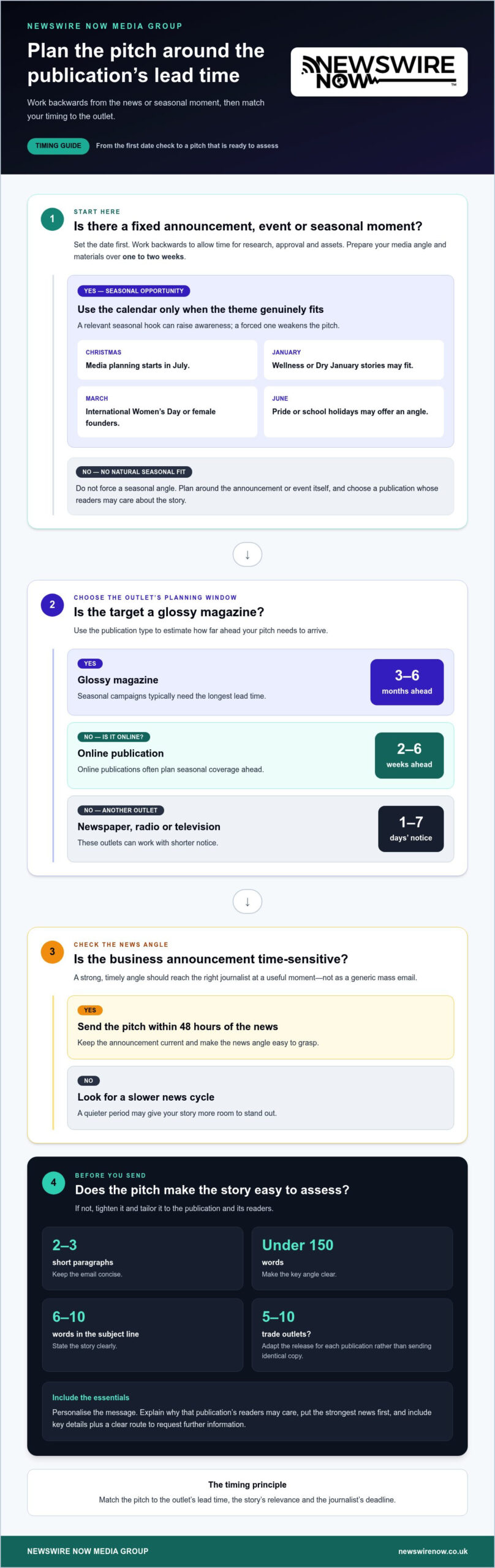
- Set the date before writing. Start with the announcement, event or seasonal moment, then work backwards to allow time for research, approval and assets. Prepare your media angle and materials over one to two weeks. For a time-sensitive business announcement, send your pitch within 48 hours of the news, or look for a slower news cycle where your story can stand out.
- Match timing to the outlet. Newspapers, radio and television can work with one to seven days’ notice, while online publications often plan seasonal coverage two to six weeks ahead. Glossy magazines typically need three to six months for seasonal campaigns. A Christmas gift pitch may need to reach a magazine well before autumn, while a local radio interview can suit a current event.
- Build a seasonal calendar. Christmas media planning starts in July. January can suit wellness or Dry January stories; March offers angles around International Women’s Day and female founders; June may connect with Pride or school holidays. Choose a theme only when it genuinely fits your business, audience and evidence. A relevant seasonal hook can raise awareness; a forced one weakens the pitch.
- Write for the journalist’s deadline. Keep an email pitch to two or three short paragraphs and under 150 words. Use a subject line of six to ten words that states the story clearly. Personalise each message, explain why that publication’s readers may care, and include the key details and a clear route to request further information. Avoid mass emails and generic templates.
- Adapt press releases for trade publications. Trade press readers want practical information about their sector, not a general sales announcement. Emphasise relevant expertise, a key appointment or an investment, then explain what it means for the industry. If pitching five to ten outlets, adapt the release for each publication rather than sending identical copy. Share supporting information through social channels only when it adds useful context.
- Make the release easy to use. Put the strongest news first, then provide accurate background, a contact route and relevant supporting material. For an event, include its date, location, audience and booking details. Time post-event follow-up promptly, with useful images or attendee comments ready to share. A planned press release distribution approach can help organise delivery alongside direct, tailored pitching.
Finding what is genuinely newsworthy about a business
For local media coverage in the UK, connect your story to a specific place and its community, then pitch relevant regional journalists. Make the local impact clear, whether it concerns jobs, access to a service or a change affecting residents. A clear news angle is central to how to get media coverage for a small business because it gives reporters a reason to consider the story.
Find a distinctive business story
List what your business does differently, then identify evidence that makes the difference meaningful to people outside your team. A repair workshop, for example, might show how it extends the life of specialist equipment local organisations rely on. Check whether the story has a clear human or community benefit. A new logo, website or routine opening is rarely news without a wider reason for people to care.
Choose a newsworthy story angle
Test each idea against three questions: does it connect with a current topic, affect people or contain something unusual? An independent manufacturer could offer an angle on changing customer demand, supported by credible business data. Lead with the strongest evidence and explain why the story matters now. If the only point is that your business wants publicity, find a more reader-focused angle. This gives small businesses a stronger starting point for how to get media coverage for a small business.
- Start with the audience affected. Name the people, community or sector that stands to gain or face a change. A new service for rural residents, for instance, has a clearer regional connection when you explain the access problem it addresses. Be specific about the location and the practical effect, rather than relying on broad claims about helping the community.
- Separate evidence from promotion. Gather verifiable details such as dates, examples, customer experiences or relevant industry data. Explain where each figure comes from and what it demonstrates. If a claim cannot be supported, leave it out. Journalists need material they can assess independently, not superlatives such as “best” or “first” without proof.
- Match the angle to a reporter. Find journalists whose work already covers the topic and region. Review their coverage archives from the last 6-12 months to understand their interests and the stories they select. A regional business reporter may welcome local employment news, whilst a specialist correspondent may prefer a sector trend with evidence.
- Build a focused target list. Choose 10-20 reporters for an outreach campaign, selecting for subject fit, audience and geography. Tailor the opening of each pitch to show why that journalist may be interested. A story about a local skills initiative, for example, could suit a regional paper if it demonstrates a clear benefit to nearby employers or residents.
- Check the story from outside your business. Ask someone unfamiliar with the announcement what they find most interesting. If they focus on a detail beyond your preferred headline, consider whether that detail offers the stronger news angle. This simple step helps separate a genuinely newsworthy development from an internal milestone that matters mainly to the company.
Building relationships with reporters and editors
Build trust through useful, timely contact rather than treating every interaction as a one-off pitch. Credible relationships grow from understanding a journalist’s editorial priorities and respecting their working day.
- Learn what the journalist needs. Review their recent coverage, then ask what stories or expertise they’re currently seeking and how they prefer to receive ideas. A reporter covering independent shops might welcome reliable data on local retail trends. Make the question brief and relevant; don’t ask for a meeting without a clear purpose.
- Offer expertise before requesting coverage. Share useful commentary when a journalist is developing a relevant story. A local accountant could explain how a business trend affects community firms, using accurate information and plain language. Keep your contribution editorially independent: offer insight, not a demand for a mention or favourable treatment.
- Make your business a reliable source. Prepare yourself to respond clearly when a journalist requests an interview or supporting details. Keep key facts, suitable spokespeople and contact information organised. If you promise a response by a particular time, meet that deadline. Reliability helps a reporter assess whether your business can support future stories.
- Follow up with restraint. Wait five to seven days after pitching before sending one concise reminder, unless an event requires a timely update. For an event, a quick call or email reminder on the morning can help with practical details. Avoid calling during news hours or when afternoon deadlines are looming; respect the reporter’s schedule.
- Build connections with relevant influencers. Identify people whose work reaches the same audience, such as a local food writer, industry specialist or community organiser. Follow their work and contribute useful information before proposing collaboration. A neighbourhood café might share accurate opening details with a local food creator, rather than sending an unrelated promotional message.
- Keep the relationship useful after publication. Thank the journalist for their time, share a published story through your business’s social channels, and correct factual errors politely. Don’t claim editorial coverage as an endorsement. A thoughtful follow-up can keep communication professional without creating pressure for another article.
- Commit to consistent, focused outreach. Building a media profile can take months or even years, so plan time for regular, relevant contact. Set a realistic time budget for monitoring coverage, preparing expert comments and maintaining accurate business information. Track interactions and useful opportunities, not just immediate placements; this helps you invest effort where relationships develop naturally.
Researching publications and programme coverage
- Define the audience you need to reach. Write down the people most likely to care about your story, including their location, interests and buying needs. A local food producer might prioritise residents interested in independent shops, whilst a specialist supplier may want professional buyers. The best publication is the one whose audience matches your objective, not simply the one with the largest profile.
- Build an evidence-based shortlist. Collect candidate newspapers, magazines, websites, radio programmes and television segments in one working document. Review the last 6-12 months of coverage for each relevant reporter or programme. Note recurring subjects, formats, locations and interviewees. This research shows whether your story fits an established editorial interest or would feel out of place.
- Assess audience fit, not just topic fit. A publication may cover small businesses but serve readers in a different region or sector. Check the geographic reach, typical reader, section focus and format. A regional newspaper may favour a community impact story, while a trade title may need detailed insight into a professional issue. Record the strongest evidence for each match.
- Use audience feedback to refine choices. If you’re unsure which publications matter to your customers, ask a sample of 10-50 people from your target audience what they read, watch or listen to. Keep the question specific, such as which local news source they use for new restaurant openings. Treat responses as one input alongside published coverage and your business goals.
- Score each outlet against your story. Compare editorial relevance, audience, location and timing before deciding where to pitch. A simple table can mark each factor as strong, moderate or weak, with a note explaining the evidence. This makes it easier to prioritise the outlets with a genuine fit instead of sending the same pitch widely.
- Adapt the story to each format. A radio producer may need a clear interview angle and an available spokesperson; a magazine editor may need a visual, seasonal feature. Keep the core facts consistent, but make the opening concise and relevant to that outlet’s audience. A single story can earn a better chance of consideration when its presentation reflects the publication’s format.
- Turn research into a practical pitch list. Record each outlet’s coverage area, relevant journalist, contact route, previous related story and planned follow-up date. For a focused campaign, target 10-20 relevant reporters, then tailor the pitch to each. Use your shortlist to organise your press release distribution around suitable publications and audiences.
Newswire Now Media Group: Single Press Release Distribution
Newswire Now Media Group is a practical next step when your story is ready for wider distribution beyond individual journalist pitches. Its Single Press Release Distribution includes editorial review, distribution to more than 500 trusted news outlets across 27 industry sectors and 37 professions, and Media Pickup Reporting.
The network also includes over 40 owned publications reaching millions of readers worldwide. Choose a single release for a focused announcement, or consider Multi-release Distribution Bundles when you have several planned stories. Distribution supports outreach; it doesn’t replace a relevant angle or tailored relationships with journalists.
If your release is prepared and you want to explore distribution, visit Newswire Now Media Group.
Turn your next business milestone into a media opportunity
Choose an upcoming development and decide what you want it to achieve: reach local customers, demonstrate expertise or strengthen awareness in your sector. A clear plan for how to get media coverage for a small business starts with a story that serves readers, not just the company’s promotional calendar. Keep gathering useful evidence and insights so future pitches offer journalists more than an announcement.
If your release is ready and you want support with distribution, Newswire Now Media Group offers Single Press Release Distribution, Multi-release Distribution Bundles and Editorial Review. These services can support the distribution of a prepared release, alongside your publication research and journalist relationships as part of a broader media approach.
Take the next step at a pace that suits your plans: contact Newswire Now Media Group to discuss press release distribution. Your next strong story can be the start of a more focused approach to earning attention.
Frequently Asked Questions
What is PR and why does your small business need it?
PR is the planned communication of information that helps people understand your business and its work. It can include media stories, expert commentary and public updates, unlike paid advertising, where you buy space for a message. A small business might use PR to introduce a new service, explain a change affecting customers or establish its founder as a knowledgeable industry voice. Set a clear objective before choosing tactics.
What makes an angle newsworthy?
A newsworthy angle gives an editor a clear reason to tell the story now. It might reveal a consequence for customers, challenge an assumption or explain a wider change through your business’s experience. For example, a reusable packaging company could show how retailers are responding to customer demand, supported by specific examples. A product announcement without a broader point is usually less compelling than evidence of a meaningful effect.
How do you find the right journalists and publications for a small business story?
Start with the subject and audience, then identify the publication sections and reporters responsible for them. Search bylines on relevant stories and note whether a journalist covers consumer advice, business, technology or another beat. Check whether their coverage reaches the people you want to inform. A sustainable clothing brand, for example, should distinguish between a fashion editor and a journalist covering supply chains.
What makes a business story newsworthy to UK media?
UK media need a clear public or audience interest, supported by accurate information and a relevant point of view. A story can connect a business development to a national conversation, a sector change or a specific community’s needs. For instance, a firm changing its delivery methods could explain the practical effect on customers and provide evidence behind its decision. Avoid presenting routine sales claims as independent news.
How do you write a press release for a small business?
Write the release so an editor can quickly understand and verify the announcement. Use a factual headline, put the main development first, then add context, a relevant spokesperson quote and supporting details. Include the release date, a named media contact and concise background about the business. For a new service, explain who it serves, what changes for customers and where they can find accurate information.
How should you pitch journalists by email in the UK?
Send a personal email explaining why the story suits that journalist’s coverage and audience. State the news clearly, show its relevance and offer an interview or evidence that strengthens the story. Make one straightforward request, such as asking whether they would consider speaking with your founder. Link to useful supporting material, and avoid large attachments or repeated messages that make the pitch harder to assess.
When is the best time to contact journalists with a story?
Contact journalists once your story is confirmed and its supporting details are ready, allowing for the outlet’s production schedule. A breaking development needs prompt outreach; a planned feature may require much earlier notice. Consider when the journalist plans coverage and when your spokesperson can respond. For an event, provide practical details early, then share meaningful updates rather than sending repeated reminders without new information.
How can small businesses get press coverage without hiring a PR agency?
A business can manage outreach itself by assigning one person to maintain story ideas, journalist contacts and follow-up notes. Set aside time to monitor relevant coverage, prepare accurate background materials and respond promptly to enquiries. Start with a focused story and a small, well-matched target list. If you need help distributing a prepared release, Newswire Now Media Group offers press release distribution, including single-release and bundled options.
Ready to get your story published?
Distribute your press release across 500+ trusted media outlets — with editorial review and a full pickup report within 48 hours.
Send Press Release →