
How Textile Manufacturing Companies Build Strong Industry Reputation
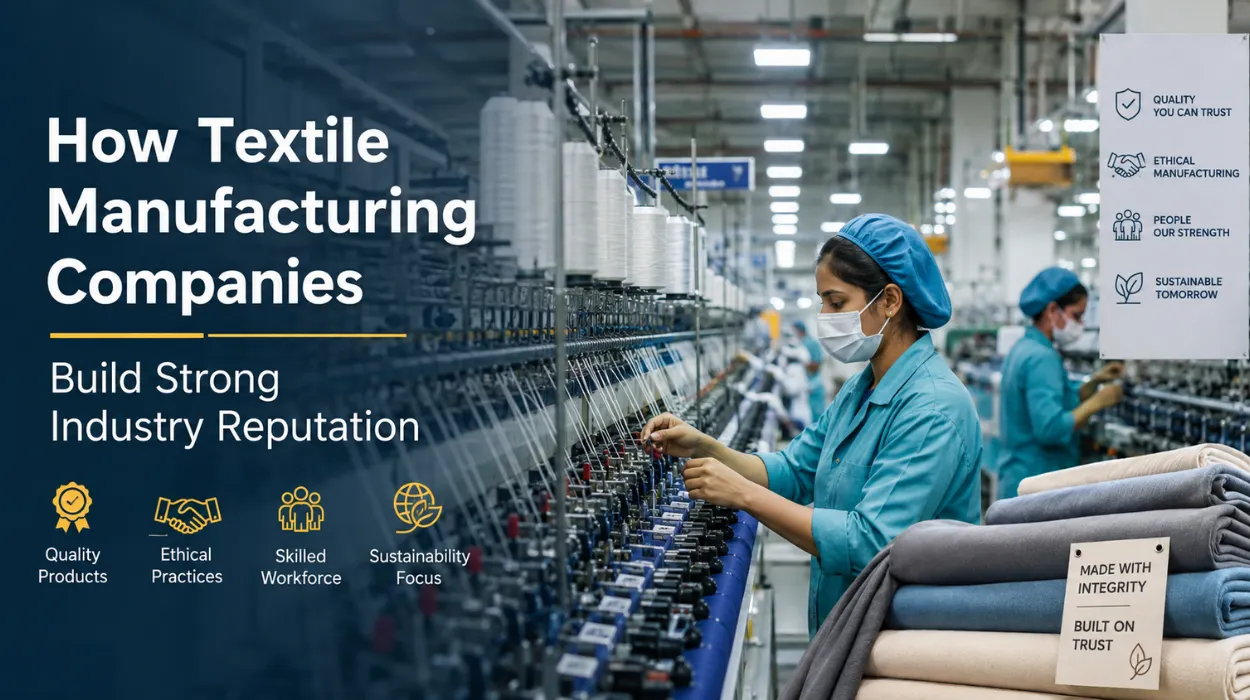
Textile manufacturing companies build a strong industry reputation by combining verified production standards, transparent communication, consistent quality, and credible media coverage.
A strong reputation develops when manufacturers demonstrate operational reliability, responsible sourcing, regulatory compliance, and measurable industry expertise through trusted information channels.
What defines a strong reputation for a textile manufacturing company?
A strong textile industry reputation is the public perception of a manufacturer’s quality, reliability, compliance, innovation, and business conduct. Reputation is built from evidence rather than promotional statements, with buyers, suppliers, journalists, investors, and industry organisations evaluating information from multiple sources. Manufacturing quality establishes the operational foundation of this reputation. Regulatory records, certifications, factory standards, product specifications, and corporate announcements provide verifiable signals about business practices. Media coverage then distributes these signals beyond existing commercial relationships. Consistent communication keeps the company’s public identity aligned with its actual operations.
A textile reputation also reflects how effectively a manufacturer communicates industry developments. Production capacity, new machinery, export milestones, sustainability initiatives, workforce programmes, and certification achievements create legitimate news subjects. A press release is a structured announcement that communicates a verified development to journalists, media organisations, and distribution networks. Newsrooms analyse such announcements according to relevance, evidence, timeliness, and editorial value. This makes factual documentation an important part of reputation management.
How does consistent manufacturing quality influence industry reputation?
Consistent manufacturing quality strengthens reputation by giving external audiences measurable evidence of operational reliability. Textile buyers assess characteristics such as fabric consistency, colour accuracy, dimensional stability, durability, defect rates, and delivery performance. Quality management systems document these characteristics through inspections, testing procedures, corrective actions, and production records. International standards such as ISO 9001 provide recognised frameworks for quality management. Textile-specific testing organisations such as SGS and Intertek also verify selected product characteristics. Public communication about verified standards gives journalists and industry audiences factual material for reporting.
Production efficiency also connects operational performance with corporate credibility. Manufacturers that document workflow improvements can explain how machinery, quality controls, production planning, and process monitoring affect output. Building efficient production processes requires measurable workflows rather than broad claims about operational excellence. A manufacturer can communicate relevant developments through structured announcements that identify the process, measurable result, implementation date, and business relevance. This approach gives media professionals specific information to analyse and report. It also prevents reputation messaging from becoming disconnected from manufacturing evidence.
How do certifications and compliance records support textile reputation?
Certifications support textile reputation by providing recognised evidence that a manufacturer meets defined requirements. Textile businesses operate across supply chains governed by product, environmental, labour, safety, and chemical requirements. Standards and certifications can address different parts of manufacturing, so each claim needs to identify the relevant standard and scope. Examples include OEKO-TEX STANDARD 100 for harmful-substance testing and the Global Organic Textile Standard (GOTS) for certified organic textile processing. ISO 14001 addresses environmental management systems, while ISO 45001 addresses occupational health and safety management. Accurate communication distinguishes certification from general sustainability claims.
Regulatory compliance also creates legitimate subjects for industry communication. Textile manufacturers operating across borders need to consider requirements established by authorities and trading markets, including the European Union’s REACH framework for chemicals. Regulatory information becomes more useful to journalists when announcements specify the applicable requirement, certification body, product category, and effective date. Press releases can distribute these verified developments to relevant media audiences. Journalists can then source factual details without relying solely on corporate promotional language. This creates a clearer connection between compliance evidence and public reputation.
How does press release distribution contribute to textile industry reputation?
Press release distribution contributes to reputation by placing verified company developments in information channels used by journalists, publishers, and industry audiences. A press release contains structured information about a specific announcement, such as an expansion, certification, product development, executive appointment, partnership, or operational milestone. Distribution services transmit that information to selected media networks and publishing destinations. News organisations determine whether the material meets their editorial requirements before publication or further reporting. Published coverage provides an external reference point for people researching the manufacturer. The value comes from accurate information reaching relevant audiences rather than from repetition alone.
Distribution also establishes a defined publication timeline. A release submitted for immediate distribution enters the publication process according to the selected release schedule and receiving network. An embargo is an instruction that restricts publication until a specified date and time. Embargoes allow journalists to review information before public release while preserving coordinated timing. The release date and time therefore form part of the communication mechanism. Precise scheduling is particularly relevant to factory openings, trade-show announcements, product launches, financial updates, and regulatory developments.
How do journalists source stories from textile manufacturing companies?
Journalists source textile industry stories by identifying timely, verifiable developments that provide relevance to their audience. Newsrooms monitor company announcements, regulatory updates, trade associations, market developments, executive statements, research, and industry events. Textile publications such as Just Style and Fibre2Fashion focus heavily on manufacturing, sourcing, supply chains, materials, and industry developments. A journalist evaluating a company announcement looks for clear facts, named entities, supporting evidence, and a meaningful news angle. A release that clearly identifies what happened, where it happened, when it happened, and why it matters provides a usable starting point. Editorial decisions remain with the publisher or journalist.
Press releases also function as source documents rather than guaranteed articles. Journalists can extract factual information, contact named representatives, verify claims, and investigate the wider context. Strong releases therefore identify relevant executives, organisations, locations, standards, dates, and measurable developments. Quotations provide attributed viewpoints but do not replace evidence. Supporting documents can further help journalists verify technical or regulatory statements. This source-oriented structure increases the informational usefulness of a release.
How does Google News affect the visibility of textile industry announcements?
Google News visibility depends on whether content meets Google’s requirements for news-related content, technical accessibility, and overall publisher quality. Google News uses automated systems to identify and organise news content from eligible publishers rather than providing guaranteed placement for every press release. Publishers need technically accessible pages that allow search systems to crawl and understand their content. Clear headlines, publication dates, author information, publisher details, and structured page elements help establish content context. Google’s Publisher policies also apply to content appearing across its news surfaces. Eligibility therefore involves both content quality and technical presentation.
Indexing is the process through which search systems discover, process, and store a webpage. Crawling frequency depends on factors such as site architecture, update patterns, accessibility, and search-system signals. Structured data can provide additional machine-readable information about an article, including headline, author, datePublished, and image information. The NewsArticle structured-data type is specifically relevant to news content. Structured data does not guarantee indexing or ranking, but accurate implementation helps search systems interpret page information. Publishers also need crawlable URLs and accessible page content.
How does media syndication expand the reach of textile announcements?
Media syndication expands reach by allowing the same news information to appear across multiple publishing destinations within a distribution network. Syndication is the redistribution of content from an originating source to additional outlets or platforms. Wire services such as PR Newswire, Business Wire, and EIN Presswire distribute corporate announcements to broad media and information networks. Receiving publications determine how they use syndicated material according to their editorial and technical practices. Some outlets publish the release in substantially similar form, while others use it as source material. The resulting footprint depends on distribution, editorial selection, indexing, and publication behaviour.
Syndication also creates a distinction between distribution and earned editorial coverage. Distribution places an announcement into channels where media professionals can access it. Earned coverage occurs when an independent publication chooses to report on a development through its own editorial process. These mechanisms serve different communication functions. A distributed release provides the factual source material, while editorial reporting can add analysis, interviews, industry context, or independent verification. Understanding this distinction prevents companies from treating every distributed copy as independent journalism.
How can textile companies make media announcements more credible?
Textile companies make media announcements more credible by presenting specific, verifiable, and proportionate information. Credible releases identify the announcement precisely instead of relying on broad descriptions such as “industry-leading” or “world-class”. Production figures need defined periods, units, locations, and measurement methods. Sustainability claims need supporting standards, certification details, or documented operational changes. Executive quotations need to explain the business significance of the announcement rather than repeat the headline. Named organisations and regulations provide additional context when they directly relate to the development.
Media credibility also depends on consistency between public statements and available evidence. A manufacturer announcing reduced water consumption can identify the baseline period, measurement boundary, production volume, and documented reduction. A company announcing new production capacity can identify the facility, equipment category, capacity figure, and implementation timeline. These details give journalists concrete information to verify. They also create a clearer record for customers and industry researchers. Reputation becomes stronger when public communication remains aligned with operational reality.
How does ongoing media communication maintain textile industry reputation?
Ongoing media communication maintains reputation by creating a consistent, evidence-based record of relevant business developments. Reputation is not established by one announcement because stakeholders continually evaluate new information about a company. Textile manufacturers can communicate verified developments involving production, certification, innovation, exports, supply-chain improvements, executive appointments, and industry participation. Each announcement needs a distinct news subject rather than repeated versions of the same corporate message. A consistent publication record helps external audiences understand the company’s evolving activities. The approach works best when communication reflects actual operational progress.
A structured media strategy also requires accurate timing and information management. Companies need to coordinate release dates, embargoes, spokesperson availability, supporting documentation, and regulatory requirements before distribution. Journalists need accessible contact information and factual source material when an announcement generates interest. Publishers need technically accessible content with clear metadata for discovery and indexing. These mechanisms connect operational evidence with public information. Strong textile industry reputation therefore emerges from the interaction between manufacturing performance, credible documentation, and disciplined media communication.
Textile manufacturing reputation is ultimately built through verifiable performance communicated through credible information channels. Quality systems establish evidence, certifications verify defined standards, press releases distribute relevant developments, journalists assess news value, media outlets apply editorial judgement, and search systems process accessible news content. Each mechanism performs a distinct function in transforming operational activity into public knowledge. Accurate information, transparent documentation, precise timing, and consistent communication create a durable reputation record across the textile industry.
Ready to get your story published?
Distribute your press release across 500+ trusted media outlets — with editorial review and a full pickup report within 48 hours.
Send Press Release →