
GMO Cookies Strain Guide: Potency, Genetics, and Origins
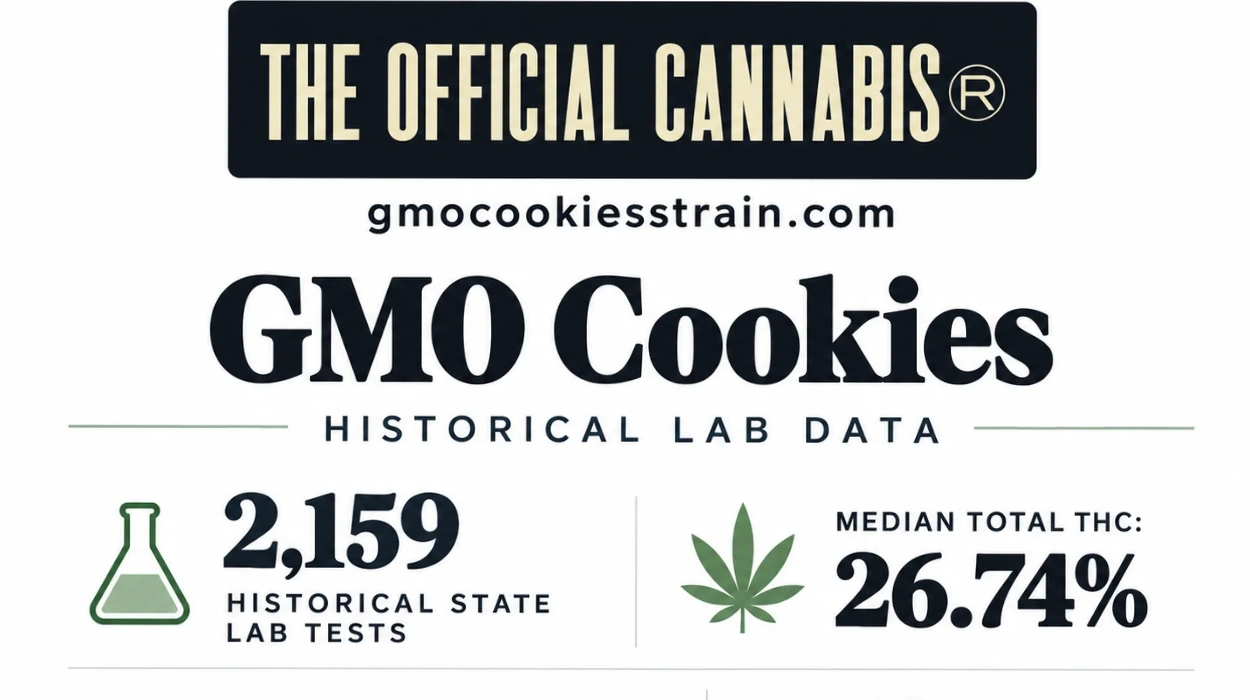
LAS VEGAS, Nevada, October 27, 2026 (Newswire Now) — Official Cannabis, a subsidiary of Real Tested Inc., has published an updated GMO Cookies strain guide examining historical laboratory results, reported genetics, and competing explanations for the strain’s name. Also known as GMO or Garlic Cookies, the cannabis strain has attracted attention for its reported potency, distinctive flavor profile and uncertain naming history.
The guide brings together historical flower-testing data and information attributed to cannabis reference sources. It also distinguishes reported breeding history from unresolved questions about the strain’s name, helping readers understand where published accounts agree and where they differ.
What Do Historical GMO Cookies Lab Tests Reveal About Potency?
The GMO Cookies lab-data summary compiles 2,159 historical state laboratory tests of flower samples reported under the strain’s name. According to the published dataset, the median total THC result was 26.74%, while the middle 50% of results ranged from 23.46% to 29.83%.
The reported figures describe historical samples associated with the GMO Cookies name. They do not establish the potency of every product sold under that name today, nor do they demonstrate that all tested samples had identical genetics.
Laboratory results can vary according to the sample, cultivation conditions, testing methods, and other factors. Historical results are therefore best understood as a description of the collected records rather than a prediction of what a consumer will encounter in an individual product.
Readers can review the GMO Cookies potency data for the published summary.
What Are the Reported Genetics of GMO Cookies?
The guide describes GMO Cookies as an indica-dominant hybrid associated with Chemdawg and Girl Scout Cookies. It attributes the reported breeding history to Mamiko Seeds, with later selection and naming credited to Skunkmasterflex.
These details reflect the breeding history reported by the guide. Strain names and genetic descriptions found in cannabis references do not independently verify the genetic composition of every product sold under the same name.
The guide also references user-reported experiences associated with the strain, including relaxing, sleepy and euphoric sensations. Such descriptions reflect reported experiences rather than guaranteed effects for every individual.
Consumers should avoid treating a strain label alone as proof of a product’s potency, composition or likely effects.
Why Does the GMO Cookies Name Have Different Explanations?
The origin of the GMO name remains disputed across commonly cited cannabis references, which offer different explanations rather than one conclusively established account. Official Cannabis presents these accounts separately to distinguish reported interpretations from confirmed historical facts.
Weedmaps describes “garlic, mushroom, onion” as a popular expansion of the initials, while acknowledging uncertainty surrounding the name’s origin.
Leafly, meanwhile, attributes the naming decision to Skunkmasterflex and links it to news coverage involving genetically modified ingredients associated with a cookie brand.
Because these explanations differ, the guide avoids presenting either one as definitively proven. Keeping the accounts separate allows readers to understand the competing explanations without confusing a commonly repeated story with established documentation.
What Does the Guide Say About GMO Cookies Terpenes and Flavor?
The guide includes source-attributed information about GMO Cookies’ reported terpene profile and flavor characteristics, alongside its historical potency and genetic descriptions. These observations provide additional context for readers researching how the strain has been described in cannabis references.
Terpenes are aromatic compounds found in many plants, including cannabis. Their presence and relative concentrations can vary between samples, so a general strain description should not be treated as a verified chemical profile for an individual product.
The guide also includes reported flowering-time information. These descriptions should be understood as reference material rather than guarantees about the cultivation characteristics or composition of every plant carrying the GMO Cookies or Garlic Cookies name.
Where Can Readers Find the Full GMO Cookies Strain Guide?
The complete guide and its accompanying potency summary are available online through Official Cannabis’s GMO Cookies resource. The materials bring together reported strain history, genetics, naming explanations and historical laboratory observations.
Readers can access the resources here:
For readers researching cannabis terminology and strain listings in Germany, the weed.de strain finder is another searchable resource for strain names and related information.
The guide’s central aim is to help readers distinguish historical testing results and source-attributed descriptions from details that remain uncertain or vary between published accounts.
About Official Cannabis
Official Cannabis, a subsidiary of Real Tested Inc., operates a network of cannabis strain guides. According to the company, the network includes 50 strain guides covering reported strain history, genetics and historical laboratory observations.
Its resources aim to distinguish documented information from conflicting or uncertain accounts and provide readers with a consolidated starting point for further research.
Media Contact
Real Tested Inc.
Babu Kipkorir
Email: [email protected]
Phone: +1 (833) 365-5250
Location: Las Vegas, Nevada, USA
Website: gmocookiesstrain.com
Source: Real Tested Inc.
Ready to get your story published?
Distribute your press release across 500+ trusted media outlets — with editorial review and a full pickup report within 48 hours.
Send Press Release →