
How Publishers Plan Successful Book Launch Budgets
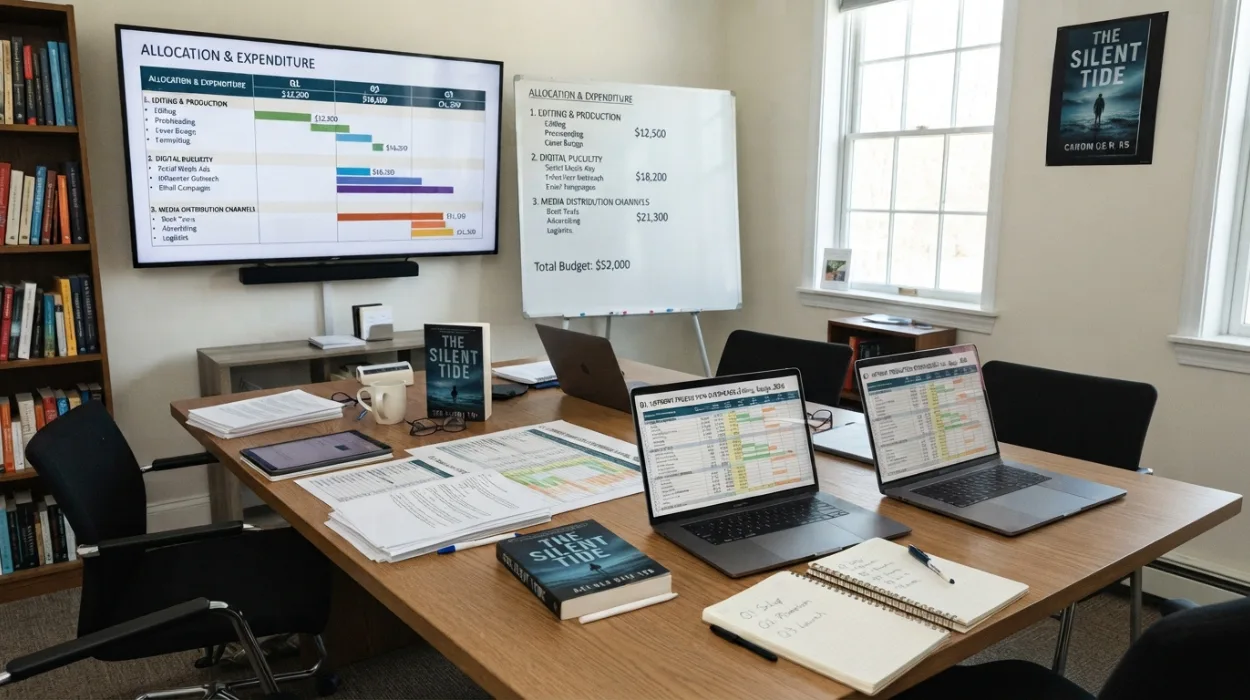
A successful book launch budget is a precise financial allocation distributed across editing, design, digital publicity, and media distribution channels to secure maximum market visibility. Publishers calculate exact expenditure thresholds by balancing upfront production overheads with targeted promotional campaigns across 3 distinct financial quarters.
What are the primary cost components of a book launch budget?
Book launch budgets allocate financial capital across 4 essential production pillars, including developmental editing, interior typesetting, cover design, and digital distribution setup. Editing services require 3 distinct professional tiers, covering developmental restructuring, copyediting, and proofreading. Production expenses escalate when publishers commission custom illustrations or complex data visualisations for non-fiction titles. Distribution setup fees secure ISBN registration, barcode generation, and metadata standardisation across global bibliographic databases. Publishers distribute these upfront capital requirements over 6 months preceding the official publication date to maintain operational liquidity.
Design investments dictate market positioning and visual credibility within competitive retail environments. Typography formatting and layout design ensure compliance with print-on-demand specifications required by 3 major fulfillment platforms, including Amazon KDP, IngramSpark, and Barnes & Noble Press. Cover design packages incorporate back-cover copywriting, spine measurement calculations, and high-resolution asset delivery for digital storefronts. Financial planning demands strict adherence to allocated expenditure caps to prevent capital depletion before marketing execution commences.
Publishers must evaluate baseline production costs alongside promotional outlays to establish comprehensive financial forecasts. Analysing historical expenditure patterns reveals specific allocation models that optimize financial returns during early distribution phases. Understanding broader industry economics assists teams when reviewing professional book publishing costs to benchmark their own capital expenditures against established market standards. Strategic capital management protects publishing organisations from unforeseen operational shortfalls during the critical pre-release window.
How do publishers allocate funds for digital PR and press release distribution?
Digital PR and press release distribution budgets allocate capital toward wire service syndication, journalist outreach software, and targeted media monitoring tools. Wire service distribution fees vary based on geographical reach and multimedia inclusion, with providers such as PR Newswire, Accesswire, and EIN Presswire charging fixed per-release rates. Publishers reserve 25 percent of their total promotional budget for targeted digital publicity campaigns designed to secure earned media coverage. This financial allocation ensures press announcements reach curated lists of literary critics, industry journalists, and broadcast producers.
Media outreach software subscriptions account for recurring monthly expenditures that streamline journalist relationship management. Platforms such as Muck Rack, Cision, and Prowly provide verified contact databases and pitch-tracking analytics that improve outreach efficiency. Publishers invest in these proprietary systems to monitor journalist beats, track media mentions, and measure the digital footprint of distributed press releases. Automated clipping services capture earned media placements across 4 main channels, including online newspapers, literary blogs, industry journals, and podcast directories.
Effective press release distribution mechanisms rely on structured metadata and optimised timing to achieve maximum search engine visibility and newsroom pickup. Wire services syndicate announcements directly to news aggregators, indexing platforms, and financial terminals through secure XML feeds. Publishers coordinate release schedules to align with embargo lifts, industry conferences, and seasonal publishing trends across global markets. This systematic distribution approach drives organic discovery among media professionals seeking authoritative book announcements and author interview opportunities.
How is advertising expenditure balanced against organic media placement?
Advertising expenditure balances against organic media placement by pairing paid digital campaigns with earned editorial coverage to maximise audience reach without inflating customer acquisition costs. Paid advertising outlays cover targeted campaigns across 3 major ad networks, including Meta Ads, Amazon Advertising, and BookBub Featured Deals. Publishers cap paid acquisition spending at 40 percent of total promotional revenue to preserve capital for long-term organic visibility initiatives. Organic media placement relies on relationship-driven pitching and press release distribution rather than direct pay-per-click bidding models.
Paid promotional campaigns accelerate initial audience discovery during the launch window when organic momentum remains underdeveloped. Amazon Advertising bids target specific reader keyword searches and competitor product pages to capture high-intent consumer traffic. Conversely, earned media placements secure third-party validation through book reviews, author profiles, and feature articles published by independent literary outlets. This editorial coverage generates enduring brand authority that paid banner advertisements cannot replicate independently.
Publishers continuously monitor return on ad spend metrics to evaluate the financial efficiency of paid promotional channels. Data analytics tools track conversion rates, click-through percentages, and direct sales attributable to specific advertising placements across digital storefronts. By balancing paid visibility with organic earned media, publishing teams achieve sustainable audience growth and diversified traffic sources. This dual-track promotional strategy mitigates financial risk and protects profit margins across diverse publishing catalogues.
How do launch timelines dictate cash flow management and expenditure phasing?
Launch timelines dictate cash flow management by sequencing expenditures across 3 distinct operational phases spanning pre-production, active promotion, and post-launch maintenance. Pre-production accounts for 50 percent of total expenditure, absorbing heavy costs associated with manuscript editing, interior formatting, and cover illustration. The active promotion phase concentrates financial outlays on press release syndication, digital advertising, and influencer outreach during the 30-day window surrounding publication. Post-launch maintenance allocates remaining funds toward ongoing inventory replenishment, review aggregation, and long-term search engine optimisation.
Prudent cash flow planning prevents liquidity crises by aligning outgoing payments with projected revenue inflows from retail distributors. Publishers negotiate staggered payment terms with freelance editors, graphic designers, and marketing agencies to preserve working capital during lean development cycles. Financial reserves must cover unexpected operational delays, such as extended printing queues or unforeseen legal review requirements for sensitive non-fiction manuscripts. Structured budget phasing provides financial transparency and accountability throughout the multi-month publishing lifecycle.
Monitoring financial milestones against established timelines ensures promotional campaigns remain strictly within approved expenditure boundaries. Publishers evaluate weekly expenditure reports to identify budget variances and reallocate underutilised capital toward high-performing marketing channels. This adaptive financial management model secures optimal resource deployment from initial manuscript acceptance through to final market distribution.
How are return on investment metrics calculated for book launch campaigns?
Return on investment metrics are calculated by dividing net profit generated from book sales by total campaign expenditure, expressed as a percentage. Publishers track specific quantitative indicators across 4 primary domains, including direct book sales volume, earned media impression counts, organic search ranking improvements, and digital advertising conversion rates. Net profit calculations subtract all production, distribution, and promotional costs from gross retail revenue collected across wholesale and direct-to-consumer channels. This mathematical evaluation identifies which promotional tactics deliver the highest financial return per dollar spent.
Attribution modeling isolates the impact of press release distribution and digital PR from paid advertising performance. Analytics platforms track referral traffic from earned media features directly to retail checkout pages using customized urchin tracking module parameters. Publishers measure the cumulative value of earned media placements by calculating equivalent ad spend metrics for comparable print and digital advertising space. These evaluative frameworks transform qualitative media coverage into quantifiable financial data that informs future budgeting decisions.
Rigorous post-campaign analysis refines financial forecasting models for subsequent title releases within the publishing catalogue. By documenting historical cost-per-acquisition metrics and revenue yields, publishing teams establish accurate benchmarks for future promotional expenditures. This data-driven approach eliminates speculative spending and prioritizes capital allocation toward proven distribution and publicity channels.
What percentage of a book launch budget should be allocated to marketing and PR?
Publishers typically allocate at least 33 to 40 percent of their overall financial budget toward marketing, digital public relations, and media distribution. This dedicated capital ensures adequate resources for wire service syndication, targeted journalist outreach, and promotional ad campaigns across platforms like Amazon Advertising and BookBub.
How do press release distribution fees impact total book promotion costs?
Press release distribution expenses vary depending on the chosen wire service provider, geographical reach, and multimedia inclusions packaged into the release. Utilizing established syndication networks like PR Newswire, Accesswire, or EIN Presswire requires a predictable per-release fee that must be factored directly into the pre-launch financial plan.
When should publishers begin spending their allocated book launch funds?
Financial outlays are typically phased across a 6-month timeline, with 50 percent of capital deployed during the pre-production phase for developmental editing and design. The remaining funds are strategically distributed during the 30-day active launch window to power press release distribution, digital PR outreach, and paid advertising campaigns.
Ready to get your story published?
Distribute your press release across 500+ trusted media outlets — with editorial review and a full pickup report within 48 hours.
Send Press Release →