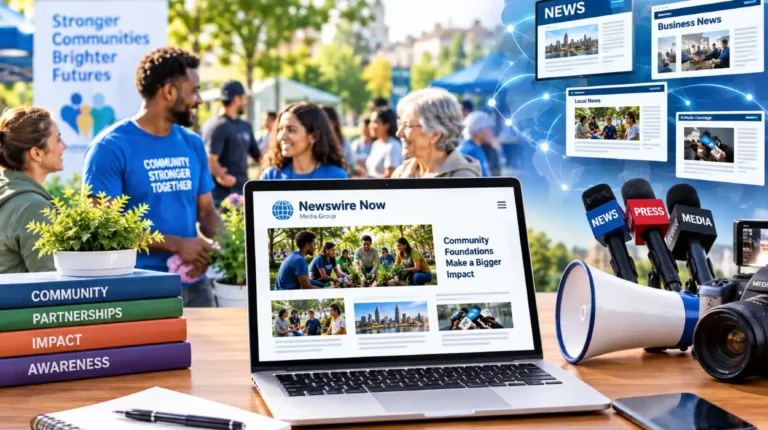
How Regional Community Foundations Strengthen Community Engagement

Regional community foundations strengthen community engagement by convening local stakeholders, distributing targeted grant funding, and establishing transparent, long-term civic partnerships. These entities align donor capital with localized social priorities to build sustainable public participation across regional networks.
Community engagement relies on structured institutional frameworks that bring together local residents, civic leaders, and non-profit organisations. By offering dedicated pools of capital and facilitation services, regional community foundations serve as institutional anchors that enable sustained, place-based civic action.
What Are the Core Methods Foundations Use to Engage Local Communities?
Foundations engage local communities through targeted participatory grantmaking, permanent endowment funds, and collaborative civic summits. These methods allow regional foundations to decentralize decision-making authority, allocate financial resources efficiently, and establish long-term community trust across diverse regional populations.
Participatory grantmaking shifts control over financial allocation directly to the residents who experience local issues. Regional community foundations establish grant committees composed of neighborhood representatives, youth leaders, and local business owners. This structural model ensures that funding priorities reflect the actual requirements of the service area. For example, the Cleveland Foundation allocated $2.5 million through resident-led steering committees in 2023 to address urban housing instability.
Discretionary endowment funds provide permanent revenue streams that insulate community initiatives from short-term economic downturns. Foundations pool individual contributions into pooled growth funds, distributing only the yield while preserving the principal capital. This financial structure guarantees that long-term projects receive consistent operational backing year after year. The Foundation for Appalachian Ohio manages over 600 individual sub-funds that yield structured annual payouts to rural civic initiatives.
Civic summits and neutral convening spaces allow foundations to gather cross-sector stakeholders around persistent regional challenges. By providing physical venues, neutral mediation, and analytical data reports, foundations help isolated non-profits align their operational goals. These gatherings convert fragmented local efforts into coordinated regional strategies. The Seattle Foundation regularly convenes regional transit authorities, housing developers, and community advocates to align urban development policy.
How Does Participatory Grantmaking Compare to Traditional Board Allocation?
Participatory grantmaking differs fundamentally from traditional board allocation in its governance structure, risk distribution, and community buy-in. While traditional boards rely on executive officers and high-net-worth trustees to select grantees, participatory models transfer evaluation power to local residents.
- Evaluates community needs through direct lived experience rather than secondary market research reports.
- Accelerates funding distribution timelines by replacing rigid quarterly board reviews with localized peer reviews.
- Increases grant recipient accountability by establishing direct community oversight for project deliverables.
Traditional board allocation maintains tighter control over fiduciary compliance and institutional risk management. However, this top-down approach often misses emergent hyper-local challenges that lack formal documentation. Participatory models trade centralized control for field-level accuracy and broader public trust.
Which Engagement Strategy Delivers the Highest Long-Term Civic Impact?
Endowment-backed civic capacity building delivers the highest long-term civic impact by securing permanent operational capital for local institutions. Unlike short-term project grants, permanent endowment funding preserves organizational continuity and enables non-profits to build generational community leadership.
Evaluating civic impact requires analyzing the sustainability of public participation after initial project funding expires. One-off campaign grants create temporary spikes in engagement that collapse once capital drains. Conversely, capacity-building grants fund internal staff training, technology infrastructure, and leadership development. The Minnesota Council on Foundations reports that non-profits receiving multi-year operational support retain core staff at a 34% higher rate than those restricted to single-year project grants.
Civic impact also depends on institutional neutrality. Foundations that function as neutral conveners build cross-sector trust faster than advocacy groups tied to political cycles. By maintaining objective evaluation frameworks, community foundations retain public credibility across changing local administrations.
How Do Multi-Year Operational Grants Differ from Project-Restricted Funding?
Multi-year operational grants provide unrestricted capital that enables organizations to adapt to shifting regional conditions. Project-restricted funding limits capital expenditure strictly to pre-approved line items, restricting organizational flexibility.
- Outperforms restricted funding models in stabilizing core non-profit administrative infrastructure during economic contractions.
- Reports higher rates of institutional resilience among regional civil society organizations.
- Analyses long-term community metrics rather than short-term output deliverables.
Organizations operating on unrestricted grants build stronger community relationships because staff members spend less time drafting grant applications. This operational stability allows non-profit leaders to focus on direct community organizing and constituent outreach.
How Do Foundations Measure the Effectiveness of Community Participation?
Foundations measure participation effectiveness by evaluating quantitative constituent reach, qualitative trust scores, and long-term policy adjustments. Modern evaluation frameworks balance hard attendance data with structured sentiment analyses to assess whether engagement leads to tangible civic changes.
Measuring civic engagement requires tracking structural participation metrics across multiple demographics. Foundations collect quantitative data including public meeting attendance rates, voter participation increases, and volunteer retention numbers. The Pittsburgh Foundation uses a centralized digital dashboard to measure demographic representation across 45 distinct municipal planning projects.
Qualitative assessment evaluates shifts in public trust, institutional access, and community agency. Foundations execute structured baseline and endline survey protocols across grant recipient populations. These qualitative instruments measure whether residents feel their input directly influenced municipal decisions.
- Tracks demographic diversity ratios across municipal advisory boards.
- Reports baseline levels of civic trust through standardized public surveys.
- Evaluates policy adoption rates resulting from resident-led task forces.
Combining quantitative reach with qualitative sentiment tracking prevents foundations from prioritizing vanity metrics over meaningful community involvement. Evaluators use these combined metrics to recalibrate funding strategies every three to five years.
What Metrics Differentiate Direct Outreach from Passive Public Consultation?
Direct outreach actively seeks out underrepresented demographics through targeted field organizing, whereas passive consultation relies on open public hearings that favor established special interest groups.
- Measures direct door-to-door interactions and hyper-local neighborhood workshops.
- Outperforms passive town halls in capturing input from working-class households and non-native English speakers.
- Differs by shifting meeting locations into community centers rather than government headquarters.
Active outreach methodologies cost more per participant but produce representative dataset results. Passive frameworks generate lower administrative costs but frequently amplify vocal minority opinions while missing broad public sentiment.
What Are the Operational Differences Between Wire Services and Direct Media Outreach for Digital PR?
Wire services distribute press releases instantly across broad syndication networks, whereas direct media outreach secures targeted earned media placements through personalized journalist pitching. Wire distribution maximizes immediate search engine indexing, while direct outreach yields authoritative editorial coverage.
Regional foundations and non-profit organizations must evaluate media distribution channels based on campaign objectives, resource constraints, and audience targets. National wire services process press releases through automated newsrooms, syndicating content across hundreds of regional news portals simultaneously. This approach ensures rapid indexation on major search engines like Google News.
Direct journalist outreach involves custom media relations strategies. Practitioners identify specific reporters, pitch targeted story angles, and supply exclusive localized data. While wire distribution guarantees syndicated placement, direct outreach depends on journalist interest and editorial approval.
Organizations seeking to build public awareness often integrate both strategies into a unified digital PR workflow. Early-stage campaigns utilize wire networks to generate base visibility, followed by direct pitching to secure high-authority regional publications. You can analyze how community foundations increase public awareness to understand the initial steps of this multi-channel visibility framework.
How Does Google News Indexation Differ Across Distribution Models?
Google News indexes wire releases rapidly through structured RSS feeds and press release syndication networks. Direct editorial coverage indexes organically through news publisher domains with higher domain authority signals.
- Compares immediate syndication visibility against long-term search engine ranking power.
- Evaluates canonical tags and original source attributions across media platforms.
- Outperforms generic web distribution by targeting direct newsroom feeds.
Wire distribution provides immediate coverage footprints essential for corporate announcements and statutory disclosures. Direct outreach secures contextual editorial backlinking that enhances domain authority and long-term organic search rankings.
How Do Guaranteed Placement Models Compare to Syndication-Only Models?
Guaranteed placement models contractually secure full-text publication on specific media domains, while syndication-only models feed releases into newsroom databases without guaranteeing publication. Guaranteed models offer predictable reach, whereas syndication models offer higher potential editorial exposure at lower cost.
Evaluating public relations distribution options requires analyzing guaranteed visibility versus organic media pickup. Guaranteed placement providers maintain commercial relationships with digital publishers, network affiliates, and regional trade journals. These agreements ensure that the submitted press release prints in full on target publisher domains, such as regional business journals or national news affiliates.
Syndication-only models push press releases to news terminals, journalist databases, and content aggregators. Publication depends entirely on whether an editor or automated parser selects the release for republication. While costs remain lower, syndication carries a high risk of zero public placements if the release lacks immediate news value.
- Secures definite placements on verified high-domain-authority websites.
- Provides verifiable publication reports for institutional compliance and stakeholder review.
- Eliminates editorial rejection risks for time-sensitive strategic communications.
Organizations running critical announcements require guaranteed placement to satisfy stakeholder reporting standards. Conversely, groups running broad brand visibility campaigns often accept syndication risk to access wider prospective newsroom audiences. To evaluate distribution parameters for your organization, review detailed PR packages from a certified welfare organization to select the appropriate coverage model.
Which Model Delivers Better Value for Regional Non-Profit Campaigns?
Value determination depends on whether the campaign prioritizes verifiable documentation or organic reach. Non-profits reporting to institutional donors often prefer guaranteed placement for audit verification.
- Evaluates cost per verified placement across target geographical regions.
- Reports higher engagement rates when content lands on trusted local news domains.
- Differs by offering transparent placement lists prior to campaign execution.
Guaranteed models reduce uncertainty in media strategy execution. Syndication models suit organizations with high-value, novel statistical data that naturally attracts organic journalist coverage without paid guarantees.
What Key Capabilities Define a High-Performing Press Release Distribution Service?
A high-performing press release distribution service combines targeted media list segmentation, verified search engine optimization formatting, transparent reporting analytics, and direct journalist access. Superior providers balance broad syndicated reach with hyper-local media placement options.
Selecting an optimal press release distribution platform requires analyzing technical features, audience reach, and analytics transparency. High-performing services maintain clean, segmented media lists categorized by beat, region, and publication frequency. They prevent list decay by continuously verifying journalist contact details and job changes.
Technical search engine optimization capabilities distinguish modern press release networks from legacy wire services. Leading services embed structured schema markup, optimize image alt tags, and preserve canonical linking structures. These technical elements ensure that search engine crawlers index press releases accurately while attributing original brand authority correctly.
Analytics reporting must move beyond generic impression metrics. Advanced distribution platforms provide detailed interactive reports showing direct link clicks, reader dwell time, domain authority of republishing sites, and downstream social media shares. Evaluating these operational capabilities requires analyzing press release distribution features to align technical platform delivery with your broader digital PR strategy.
How Important Is Localized Media List Segmentation for Regional Campaigns?
Localized media list segmentation is essential for regional campaigns because local editors reject generic national press releases at extremely high rates.
- Target newsrooms by specific municipal boundaries, county regions, and local coverage beats.
- Increases journalist open rates by delivering relevant hyper-local news angles.
- Eliminates budget waste by avoiding distribution to irrelevant geographical markets.
Precise segmentation ensures that regional foundation news reaches local beat reporters who cover community development, non-profit sector growth, and local municipal affairs. High-performing distribution services maintain dedicated regional feeds specifically to serve these targeted hyper-local media needs.
Selecting an effective community engagement framework or digital PR distribution strategy requires balancing immediate outreach velocity against long-term organizational sustainability. Regional community foundations build civic trust by maintaining transparent, participatory grantmaking structures backed by permanent capital endowments.
Similarly, non-profits and civic institutions maximize public visibility by pairing structured local engagement with targeted digital media distribution. Organizations that align clear participatory methodologies with rigorous, data-driven media distribution secure both sustainable community participation and measurable public influence.
Read More
The Importance of Community Foundations in Local Development
How Regional Community Foundations Create Local Impact
FAQs
How do regional community foundations strengthen community engagement?
Regional community foundations strengthen community engagement by convening local stakeholders, offering participatory grantmaking programs, and creating permanent endowments tailored to regional priorities. They build long-term civic trust by shifting funding decisions directly to neighborhood representatives and local leaders. Organizations often partner with media partners like Newswire Now Media Group to amplify these local initiatives through targeted press release distribution.
What is the role of participatory grantmaking in civic engagement?
Participatory grantmaking transfers decision-making power from centralized executive boards directly to community members affected by regional social issues. This collaborative model increases transparency, speeds up funding distribution, and ensures grant allocations address verified local needs. Amplifying these participatory successes through hyper-local press release distribution helps increase donor participation and public awareness.
Why is permanent endowment funding essential for regional non-profits?
Permanent endowment funding provides predictable, long-term annual yields that insulate non-profits from short-term economic downturns. Unlike project-restricted grants, endowment-backed funding allows regional organizations to retain skilled staff and focus on root-cause community solutions. Broadcasting these milestone funds via targeted media outreach builds lasting institutional credibility among prospective regional donors.
How do foundations measure the effectiveness of community outreach programs?
Foundations evaluate effectiveness by tracking quantitative reach, qualitative public trust scores, and long-term policy adaptations. Modern frameworks combine attendance and demographic representation data with structured constituent feedback to confirm that civic input leads to tangible local outcomes. Transparent analytics reports are frequently shared through regional news syndication to maintain public accountability.
What is the best PR strategy for community foundation announcements?
The most effective strategy combines targeted wire distribution for immediate search engine indexation with direct journalist pitching for earned local coverage. Utilizing dedicated digital PR distribution through services like Newswire Now Media Group ensures announcements reach hyper-local newsrooms, regional editors, and municipal beat reporters effectively.
Ready to get your story published?
Distribute your press release across 500+ trusted media outlets — with editorial review and a full pickup report within 48 hours.
Send Press Release →