
How British Film Production Companies Build International Success
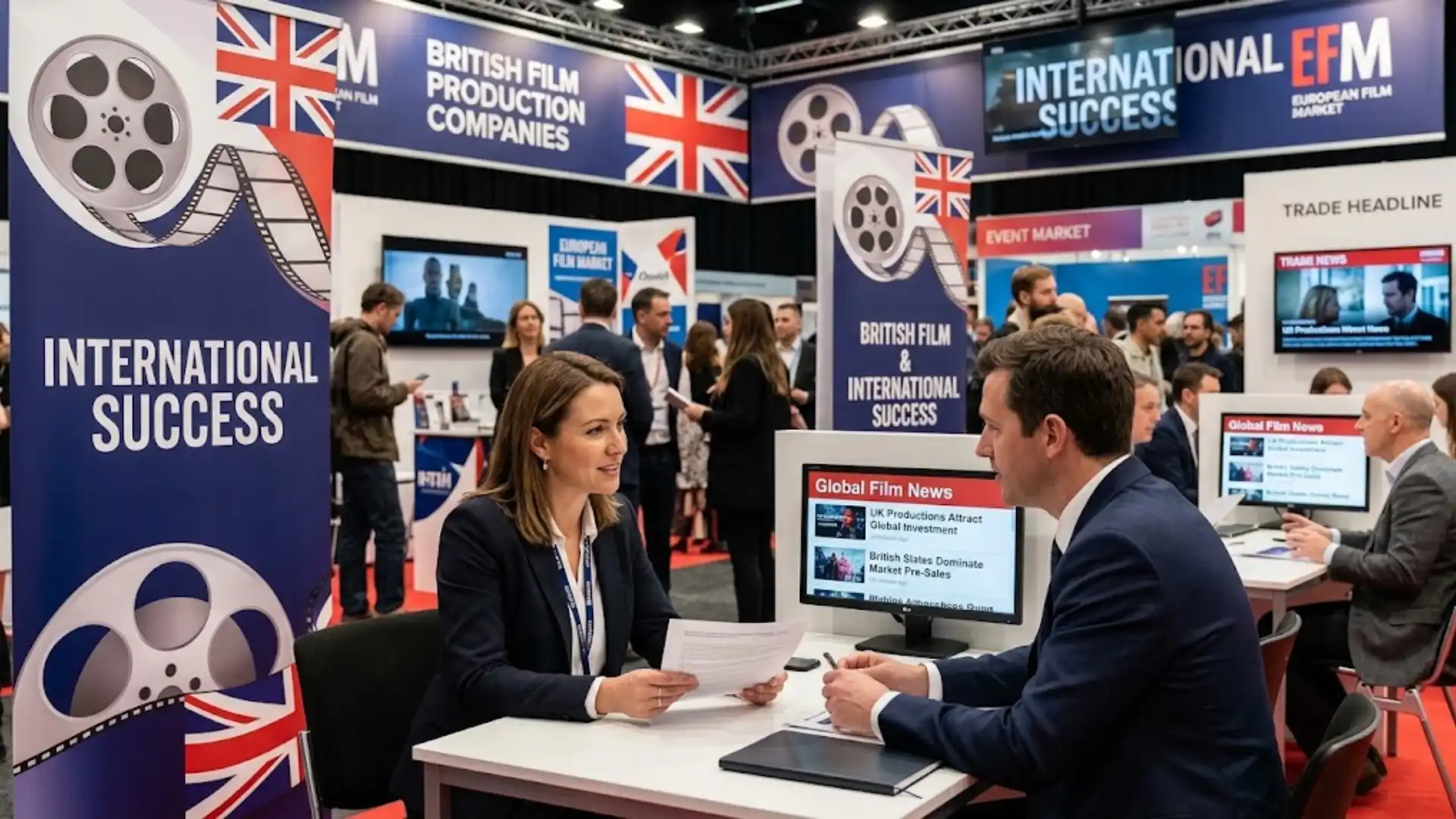
British film production companies build international success by leveraging global co-production treaties, securing international pre-sales at major film markets, and executing strategic digital PR campaigns to drive trade visibility. They combine robust domestic infrastructure with targeted international media outreach to attract global distribution partners and international capital.
Evaluating international expansion requires production executives to analyse media placement strategies, press release distribution mechanisms, and trade communication workflows. Understanding the trade-offs between traditional film market publicity, direct journalist outreach, and syndicated wire distribution determines how effectively a production company scales its global profile.
Which Media Distribution Strategy Best Drives International Pre-Sales?
Direct targeted outreach to international trade journalists outperforms wire syndication for securing global pre-sales. Production companies using direct press outreach achieve higher open rates and meaningful coverage in top-tier film publications, whereas general wire releases struggle to gain traction among specialized festival buyers.
Independent producers evaluating promotional strategies must weigh immediate volume against tailored influence. Syndicated wire releases publish announcements across broad news aggregators within 24 to 48 hours. This approach provides rapid online footprints but rarely yields exclusive coverage in dedicated trade outlets such as Screen International or Variety.
Direct outreach involves targeting specific film reporters, festival delegates, and sales agents. Pitching exclusive project slates or casting announcements directly to named editors requires 2 to 4 weeks of advance preparation. Production houses assessing these approaches frequently combine both methods to balance quick indexing with high-impact editorial placement.
Building an international reputation depends on understanding [what British film production companies are known for] in global markets. Global distributors look for track records in story execution, technical expertise, and fiscal reliability. Aligning media announcements with these established traits reinforces a company’s position during market negotiations.
How Wire Services Compare to Direct Press Pitching
Evaluating wire services against direct press pitching requires examining control over timing versus editorial depth. Wire distribution guarantees publication across network endpoints at a predetermined minute, which proves critical when coordinating slate announcements across multiple time zones during major festivals like Cannes or Berlin.
Direct press pitching allows producers to offer exclusive interviews, behind-the-scenes access, and detailed project breakdowns. While pitch response rates vary, editorial features generated through direct contact build substantially higher authority among international distributors and equity financiers compared to automated wire republications.
How Google News Optimisation Alters Film Trade Visibility
Google News indexing accelerates trade discovery by delivering project announcements directly to the feeds of international film executives. Optimising release copy with structured metadata, clear entities, and schema markup ensures that production announcements rank prominently for key trade queries within hours of publication.
Generic distribution methods lacking structured entity markup often fail to trigger Google News inclusion. Production companies relying on non-optimised press releases lose immediate visibility during fast-moving film markets, where international sales agents rely on real-time news alerts to track available packages and project attachments.
How Do Global Film Markets Compare to Digital PR for Raising Capital?
Global film markets deliver concentrated face-to-face dealmaking, while digital PR maintains continuous investor visibility year-round. Film markets provide direct access to sales agents over focused five-day periods, whereas continuous digital PR builds ongoing corporate authority that simplifies equity fundraising between market cycles.
Producers comparing capital-raising channels must evaluate the operational metrics of physical film markets against digital media campaigns:
- Attend established physical markets such as the European Film Market (EFM), Marché du Film, and Toronto International Film Festival to hold direct financier meetings.
- Issue strategic digital press releases during pre-production milestones to establish verifiable corporate momentum.
- Secure trade press coverage prior to market attendance to increase booth meetings with international sales agents by up to 40%.
- Maintain active Google News visibility between markets to reassure equity partners of ongoing production activity and fiscal health.
Evaluating physical market attendance reveals high fixed costs, including travel, market badges, and venue rentals. A single market presence can require investments ranging from £10,000 to £50,000 without guaranteed pre-sales. Conversely, digital PR maintains a persistent online footprint that continuously validates the production company’s track record to international financiers conducting online due diligence.
Analyzing [how British film production companies build international success] demonstrates that physical meetings and digital outreach operate synergistically. Digital media placements validate market announcements, while physical deals generate the factual milestones required for high-authority press coverage.
How Inward Investment Impacts UK Production Visibility
Official British Film Institute data shows that total UK film and high-end television production spend reached £6.8 billion in 2025, with inward investment and co-productions accounting for £5.8 billion—or 85%—of the total spend. Feature film production contributed £2.8 billion, representing the highest annual spend on record.
These figures demonstrate that international co-productions and inward investment drive the vast majority of UK production volume. Independent production companies that maintain visible, digitally archived press coverage position themselves effectively to capture international co-production partnerships and service work generated by this global demand.
How Co-Production Treaties Shape Media Messaging
The UK maintains official bilateral co-production treaties with countries including Australia, Canada, China, France, India, Israel, Palestine, South Africa, and South Korea, alongside access to the European Convention on Cinematographic Co-production. Leveraging these agreements allows production companies to access foreign tax incentives and regional funds.
Media messaging surrounding treaty co-productions must satisfy regulatory criteria across all partner territories. Press releases must carefully balance credits, publicise local expenditure milestones, and highlight cross-border talent attachments to satisfy national film funds while maintaining global trade interest.
What Are the Trade-offs Between Guaranteed Media Placement and Earned Coverage?
Guaranteed media placement offers certainty and precise timing, whereas earned media delivers superior credibility and higher organic search value. Guaranteed placements allow production houses to control release schedules exactly, but earned coverage from independent film critics carries significantly more weight with festival programmers and sales agents.
Evaluating media options requires a clear analysis of performance metrics across earned, paid, and syndicated models:
- Analyse earned media outreach by tracking pitch-to-publication ratios, editorial domain authority, and social amplification by industry journalists.
- Evaluate guaranteed sponsored placements based on guaranteed impression numbers, exact publication dates, and target demographic alignment.
- Measure syndicated distribution through referral traffic volume, total domain republications, and search engine indexation speeds.
Earned media coverage requires pitch development and media relations, with no guarantee of publication. However, a single feature in a recognized trade publication provides long-term reputational value that sponsored content cannot replicate. Sales agents and film festival selectors evaluate earned reviews as genuine endorsements of artistic and commercial merit.
Guaranteed media placement eliminates publicity risk during time-sensitive moments, such as picture lock or theatrical release windows. Paying for guaranteed placement ensures that project announcements appear on schedule, enabling production teams to coordinate marketing pushes across digital channels, social media, and investor updates simultaneously.
Producers assessing long-term digital authority often choose hybrid approaches. Utilizing guaranteed distribution for baseline announcements ensures timely indexation, while running parallel earned media campaigns secures the third-party validation necessary to convince risk-averse foreign buyers.
How Earned Coverage Affects Organic Search Authority
Earned media placements on high-authority film news sites pass significant search engine trust to a production company’s digital properties. Search engine algorithms evaluate natural context, editorial placement, and thematic relevance when indexing these articles, elevating the production company’s search visibility for relevant industry terms.
Sponsored or syndicated links often carry rel="nofollow" or rel="sponsored" attributes to comply with search engine guidelines. While these links drive referral traffic and support brand presence, they do not pass the same level of search equity as contextual, earned editorial links embedded within authentic film reporting.
How Cost Models Differ Across PR Mechanisms
PR cost structures vary significantly between flat-fee distribution models and retainers for dedicated media relations agencies. Flat-fee wire services charge between £300 and £1,500 per release, offering predictable expenditure for discrete project announcements.
Dedicated digital PR retainers typically range from £3,000 to £10,000 per month. Retainers cover ongoing strategy, journalist list curation, bespoke pitching, and reputation management. Production companies must match these cost structures to their project lifecycles, selecting per-release pricing for individual titles or monthly retainers during active slate development.
Which PR Features Should Film Production Companies Evaluate in a Service?
Film production companies should evaluate PR services based on specialized trade media reach, search indexing speed, and verified entertainment industry contact networks. Generic PR services often lack the direct connections to film critics, festival trade dailies, and entertainment desk editors required to generate meaningful industry coverage.
Evaluating prospective PR providers requires assessing several core technical and operational criteria:
- Verify direct relationships with reporters at key entertainment publications including Deadline, Variety, Hollywood Reporter, and Screen International.
- Inspect past distribution reports to confirm consistent indexation within Google News and specialized entertainment search verticals.
- Confirm support for embedded high-resolution media assets, including production stills, key art, embedded trailers, and downloadable press kits.
- Assess the provider’s understanding of film sales windows, festival submission deadlines, and territorial embargo management.
A major criteria when evaluating PR services is the handling of digital assets. Standard text press releases achieve significantly lower engagement than releases featuring embedded trailer teasers and production photography. Advanced PR workflows integrate media hosting directly into press releases, allowing journalists to download press kits without leaving the release page.
Search engine visibility remains another critical factor. A service capable of placing releases on platforms with rapid crawl rates ensures that breaking news—such as casting additions or co-production deals—indexes within minutes. This rapid indexing prevents third-party blogs from misattributing project details or capturing search traffic meant for the primary announcement.
Production companies seeking to expand their global reach, secure high-value co-production deals, and maximize trade press visibility can explore dedicated solutions through [PR Services for British Film Production Companies by Newswire Now Media Group] to enhance their international distribution strategy.
How Press Release Layout Affects Journalist Engagement
Film trade journalists process hundreds of pitch releases daily during major film markets. Press releases structured with clear inverted-pyramid formatting, bolded key facts, accessible media kits, and explicit rights contact information achieve higher pickup rates than dense, unstructured text blocks.
Including explicit territorial rights availability, talent attachments, and production timelines in the first two paragraphs allows trade editors to verify the news value immediately. Providing friction-free access to print-ready images and contact details for sales agents accelerates publication turnaround times.
How Analytics and Reporting Validate PR Performance
Evaluating PR effectiveness requires moving beyond basic reach metrics to analyze meaningful trade engagement. Modern media reporting tracks publication domain authority, referral traffic to project landing pages, social shares among verified industry figures, and subsequent inbound inquiries from sales agents or festival programmers.
Comprehensive reporting allows production executives to demonstrate tangible return on PR investment to executive producers and financiers. Tracking search ranking improvements for project titles and corporate entities confirms that digital outreach successfully builds long-term online value alongside immediate press coverage.
Read More
How Press Releases Increase Film Industry Visibility
Reputation Management for Film and Entertainment Companies
FAQs
How do British film production companies secure international distribution deals?
British film production companies secure international distribution deals by leveraging global film markets—such as the European Film Market (EFM) or Marché du Film—alongside targeted international PR campaigns. They utilize strategic press releases, trade journal outreach, and festival premieres to build commercial buzz that attracts sales agents and territory buyers. Partnering with specialist distribution agencies like Newswire Now Media Group allows independent producers to coordinate trade announcements across global news networks efficiently.
What is the role of digital PR in international film co-productions?
Digital PR establishes continuous corporate authority and search visibility for film production companies between major film market cycles. By distributing structured press releases regarding project slates, talent attachments, and regional funding milestones, production houses maintain investor confidence and satisfy cross-border co-production regulatory standards. Verified trade coverage in Google News and industry publications validates a studio’s operational track record to prospective foreign financial partners.
How does Google News indexing benefit film production press releases?
Google News indexing accelerates trade discovery by placing production announcements directly into real-time search feeds monitored by global sales agents, distributors, and festival programmers. Optimised digital press releases containing schema markup and structured metadata ensure immediate search visibility during fast-moving film markets. This rapid indexation protects project announcements from being buried and captures organic search traffic for casting, funding, or distribution updates.
What is the difference between press release wire distribution and direct media pitching for films?
Wire distribution broadcasts a press release across broad digital publisher networks simultaneously, delivering rapid indexation and wide online coverage. Direct media pitching involves placing exclusive project angles directly with named journalists at specialized trade outlets like Screen International or Variety. While direct pitching builds deeper editorial credibility for a slate, wire distribution via services like Newswire Now Media Group provides guaranteed, immediate syndication across search engine news feeds.
Why do film production companies use specialized PR distribution services over generic corporate wires?
Specialized entertainment PR services offer direct contact networks tailored to film critics, festival trade dailies, and entertainment desk editors. Unlike generic corporate distribution channels, tailored services support embedded high-resolution media kits, electronic press kits (EPKs), trailer hosting, and entertainment-specific search categorisation. This targeted architecture ensures film announcements reach the specific trade delegates and foreign buyers necessary to drive global pre-sales
Ready to get your story published?
Distribute your press release across 500+ trusted media outlets — with editorial review and a full pickup report within 48 hours.
Send Press Release →