
The Role of Charitable Foundations in Creating Social Change
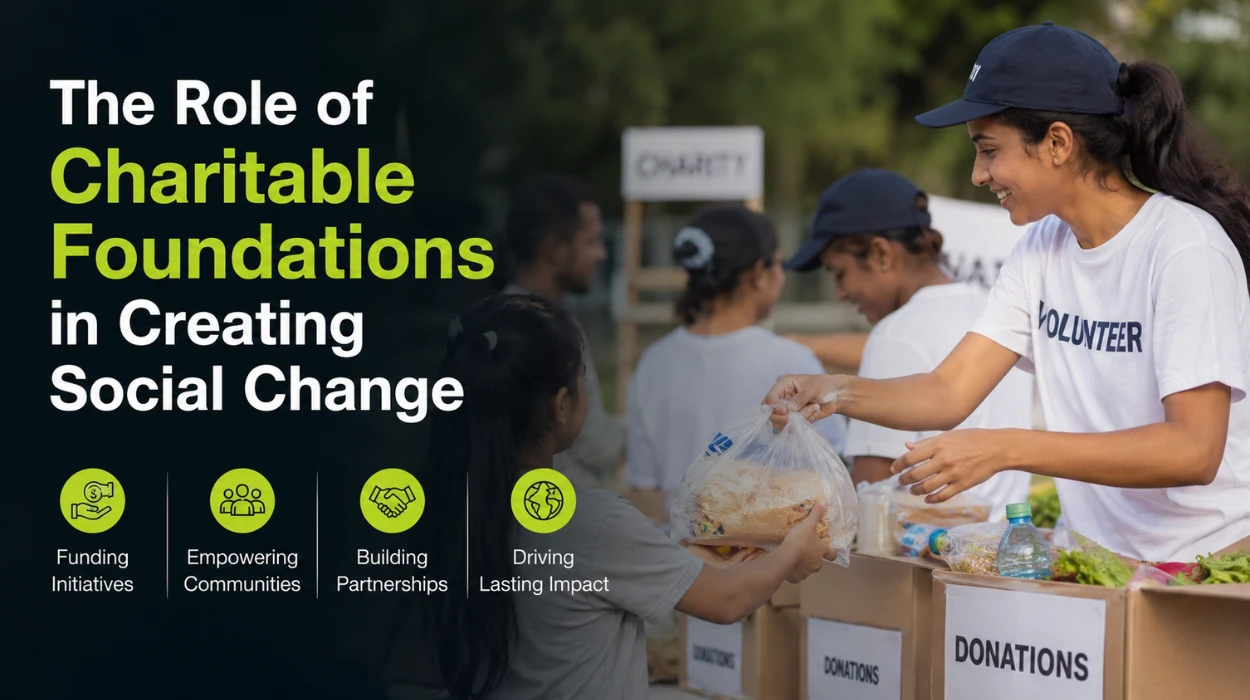
Charitable foundations create social change by funding community programmes, supporting long-term solutions, strengthening local organisations, and directing resources towards measurable social needs.
Their impact depends on how effectively they combine funding, partnerships, public awareness, and accountability to address specific social challenges.
How Do Charitable Foundations Create Social Change?
Charitable foundations create social change by converting financial resources into structured programmes that address defined community needs. Foundations assess social problems, allocate grants, support organisations, and measure outcomes. Their role differs from short-term charitable giving because many foundations develop sustained funding strategies. This approach allows projects to focus on education, poverty reduction, healthcare, housing, employment, and environmental protection. The effectiveness of each foundation depends on programme design, funding discipline, community participation, and measurable outcomes.
Funding long-term community programmes
Foundations can provide multi-year grants for initiatives that require sustained resources. A youth education programme, for example, may need funding for teachers, learning materials, technology, and evaluation. Short-term donations can address immediate shortages, while structured foundation funding can support programme development. Foundations also analyse grant applications against defined objectives and eligibility criteria. This process helps direct resources towards projects with clear social purposes.
Strengthening local organisations
Foundations often support charities and community organisations that already understand local conditions. A community food programme can identify food insecurity patterns more accurately when its staff work directly with residents. Foundation funding can cover programme delivery, training, technology, research, and organisational development. Stronger organisations can then expand their capacity and improve service delivery. This creates a connection between philanthropic capital and community-led action.
Which Approach Creates More Lasting Social Change: Grants or Direct Programmes?
Grants can create broader community impact through existing organisations, while direct programmes give foundations greater control over implementation and measurement. Grants allow specialist organisations to apply local knowledge and established networks. Direct programmes allow foundations to define operational standards and monitor delivery closely. The two approaches differ in administrative responsibility, community reach, and programme control. The appropriate model depends on the foundation’s objectives, expertise, resources, and relationship with local organisations.
Compare grant-making with direct delivery.
A grant-making model transfers resources to organisations responsible for implementation. A direct-delivery model places the foundation closer to programme operations. Each model creates different accountability structures.
- Compare grant applications against defined social outcomes and organisational capacity.
- Evaluate direct programmes through operational targets, participation rates, and outcome measurements.
- Analyse community partnerships before selecting a delivery model.
- Measure programme results against baseline conditions and agreed indicators.
Grant-making can scale through established charities, while direct delivery can provide closer operational oversight. Neither model automatically produces stronger outcomes. Programme design, execution, governance, and evaluation determine the resulting social value.
How Do Charitable Foundations Compare With Individual Donations?
Charitable foundations usually provide a more structured approach to philanthropy than individual donations because they can establish formal priorities, grant criteria, monitoring systems, and long-term funding strategies. Individual donations can respond quickly to urgent needs and support causes chosen directly by donors. Foundations generally operate through defined governance and funding processes. Their resources can also be pooled and allocated across multiple initiatives. The difference lies primarily in structure, scale, continuity, and accountability.
Assess structure and continuity.
Individual giving can provide immediate assistance after events such as floods, earthquakes, or economic shocks. Foundation funding can support recovery programmes that continue after the immediate crisis. A foundation supporting flood-affected communities may finance temporary housing first and livelihood restoration later. This creates a longer funding sequence than a single emergency donation. Both approaches remain relevant because immediate relief and long-term recovery require different forms of support.
Examine accountability
Foundations normally establish grant agreements, reporting requirements, financial controls, and programme objectives. These mechanisms provide evidence about how funding is used. Individual donors may rely on information supplied by the organisation receiving their contribution. Strong reporting can increase transparency and improve future funding decisions. Accountability therefore becomes a central component of sustainable philanthropy.
Which Communication Approach Helps Foundations Build Greater Public Awareness?
Strategic media coverage can extend awareness beyond existing donors by presenting verified information about programmes, social issues, research, and measurable outcomes. Foundations can use owned channels to explain their work directly. They can also use earned media to reach audiences through independent publications. Direct journalist outreach creates opportunities for targeted coverage around relevant developments. Press release distribution provides another route for communicating newsworthy announcements across media networks.
Compare owned media and earned media.
Owned media gives foundations control over messaging, publication timing, supporting data, and visual assets. A foundation website can publish an annual impact report without relying on external editorial decisions. Earned media provides independent editorial context and can expose a programme to audiences beyond the foundation’s existing channels. However, editorial coverage depends on news value and journalist interest.
- Publish impact reports through the foundation’s website and resource centre.
- Pitch research findings to journalists covering philanthropy, education, healthcare, or community development.
- Distribute genuinely newsworthy announcements through relevant media channels.
- Measure referral traffic, media mentions, backlinks, and audience engagement after coverage.
Foundations should distinguish public information from promotional messaging. Journalists assess relevance, evidence, timeliness, and public interest. Clear data therefore strengthens the information available for editorial consideration.
Is Direct Journalist Outreach More Targeted Than Press Release Distribution?
Direct journalist outreach provides greater targeting, while press release distribution provides broader dissemination across relevant media channels. Outreach allows communication to specific journalists based on their beat, publication, and recent reporting. Distribution can place the same announcement across a network of media outlets and online platforms. The approaches therefore differ in precision and reach. Foundations can evaluate each method according to the nature of the announcement and intended audience.
Evaluate targeting and scale.
Direct outreach works particularly well when a foundation has research relevant to a specific journalist’s coverage area. A healthcare reporter may be more interested in a new public health study than a general funding announcement. Distribution can support broader visibility when an announcement has clear public relevance. The effectiveness of either method depends on the quality of the underlying story.
- Identify journalists whose recent reporting matches the foundation’s subject.
- Personalise pitches with relevant evidence and a clear news angle.
- Distribute announcements when multiple media audiences could benefit from the information.
- Track published coverage and identify which outlets generate meaningful audience engagement.
The two methods can operate independently or as complementary communication channels. Their relative value changes according to story complexity, audience definition, timing, and available resources.
Which Media Coverage Model Provides Stronger Evidence of Social Impact?
Outcome-focused coverage provides stronger evidence of social impact than coverage based only on organisational announcements because it connects activities with measurable results. A foundation can report the amount of funding provided, but funding alone does not establish social change. Stronger reporting explains what changed, who benefited, and how results were measured. Independent media coverage can add external context to those findings. Transparent evidence helps donors, partners, journalists, and communities assess programme performance.
Measure outcomes rather than activity
A foundation may report that it funded 500 scholarships. A stronger evaluation can examine graduation rates, employment outcomes, completion rates, and beneficiary experiences. These indicators connect funding with observable changes. The selected measurements should match the programme’s stated objective. Different social initiatives therefore require different evaluation frameworks.
A foundation focused on housing can measure stable tenancy, eviction prevention, and household outcomes. An education foundation can assess attendance, attainment, completion, and progression. A welfare organisation can evaluate service access, beneficiary outcomes, and programme continuity. The measurement model should reflect the social problem rather than rely on a universal metric.
How Does Digital PR Support the Visibility of Charitable Foundations?
Digital PR can connect foundation announcements with wider conversations about social issues, research, community programmes, and philanthropic trends. It combines media relations, news distribution, editorial outreach, online content, and reputation management. The approach differs from publishing content solely on a foundation’s own website. Digital PR can generate third-party coverage and references that extend the reach of important information. Its value should be assessed through coverage quality, relevance, referral activity, and audience response.
Evaluate visibility beyond owned channels.
A foundation’s website remains an important source of authoritative information. External coverage can introduce that information to people who have never visited the organisation’s website. Relevant articles can also provide context around a foundation’s research or community initiatives. However, visibility alone does not prove social impact. Media attention becomes more meaningful when it communicates useful evidence and connects audiences with substantive programmes.
Foundations developing a wider media strategy can first establish the fundamentals discussed in charitable foundations and community impact. This provides context for evaluating how public communication fits within broader philanthropic objectives.
What Should Foundations Evaluate When Choosing a Media Distribution Method?
Foundations should evaluate audience relevance, editorial quality, distribution scope, reporting, transparency, and measurable outcomes when comparing media distribution methods. A large distribution network does not automatically produce meaningful coverage. A smaller targeted campaign can generate stronger relevance for a specialist story. Foundations should also distinguish syndication from independent editorial coverage. Clear evaluation criteria make media decisions more objective.
Assess distribution criteria
The following factors provide a practical comparison framework:
- Evaluate audience relevance by examining publications and journalist sectors reached.
- Compare distribution scope by reviewing the number and type of media destinations.
- Analyse editorial value by separating automated syndication from independent reporting.
- Check reporting capabilities for publication records, referral activity, and coverage tracking.
- Review transparency around placement claims, distribution processes, and measurable deliverables.
- Measure results against defined communication objectives rather than raw publication counts.
These criteria apply across different PR distribution models. They also help foundations distinguish visibility metrics from genuine audience engagement. A publication count describes distribution activity, while meaningful coverage demonstrates editorial or audience relevance.
How Can Foundations Connect Media Visibility With Their Wider Social Mission?
Foundations can connect media visibility with social change by making evidence, community needs, programme outcomes, and public-interest developments central to their communications. Media coverage should explain why an issue matters rather than simply announce organisational activity. Strong communication connects data with real-world outcomes without overstating results. This approach supports informed public discussion and gives stakeholders clearer evidence. It also creates a stronger basis for evaluating future communications.
Align communication with measurable objectives.
A foundation can define objectives before selecting a media method. These objectives may include increasing awareness of a social issue, explaining research findings, attracting qualified partners, or documenting programme outcomes. Each objective requires different audiences and measurement criteria. A media campaign focused on donor awareness should therefore use different indicators from a campaign focused on public education.
For organisations assessing the commercial side of professional media distribution, foundations choose newswire distribution provides a further comparison point. The evaluation should remain centred on distribution requirements, audience relevance, reporting, and the distinction between syndication and independent editorial coverage.
For a welfare organisation assessing available communication support, the relevant Welfare Organisation service can also be evaluated against the same criteria: audience reach, media relevance, reporting transparency, and alignment with defined communication objectives.
What Determines Whether Foundation Communications Produce Meaningful Social Change?
Meaningful social change depends on the relationship between funding, programme quality, community participation, measurable outcomes, and responsible communication. Media visibility can increase awareness, but visibility does not substitute for effective programme delivery. Grants can expand the capacity of established organisations, while direct programmes provide greater operational control. Journalist outreach offers precision, while distribution provides broader dissemination. The strongest evaluation therefore examines the complete social-impact pathway rather than one communication metric.
Charitable foundations operate within different social, financial, and institutional environments. Their communication choices should reflect the purpose of each programme and the audience that needs the information. Media strategies can support transparency, public education, stakeholder engagement, and awareness of measurable results. Their effectiveness depends on relevance and evidence rather than publication volume alone. Evaluating these factors allows foundations and welfare organisations to make informed decisions without treating one distribution model as universally superior.
Ready to get your story published?
Distribute your press release across 500+ trusted media outlets — with editorial review and a full pickup report within 48 hours.
Send Press Release →