
How Can Tractor Manufacturers Gain Media Coverage?
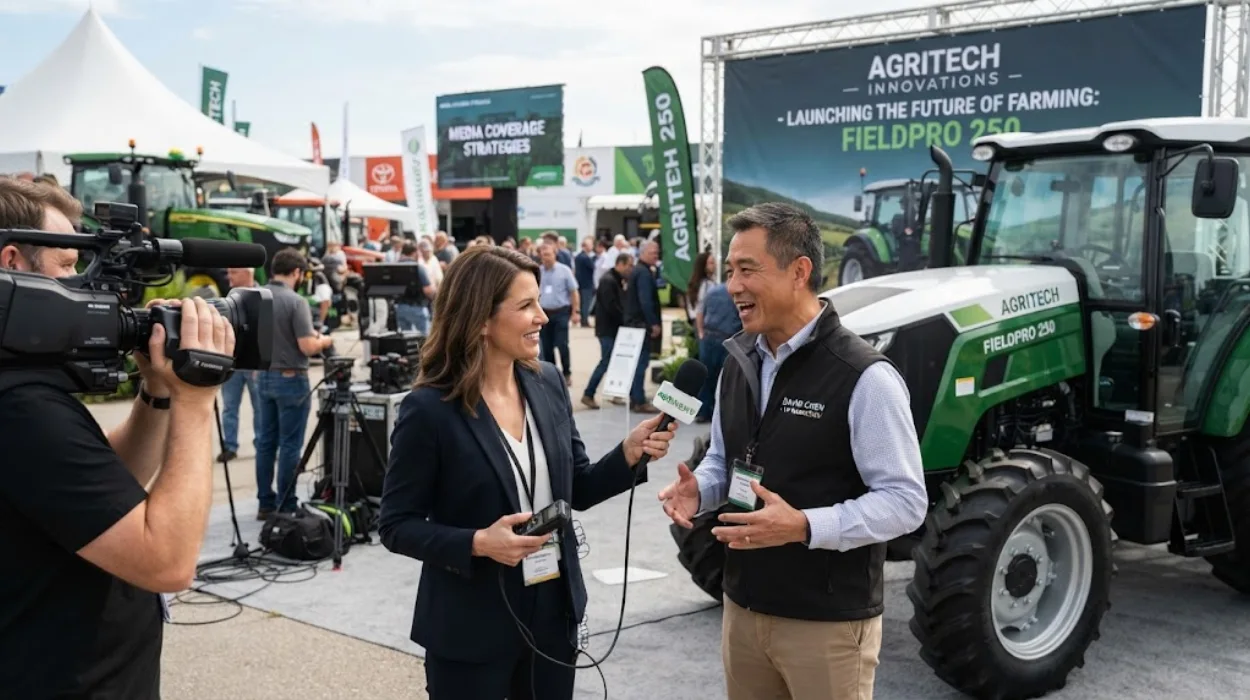
Tractor manufacturers gain media coverage by distributing verified press releases through wire services that feed agricultural trade outlets, regional business press, and Google News. Coverage depends on newsworthiness, correct outlet targeting, and timing aligned with product launches, regulatory updates, or trade events.
What Makes a Tractor Manufacturer’s News Newsworthy?
A tractor manufacturer’s news becomes newsworthy when it reports a measurable change: a new engine specification, a safety certification, a production milestone, or a policy shift affecting farm equipment. Journalists filter announcements by relevance to their readers, and agricultural editors prioritise stories that affect purchasing decisions, compliance timelines, or farm productivity. A release stating that a manufacturer “improves efficiency” carries no editorial value because it lacks a verifiable fact. A release stating that a new tractor model reduces fuel consumption by 12 litres per hour under EU Stage V emission standards gives an editor a fact to report, verify, and cite. Regulatory context strengthens newsworthiness further; announcements tied to bodies such as the Environmental Protection Agency or the European Union’s emissions directives receive faster editorial attention because they intersect with compliance reporting. Specificity, not promotional framing, determines whether a release converts into coverage.
Which Details Editors Verify First?
Editors verify the technical specification, the source company’s registration details, and the date of the claim before publishing. A release lacking a named spokesperson, a verifiable model number, or a dated quote is rejected by most agricultural trade desks. Wire services such as Business Wire and PR Newswire require company verification before distribution, which pre-filters unsubstantiated claims. This verification step protects the outlet’s credibility and explains why factual precision outperforms broad marketing language in earning pickup.
Which Media Outlets Cover Agricultural Machinery News?
Agricultural machinery news is covered by trade publications such as Successful Farming, Farm Journal, and AgWeb, alongside general business wires such as Reuters and Bloomberg when the announcement affects commodity markets or manufacturing output. Trade publications focus on equipment specifications, dealer networks, and farmer-facing utility. General business outlets cover tractor manufacturer news only when it intersects with broader economic indicators, such as steel tariffs, supply chain disruption, or quarterly earnings. Regional agricultural newspapers, including those distributed across the US Midwest and the EU’s Common Agricultural Policy member states, cover localised announcements such as dealership openings or regional compliance changes. Understanding this split determines which wire distribution tier a manufacturer selects: national business wires for financially material news, and trade-focused syndication for product-level announcements.
How Does Press Release Distribution Get Tractor News Into Google News?
Press release distribution gets tractor news into Google News when the release is published on a site that meets Google’s publisher content policies and is picked up by an outlet already indexed in Google News. Google News does not index every press release wire page directly; it indexes news publishers that syndicate wire content, provided those publishers meet standards on originality, authorship, and sourcing transparency. A release distributed through Business Wire, for example, is picked up by hundreds of syndication partners, and those partners’ own Google News eligibility determines whether the story surfaces in search. Structured metadata, including a clear headline, publish date, and byline, increases the likelihood that syndicated versions retain indexing eligibility after redistribution.
What Disqualifies a Release From Google News Indexing?
A release gets disqualified from Google News indexing when it contains duplicate content across too many domains without canonical tagging, when it lacks a clear publish date, or when the hosting domain violates Google’s policy on deceptive practices. Google News also excludes pages that function purely as advertisements rather than informational reporting. Manufacturers avoid disqualification by ensuring the release reads as a factual report rather than promotional copy, matching the tone expected of a news article rather than a marketing page. Domains with a history of thin, non-original content face slower crawl cycles, which delays indexing even for releases that otherwise meet Google’s publisher standards, so the reputation of the syndication partner matters as much as the content of the release itself.
How Do Journalists Source Stories About Farm Equipment?
Journalists source farm equipment stories from wire distribution feeds, direct pitches from manufacturer communications teams, trade show announcements, and regulatory filings. Agricultural journalists monitor wire services daily, filtering releases by keyword relevance to their beat, such as “emissions compliance” or “autonomous tractor testing.” Trade shows including Agritechnica in Hanover and the National Farm Machinery Show in Louisville generate concentrated pitching windows, where journalists expect a volume of announcements and allocate coverage accordingly. This is where manufacturers use press release distribution to reach multiple outlets simultaneously rather than pitching each journalist individually, since a single verified release syndicated through a wire service can surface across dozens of agricultural desks within hours. Direct relationships with beat reporters supplement wire distribution but rarely replace it, because wire syndication reaches regional and international outlets outside a single reporter’s network.
What Role Do Wire Services Play In Reaching Agricultural Press?
Wire services distribute a single verified release to hundreds of media databases, journalists’ inboxes, and syndication partners simultaneously, removing the need for individual outreach to each outlet. Three wire services dominate agricultural and industrial press distribution: PR Newswire, Business Wire, and EIN Presswire. PR Newswire maintains dedicated agriculture and manufacturing distribution lists that route releases directly to farm-sector editors. Business Wire operates NewsTrak, a system matching release content to relevant journalist subscriptions by industry code. EIN Presswire offers narrower, lower-cost distribution suited to regional announcements rather than international product launches. Selecting the correct wire tier affects both reach and cost, since national distribution through major wires carries a materially higher fee than regional or trade-specific syndication.
- Select a wire service whose media database includes agricultural trade editors by name.
- Confirm the wire service’s Google News syndication partnerships before distribution.
- Match distribution geography to the announcement’s relevance, avoiding global spend for a regional dealership update.
Distribution tiers also determine syndication depth. National-tier distribution through PR Newswire or Business Wire typically reaches financial data terminals such as those operated by Bloomberg and Refinitiv, which matters when a tractor manufacturer’s announcement affects publicly traded parent companies. Trade-tier distribution through EIN Presswire or sector-specific agricultural networks bypasses financial terminals but reaches a denser concentration of farm equipment editors who would otherwise be diluted within a general business feed. Manufacturers distributing safety recalls or compliance notices generally require national-tier wires, since regulatory bodies expect broad, verifiable public disclosure rather than narrow trade circulation.
How Does Timing Affect Media Pickup For Machinery Announcements?
Timing affects media pickup because agricultural editors work around planting and harvest cycles, trade show calendars, and fiscal reporting periods, and a release competing with a major event receives less editorial attention. A product announcement timed for the week of Agritechnica competes against dozens of simultaneous manufacturer releases, reducing the odds of individual pickup despite high overall reader traffic that week. Conversely, a release distributed during a quieter reporting period, such as midsummer for northern hemisphere farm press, faces less competition for editorial space. Embargoes function as a coordination tool in this context: a manufacturer sets a release under embargo, sharing it with select journalists ahead of the public wire distribution time, which allows reporters to prepare in-depth coverage rather than reacting to a live wire feed. Embargo windows of 24 to 48 hours are standard practice among agricultural trade desks, giving journalists sufficient preparation time without risking early publication.
Does Day of Week Affect Distribution Results?
Distribution volume data from major wire services consistently shows Tuesday through Thursday as the highest-traffic days for business and trade press, while Monday releases compete with weekend backlog and Friday releases risk being deprioritised ahead of the weekend news cycle. Agricultural trade outlets, which often publish weekly digests, favour releases distributed early in the week to allow inclusion in that week’s roundup coverage.
What Structured Data Helps Tractor News Get Indexed?
Structured data in the form of NewsArticle schema markup, clear publish and modified dates, and author or organisation metadata helps search engines and Google News correctly classify and index tractor-related press coverage. Schema.org’s NewsArticle markup tells crawlers the content type, publication date, and headline explicitly, reducing ambiguity that can delay or prevent indexing. Publisher guidelines from Google specify that pages should display a clear byline, an “About” or organisational transparency page, and consistent publication dating across the site. Crawl frequency for a domain increases when Google recognises consistent, dated publishing activity, meaning outlets that publish agricultural news regularly get crawled more often than those publishing sporadically, which benefits syndicated tractor announcements hosted on those domains.
How Can Manufacturers Sustain Ongoing Media Visibility?
Manufacturers sustain ongoing media visibility by distributing releases on a consistent schedule tied to genuine developments rather than isolated one-off campaigns. A single release generates a short spike in coverage, typically concentrated within 48 to 72 hours of distribution, after which pickup declines sharply. Recurring visibility requires a cadence of distinct, verifiable announcements: quarterly production updates, safety certifications, dealership network changes, and participation in named industry events such as the World Agri-Tech Innovation Summit. For manufacturers assessing which distribution approach fits agricultural announcements specifically, reviewing dedicated agriculture sector press release distribution resources clarifies how wire selection and outlet targeting differ from general industrial PR. Consistency across announcement types builds a recognisable pattern that agricultural editors come to expect and monitor, which increases the likelihood of proactive coverage requests rather than one-directional pitching.
Press release distribution reaches agricultural media through verified wire syndication, correct outlet targeting, and timing calibrated to trade cycles and reporting periods. Coverage depends on factual specificity, structured metadata, and consistent distribution rather than promotional framing.
Ready to get your story published?
Distribute your press release across 500+ trusted media outlets — with editorial review and a full pickup report within 48 hours.
Send Press Release →