
What Makes the World’s Biggest Shopify Stores Successful?
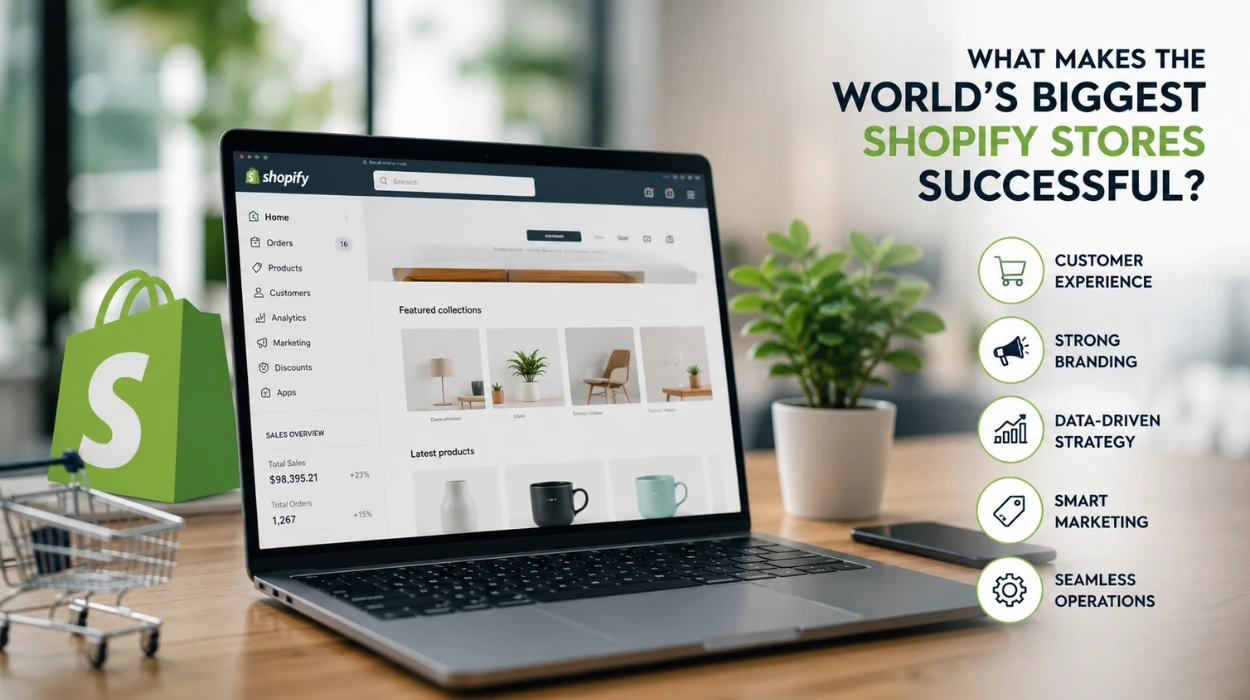
The world’s biggest Shopify stores succeed through a combination of scalable architecture, disciplined marketing spend and reliable fulfilment. No single tactic explains their growth; each large-scale store balances technology, logistics and retention strategy differently.
Which Platform Architecture Supports the Highest Order Volumes — Shopify Plus vs Headless Shopify?
Shopify Plus suits stores processing under 50,000 orders monthly, while headless Shopify architecture handles higher volumes with custom front-end demands. Shopify Plus provides a managed checkout, built-in scalability during traffic spikes, and reduced technical overhead. Headless setups decouple the front end from Shopify’s backend, giving brands full control over page speed and user interface design. Stores like Gymshark and Allbirds have used headless configurations to manage complex product catalogues and international storefronts. The trade-off is development cost: headless builds require dedicated engineering teams and longer deployment timelines.
What Shopify Plus Offers Enterprise Merchants
Shopify Plus includes several features that support rapid scaling without custom engineering.
- Manage checkout customisation through Shopify Functions, allowing merchants like Kylie Cosmetics to adjust discount logic without rebuilding checkout flow.
- Handle traffic surges automatically during flash sales, avoiding the server crashes common on unmanaged platforms.
- Reduce maintenance costs by relying on Shopify’s infrastructure rather than in-house server management.
- Launch multiple storefronts from a single backend, useful for brands operating across three or more regions.
What Headless Architecture Requires
Headless implementations demand more resources but unlock design flexibility that templated themes cannot match. Brands pursuing headless builds typically need a front-end framework such as React or Next.js connected via Shopify’s Storefront API. This separation improves page load speed, which directly affects conversion rates on high-traffic stores. However, headless architecture increases development costs by 200% to 400% compared with standard theme customisation, according to agency case studies from 2024. Merchants considering this route should weigh page-speed gains against the engineering investment required to maintain a decoupled system.
Which Marketing Approach Converts Better at Scale — Content-Led Organic Growth vs Paid Acquisition?
Content-led organic growth compounds over 12 to 18 months, while paid acquisition delivers immediate but costlier results. Organic strategies rely on SEO, email marketing and community building to reduce customer acquisition costs over time. Paid acquisition through platforms like Meta Ads and Google Shopping generates faster revenue but requires continuous budget allocation. Large Shopify stores such as Kith and Fashion Nova blend both approaches, using paid channels for product launches and organic content for retention. The balance between these two methods differs significantly depending on product margin and average order value.
How Organic Growth Builds Long-Term Value
Organic strategies reduce dependency on rising ad costs, which increased by 15% across major platforms between 2023 and 2025. Stores that invest in blog content, SEO-optimised product pages and email sequences see customer lifetime value grow independently of ad spend. This approach suits stores with strong repeat-purchase potential, such as skincare or supplement brands. The downside is the lag time before organic channels generate meaningful traffic, often six months or longer.
How Paid Acquisition Accelerates Early Growth
Paid channels compress the time needed to reach revenue targets, particularly for new product launches. Stores can test messaging, pricing and creative variations within days rather than months. This speed comes at a cost: customer acquisition costs on paid social have risen sharply, making profitability harder for stores with thin margins. Brands with average order values above £80 typically sustain paid acquisition more comfortably than those selling lower-priced items.
Does In-House Development Outperform Agency Partnerships for Enterprise Shopify Stores?
In-house development suits stores requiring constant iteration, while agency partnerships suit stores needing periodic, specialised builds. In-house teams offer faster turnaround on urgent fixes and deeper product knowledge. Agencies bring broader technical expertise across multiple Shopify implementations, often accelerating complex projects like headless migrations. Enterprise stores with revenue above £10 million annually frequently maintain hybrid models, combining a small internal team with external specialists for major projects.
Comparing the two models requires evaluating specific operational needs:
- Assess development frequency — stores updating their site weekly benefit more from in-house teams than sporadic agency engagements.
- Evaluate technical complexity — headless migrations or custom app development often require agency-level expertise unavailable internally.
- Calculate total cost of ownership — in-house salaries versus agency retainers differ substantially depending on team size and project scope.
- Review response time requirements — stores experiencing frequent site issues need immediate in-house support rather than scheduled agency check-ins.
Neither model guarantees success independently. The decision depends on how Shopify’s biggest stores structure their operations around growth stage and technical debt.
Which Fulfilment Model Handles Peak Demand More Reliably — Third-Party Logistics vs In-House Warehousing?
Third-party logistics handles unpredictable demand spikes more reliably, while in-house warehousing offers greater control over fulfilment speed and quality. Third-party logistics providers, such as ShipBob and Deliverr, distribute inventory across multiple warehouses, reducing shipping times during regional demand surges. In-house warehousing allows brands to manage packaging quality and customer experience directly, which matters for premium or personalised products.
When Third-Party Logistics Performs Best
Stores experiencing seasonal spikes, such as those selling holiday-specific products, benefit from third-party logistics networks. These providers absorb sudden order volume increases without requiring the brand to hire temporary staff or lease additional warehouse space. Fulfilment accuracy rates across established third-party providers typically exceed 99.5%, based on 2024 industry benchmarks. The trade-off is reduced control over packaging presentation, which can affect unboxing experience for brands prioritising customer perception.
When In-House Warehousing Performs Best
Brands with complex packaging requirements, such as customised gift sets, often retain in-house fulfilment despite higher operational costs. This model supports faster adjustments to packaging design and quality control checks before dispatch. In-house warehousing typically costs 20% to 35% more per order than third-party logistics once staffing, rent and equipment are factored in. Stores choosing this route generally exceed £5 million in annual revenue, which justifies the fixed infrastructure investment.
Which Retention Strategy Sustains Growth Longer — Subscription Models vs One-Off Purchase Optimisation?
Subscription models sustain revenue predictability over multiple years, while one-off purchase optimisation maximises value from single transactions without recurring commitment. Subscription-based stores, common in the beauty and supplement categories, report customer retention rates of 60% to 75% after the first three months when onboarding is well designed. One-off purchase optimisation focuses on upselling, bundling, and post-purchase email flows to increase average order value without requiring ongoing commitment from the customer.
Evaluating which model fits a given store involves several considerations:
- Determine product consumability — items like skincare or coffee suit subscriptions, while items like furniture suit one-off optimisation.
- Test churn tolerance — subscription models require systems to manage cancellations, pauses and win-back campaigns.
- Measure repeat purchase intervals — products bought every 30 to 60 days align naturally with subscription cycles.
- Compare implementation complexity — subscription billing requires additional app integrations, such as Recharge or Bold Subscriptions, adding technical overhead.
Stores evaluating these trade-offs often review structured services for growing Shopify stores to compare implementation timelines and expected retention outcomes before committing resources to either model.
Bringing the Comparisons Together
No single architecture, marketing channel or fulfilment method defines success across the world’s largest Shopify stores. Each approach carries distinct trade-offs between cost, control and speed. Headless architecture rewards stores with engineering resources; Shopify Plus suits those prioritising simplicity. Organic growth compounds patiently; paid acquisition delivers immediate but costlier results. In-house teams offer control; agencies offer specialised speed. Third-party logistics scales with demand; in-house warehousing protects packaging quality. Subscription models build predictability; one-off optimisation maximises transactional value. Store operators evaluating these paths should weigh their product type, margin structure and growth stage before selecting a combination that fits their specific operational reality, drawing on ecommerce sector expertise where internal resources fall short.
Ready to get your story published?
Distribute your press release across 500+ trusted media outlets — with editorial review and a full pickup report within 48 hours.
Send Press Release →