
How to Create a Social Media Calendar for Your Brand
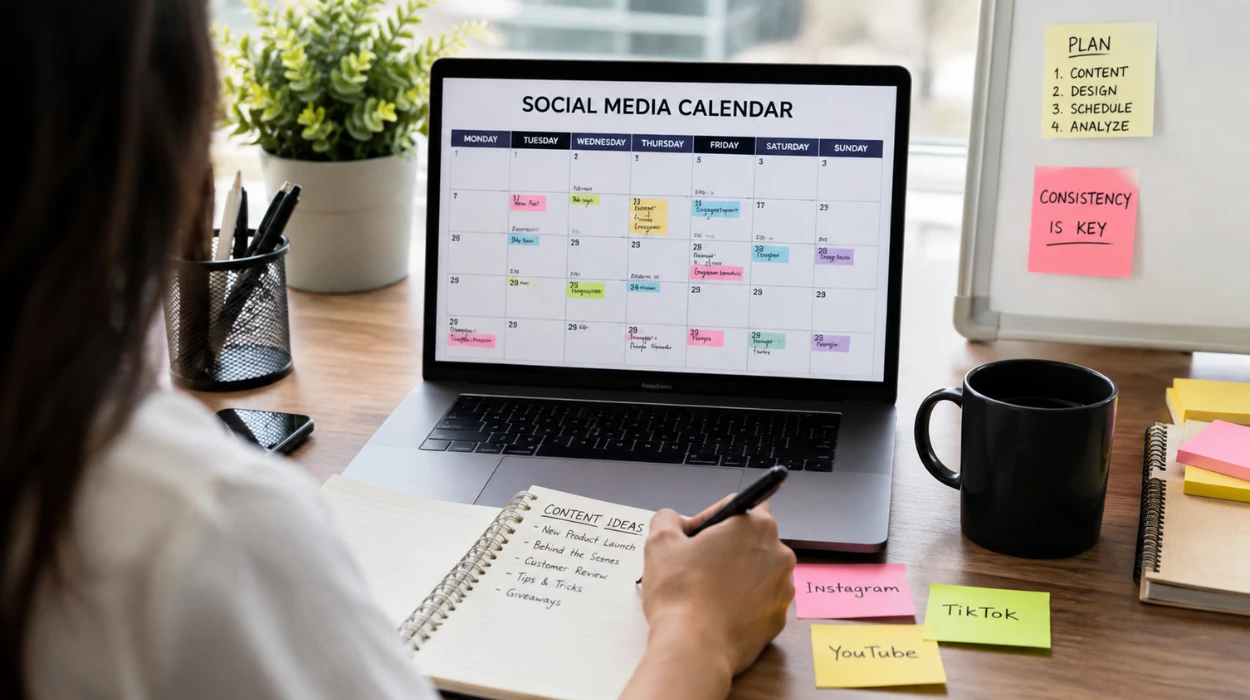
A social media calendar is a structured schedule that defines what content is published, where it is distributed, and when it appears across platforms. It aligns content production with distribution timing, media relevance, and audience visibility cycles.
What is a social media calendar and how does it function?
A social media calendar is a time-based content distribution framework that organises publishing frequency, platform selection, and message alignment across owned and earned media channels.
How does a social media calendar structure content distribution?
A social media calendar defines publishing dates, content formats, and distribution channels in a single system. It maps each post to a specific objective such as awareness, indexing, or engagement. It aligns publishing times with peak crawl and indexing activity on platforms like Google News and LinkedIn. It ensures that content flows consistently across channels without duplication or timing conflicts. It integrates editorial planning with distribution logic used in digital PR. It creates a repeatable system that supports long-term visibility rather than isolated posting.
How does it relate to press release distribution and media coverage?
A social media calendar supports press release distribution by synchronising announcement timing with social amplification. It ensures that a press release published on a wire service aligns with supporting social posts. It increases the probability of journalist discovery by maintaining consistent topical signals. It reinforces indexing signals when social posts link to distributed media content. It helps maintain content freshness, which Google News evaluates through crawl frequency and recency signals. It connects owned media channels with earned media visibility.
Why is a structured calendar essential for brand visibility?
A structured calendar ensures consistent publishing, which directly influences indexing, discoverability, and media pickup rates.
How does consistency impact indexing and discoverability?
Consistency signals relevance to algorithms that evaluate content freshness and authority. Platforms like Google News prioritise sources that publish at predictable intervals. A calendar ensures that content appears regularly, enabling faster crawl cycles. It reduces gaps that weaken topical authority in digital PR ecosystems. It strengthens internal linking between press releases and social posts. It supports sustained visibility across search and news aggregation systems.
How does it support journalist sourcing behaviour?
Journalists source stories from platforms that demonstrate reliability and topical consistency. A calendar ensures that updates align with industry trends and news cycles. It allows brands to publish supporting insights alongside press releases. It creates a content trail that journalists can verify and reference. It improves credibility by maintaining a consistent narrative across channels. It increases the likelihood of media mentions through structured visibility.
What elements must a social media calendar include?
A complete social media calendar includes publishing dates, content types, distribution channels, timing logic, and topic alignment.
Which core components define the calendar structure?
A calendar includes exact publishing dates to maintain consistency. It defines content formats such as text posts, press release links, or visual summaries. It assigns each post to a distribution channel such as LinkedIn, X, or Facebook. It includes timing data aligned with audience activity and indexing cycles. It categorises topics to maintain thematic relevance. It tracks performance metrics for evaluation and optimisation.
How does topic alignment influence PR distribution?
Topic alignment ensures that content matches current industry narratives. It connects social posts with press releases distributed through wire services. It maintains consistency across messaging, which strengthens authority signals. It ensures that each post contributes to a broader communication strategy. It prevents fragmentation of brand messaging across channels. It supports semantic relevance in search and news indexing systems.
How do you define content categories within the calendar?
Content categories organise posts into distinct themes that align with PR objectives and distribution strategies.
What categories support press release amplification?
Content categories include announcement posts that distribute press releases. They include insight posts that analyse industry trends referenced in releases. They include media mentions that highlight coverage from outlets such as Reuters or Bloomberg. They include updates that maintain continuity between major announcements. They include verification posts that reinforce credibility through data or statistics.
How does categorisation improve content clarity?
Categorisation ensures that each post serves a defined purpose. It prevents overlap between informational and promotional messaging. It allows audiences to recognise patterns in content delivery. It simplifies scheduling by grouping similar content types. It improves tracking by associating performance metrics with categories. It enhances strategic alignment with PR distribution goals.
How do you determine the optimal posting frequency?
Optimal posting frequency is defined by platform indexing behaviour, audience activity patterns, and content production capacity.
How do platforms influence posting frequency?
Different platforms index content at different rates based on user activity and algorithm design. LinkedIn prioritises consistent professional updates with moderate frequency. X processes real-time updates and supports higher posting frequency. Facebook balances engagement signals with content recency. A calendar aligns posting frequency with these platform-specific behaviours. It ensures that content remains visible without saturation.
How does frequency affect media visibility?
Consistent frequency increases the probability of content being discovered by journalists. It maintains a continuous presence in search and news feeds. It reinforces topical authority through repeated exposure. It supports sustained indexing by search engines. It prevents content gaps that reduce visibility. It creates a reliable publishing rhythm that media professionals recognise.
How do you align your calendar with press release timing?
Alignment with press release timing ensures that social posts reinforce distribution efforts and maximise visibility.
What role does embargo timing play?
Embargo timing defines when information becomes publicly accessible. A calendar schedules posts to coincide with embargo lifts. It ensures that social content does not publish before official release. It synchronises announcements across platforms and wire services. It prevents information leaks that disrupt media coverage. It maintains credibility in journalist relationships.
How does distribution timing affect indexing?
Distribution timing influences how quickly content appears in search and news platforms. A calendar aligns posts with peak indexing periods. It ensures that press release links receive immediate amplification. It supports faster crawl rates by search engines. It increases the likelihood of appearing in trending or recent sections. It strengthens visibility during critical announcement windows.
How do you integrate distribution strategies into the calendar?
Integration of distribution strategies ensures that content reaches multiple channels and supports broader media exposure.
What is the role of multi-channel distribution?
Multi-channel distribution ensures that content appears across platforms simultaneously. It increases reach by targeting different audience segments. It reinforces messaging through repetition across channels. It supports cross-platform indexing signals. It enhances discoverability in both search and social environments. It connects social media with press release distribution networks.
How does strategic planning improve distribution efficiency?
Strategic planning defines how and where content distributes. It aligns posts with broader Content Distribution Strategy to ensure maximum visibility across media ecosystems. It reduces redundancy by coordinating messaging across platforms. It ensures that each post contributes to a unified narrative. It improves efficiency by standardising workflows. It supports measurable outcomes in digital PR campaigns.
How do you select the right platforms for your calendar?
Platform selection is based on audience presence, indexing behaviour, and relevance to media distribution goals.
Which platforms support PR visibility most effectively?
LinkedIn supports professional announcements and industry insights. X enables real-time updates and journalist engagement. Facebook provides broad audience reach and content sharing. Google News integrates with publisher content for indexing. Each platform contributes to different aspects of visibility. A calendar assigns content based on these platform strengths.
How does platform selection affect media coverage?
Platform selection influences how journalists discover content. Professional platforms increase credibility and relevance. Real-time platforms improve responsiveness to news cycles. Broad platforms expand audience reach and engagement. A calendar ensures that content appears where it has the highest impact. It aligns platform choice with PR objectives.
How do you track and analyse calendar performance?
Performance tracking measures how effectively content supports visibility, indexing, and media engagement.
Which metrics define success in PR-focused calendars?
Metrics include impressions that measure visibility across platforms. Engagement rates indicate audience interaction with content. Click-through rates show how users access press releases. Indexing speed reflects how quickly content appears in search results. Media mentions track coverage by outlets such as the Associated Press or BBC News. These metrics provide measurable insights into calendar effectiveness.
How does analysis improve future planning?
Analysis identifies which content types generate the highest visibility. It reveals optimal posting times based on engagement data. It highlights gaps in distribution or topic alignment. It informs adjustments to frequency and platform selection. It supports continuous improvement of the calendar structure. It ensures that future content aligns with proven strategies.
How do tools support social media calendar creation?
Tools provide automation, scheduling, and analytics that streamline calendar management and improve distribution accuracy.
Which tools are commonly used for calendar management?
Tools include 3 scheduling platforms, including Hootsuite, Buffer, and Sprout Social. These tools allow users to schedule posts in advance across multiple channels. They provide analytics dashboards to track performance metrics. They support integration with content management systems. They enable collaboration between marketing and PR teams. They simplify the execution of complex distribution strategies.
How do tools enhance PR distribution workflows?
Tools automate the timing of posts aligned with press release distribution. They ensure consistency across platforms without manual intervention. They provide real-time data on content performance. They support rapid adjustments based on analytics. They reduce operational complexity in managing multiple channels. They improve accuracy in scheduling and execution.
How do you maintain long-term consistency in your calendar?
Long-term consistency is achieved through structured planning, performance analysis, and alignment with PR objectives.
What processes ensure ongoing consistency?
Processes include regular content audits to evaluate performance. They include updating topics based on industry trends and news cycles. They include maintaining a fixed publishing schedule. They include reviewing analytics to refine strategies. They include aligning content with ongoing PR campaigns. These processes ensure that the calendar remains effective over time.
How does consistency influence authority and visibility?
Consistency strengthens authority by maintaining a continuous presence. It signals reliability to both audiences and algorithms. It improves indexing frequency in search engines. It increases recognition among journalists and media outlets. It supports sustained engagement across platforms. It reinforces the effectiveness of press release distribution strategies.
A social media calendar defines how content distributes, aligns with press release timing, and maintains visibility across digital PR ecosystems. It connects structured planning with indexing behaviour, journalist sourcing patterns, and multi-channel distribution mechanisms. It ensures that every piece of content contributes to a consistent and measurable communication strategy.
Ready to get your story published?
Distribute your press release across 500+ trusted media outlets — with editorial review and a full pickup report within 48 hours.
Send Press Release →