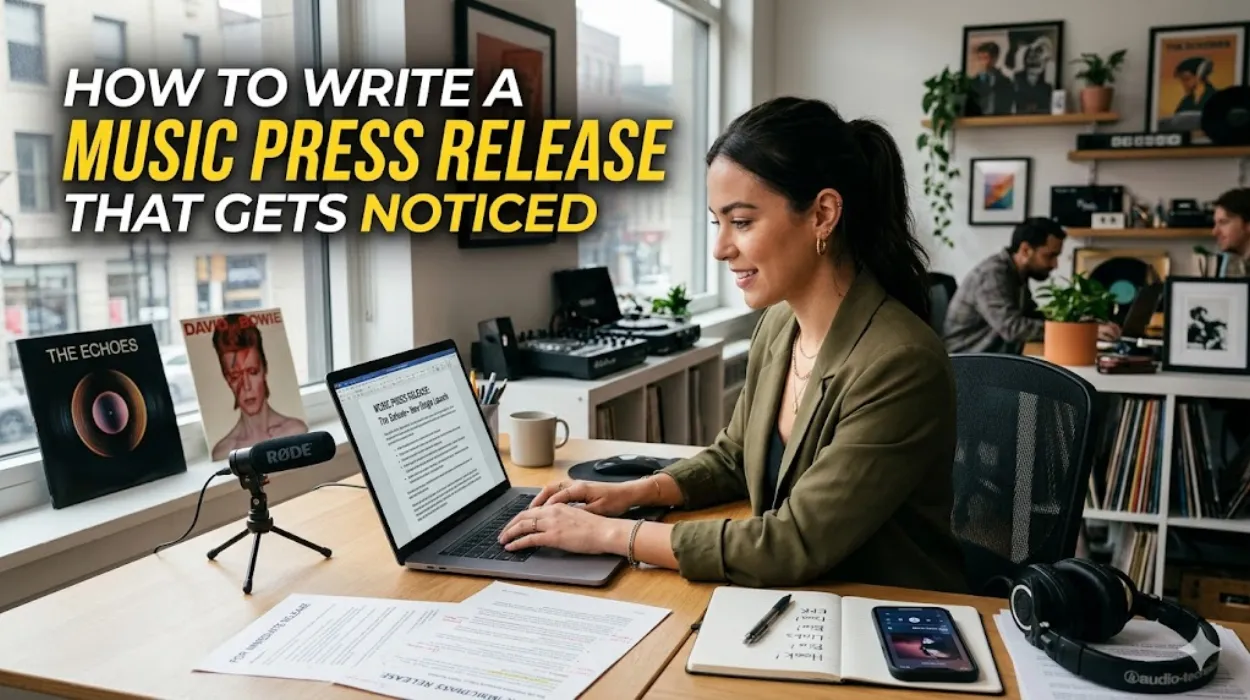
A music press release gets noticed when it delivers clear news value, structured storytelling, and verifiable details in a concise format. It succeeds by aligning audience relevance, timing, and distribution strategy with editorial expectations.
What makes a music press release effective in a competitive media landscape?
An effective music press release presents a newsworthy angle, structured format, and factual clarity that matches editorial standards. It avoids exaggeration and focuses on verifiable developments such as releases, tours, or collaborations.
A music press release performs best when it communicates one primary message supported by evidence. Editors prioritise relevance, timeliness, and clarity over stylistic creativity. A release must include a strong headline, factual opening paragraph, and structured body content. It should answer who, what, when, where, and why within the first 75 words. Supporting details must include dates, locations, and measurable milestones. Quotes must add perspective rather than repeat facts. This approach increases editorial usability and reduces rejection rates.
How does structure influence visibility and pickup?
Structure determines whether journalists can quickly extract usable information from the release. A clear hierarchy improves readability and editorial efficiency.
A standard structure includes a headline, subheading, dateline, lead paragraph, body, quote, and boilerplate. The headline must communicate a specific development such as a release date or collaboration. The lead paragraph must summarise the announcement in one sentence. The body expands with context, data, and supporting details. Quotes must introduce interpretation or artistic intent. The boilerplate provides background information about the artist. This format aligns with newsroom workflows and improves pickup probability.
How do different types of music press releases compare in purpose and impact?
Different types of music press releases serve distinct purposes and vary in media appeal depending on context. Each type addresses a specific stage in an artist’s career or promotional cycle.
Music releases, tour announcements, and milestone reports represent three primary categories. A release announcement focuses on new content such as a single or album. A tour announcement highlights live performances with dates and venues. A milestone report presents measurable achievements such as streaming numbers or chart positions. Each type requires different supporting data and tone. Release announcements prioritise artistic context, while tour announcements prioritise logistics. Milestone reports rely on quantifiable evidence to establish credibility.
What are the advantages and limitations of each release type?
Each release type offers unique strengths but also presents limitations depending on timing and audience interest.
- Focus on releases: Announces new music such as a debut album released on 12 March 2026
Advantage: High relevance to music editors
Limitation: Saturated category with high competition - Highlight tours: Lists 15 confirmed dates across the UK and Europe
Advantage: Local media relevance increases coverage
Limitation: Limited appeal without notable venues or scale - Report milestones: Shares 10 million Spotify streams within 30 days
Advantage: Data-driven credibility attracts business media
Limitation: Requires significant metrics to stand out
Each approach must align with a clear news angle to maintain editorial value.
How does timing affect the success of a music press release?
Timing determines whether a press release aligns with editorial cycles and audience attention patterns. Strategic timing increases the likelihood of coverage and engagement.
Press releases perform best when distributed between Tuesday and Thursday before midday. This timing aligns with newsroom planning cycles and avoids weekend backlog. Releases tied to events must be sent at least 14 days in advance. Embargoed releases allow journalists to prepare coverage ahead of time. Seasonal trends also influence performance, with fewer releases in January and August leading to higher visibility. Poor timing reduces open rates and editorial consideration regardless of content quality.
What timing strategies improve media engagement?
Timing strategies must align with both editorial workflows and audience behaviour patterns.
- Schedule midweek distribution: Send releases at 10:00 AM for optimal newsroom visibility
- Align with announcements: Release news 14 days before an album launch
- Use embargoes: Provide early access to journalists under agreed conditions
- Avoid peak congestion: Skip major industry event weeks such as award ceremonies
These strategies improve open rates and increase the probability of editorial pickup.
How do writing style and tone influence credibility?
Writing style directly affects how journalists perceive the reliability and usability of a press release. A factual and neutral tone increases trust and reduces editorial revision.
Press releases must use short sentences and precise language. Each sentence should communicate one idea supported by evidence. Avoid adjectives that imply opinion rather than fact. Replace vague claims with exact numbers and named examples. Quotes must provide insight rather than repetition. Consistency in tone ensures clarity and professionalism. This approach aligns with journalistic standards and improves acceptance rates.
What writing techniques improve clarity and impact?
Effective writing techniques focus on precision, structure, and readability.
- Use active voice: “The artist released the single on 5 April 2026”
- Include exact figures: “The track reached 2.3 million streams in 10 days”
- Present verifiable facts: “The performance took place at a 5,000-capacity venue”
- Limit sentence length: Keep sentences under 20 words
These techniques enhance readability and reduce ambiguity.
How do distribution channels compare in reach and effectiveness?
Distribution channels determine how widely and effectively a press release reaches its target audience. Each channel offers different levels of control, reach, and cost.
Direct outreach involves sending releases to selected journalists and editors. Wire distribution services distribute releases across multiple platforms simultaneously. Social media distribution targets audiences directly without editorial mediation. Email newsletters reach existing subscribers with high engagement rates. Each channel serves a distinct purpose within a broader strategy. Combining channels increases overall visibility and coverage potential.
What are the strengths and weaknesses of each channel?
Each distribution channel provides specific advantages and limitations depending on objectives.
- Use direct outreach: Email 25 targeted journalists in music publications
Advantage: High relevance and personalised engagement
Limitation: Time-intensive and limited scale - Apply wire distribution: Publish through a syndication platform
Advantage: Broad reach across multiple outlets
Limitation: Lower editorial selectivity - Leverage social media: Share announcements on platforms with 50,000 followers
Advantage: Immediate audience engagement
Limitation: Limited credibility without media coverage
A balanced approach maximises both reach and relevance.
How do industry trends influence music press release strategies?
Industry trends shape how press releases are written, distributed, and consumed. Adapting to these trends improves effectiveness and relevance.
Digital-first media has reduced reliance on traditional print outlets. Data-driven storytelling has become a standard expectation. Multimedia elements such as videos and images increase engagement rates. Journalists prioritise releases that include streaming data and audience metrics. Shorter attention spans require concise and structured content. These trends influence both format and content strategy.
What emerging practices are shaping press release effectiveness?
Emerging practices reflect changes in media consumption and editorial workflows.
- Integrate multimedia: Include a 60-second video teaser alongside the release
- Provide analytics: Share streaming data from platforms such as Spotify and Apple Music
- Optimise for mobile: Format content for readability on smartphones
- Use SEO principles: Include relevant keywords in headlines and subheadings
These practices align with current media expectations and improve discoverability.
How does professional support compare to independent writing approaches?
Professional support and independent writing represent two distinct approaches to creating press releases. Each approach offers different levels of expertise, control, and efficiency.
Independent writing provides full creative control and cost efficiency. However, it requires knowledge of media standards and distribution practices. Professional services offer structured expertise and established workflows. They ensure compliance with editorial expectations and improve formatting consistency. The choice depends on resources, experience, and desired outcomes.
What factors should be evaluated when choosing an approach?
Evaluating the right approach requires analysing expertise, time, and expected results.
- Assess expertise: Determine knowledge of journalistic standards and formatting
- Evaluate time: Consider 3 to 5 hours required to draft and refine a release
- Compare outcomes: Measure success by pickup rates and engagement metrics
- Review scalability: Consider ability to produce multiple releases consistently
For deeper evaluation, refer to Professional Press Release Writing Service, which provides structured insight into service-based approaches.
Conclusion
A music press release succeeds through clarity, structure, timing, and strategic distribution. Each element contributes to overall effectiveness and media engagement. Evaluating formats, channels, and writing approaches reveals measurable differences in performance. Adapting to industry trends ensures continued relevance in a changing media landscape. A structured and analytical approach improves both visibility and credibility without relying on promotion.